Sacramento Range Hood Installation Cost Guide: Ducting, Makeup Air, and Kitchen Remodel Planning
A good range hood is one of those kitchen upgrades that feels simple until the walls are open. Homeowners usually start with a practical complaint: cooking smoke lingers, the microwave fan is too weak, fried food smells hang around for days, or a new gas or induction range needs better ventilation than the old setup. In Sacramento homes, the final cost depends less on the hood itself and more on where the air can go.
Older Sacramento kitchens often have recirculating microwave fans, undersized ducting, awkward soffits, flat roof sections, brick or stucco exterior walls, or cabinets that were never designed for a proper vent path. Newer homes may have a basic ducted microwave, but the duct route can still be too small or noisy for a serious range upgrade. If the project is part of a kitchen remodel, planning the hood early can prevent expensive cabinet, tile, electrical, and roof changes later.
This guide explains realistic 2026 range hood installation costs in the Sacramento area, when makeup air matters, what duct routes usually cost, how permits fit in, and what homeowners should ask before hiring a contractor.
Typical 2026 Range Hood Installation Costs in Sacramento
Range hood pricing varies widely because the work may involve cabinetry, electrical, drywall, roofing, stucco, ducting, tile, and sometimes structural framing. For planning purposes, Sacramento homeowners often see ranges like these:
- Replace an existing ducted microwave or hood with similar venting: $600 to $1,800 plus the appliance
- Install an under-cabinet hood with a short wall duct: $1,200 to $3,500 plus the appliance
- Install a hood with attic or roof ducting: $2,000 to $6,000 plus the appliance, depending on roof access and duct length
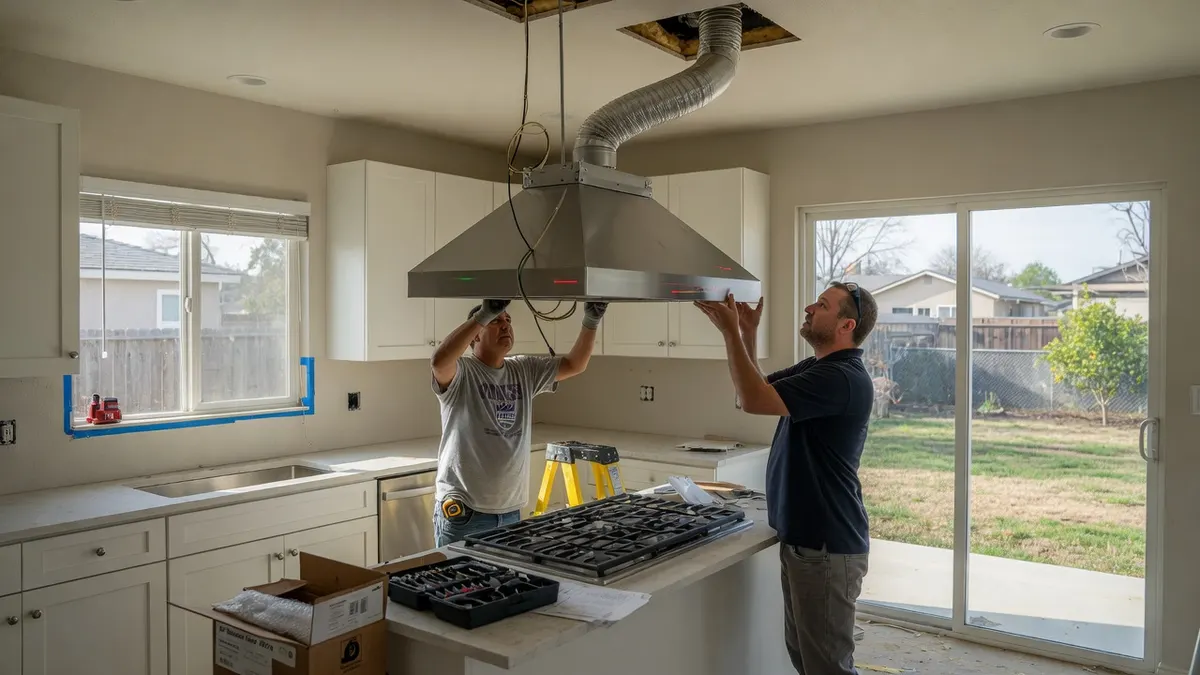
- Island range hood installation: $3,500 to $9,000 or more when ceiling framing, finish work, and longer duct runs are involved
- Custom wood or plaster hood surround: $4,000 to $12,000 or more depending on cabinet work, finish carpentry, and blower selection
- Electrical circuit or outlet changes: often $300 to $1,500 when the existing wiring is not in the right location
- Stucco, drywall, tile, or cabinet repair after vent work: often $500 to $3,000 depending on finishes
The appliance itself can cost a few hundred dollars for a basic under-cabinet unit or several thousand dollars for a larger insert, remote blower, or custom hood liner. A useful bid separates the appliance, ducting, electrical, roof or wall penetration, finish repair, and permit assumptions. A single lump sum can hide a lot of risk.
Why Duct Route Is the Main Cost Driver
The best range hood sends cooking exhaust outdoors through a duct that is short, smooth, properly sized, and as direct as the home allows. The cheapest route is often straight through an exterior wall behind the range. That can work well in a one-story kitchen with the range on an outside wall. Costs rise when the duct must go through upper cabinets, across an attic, through a roof, around framing, or across a second story.
Sacramento houses create several common challenges:
- Older bungalows and ranch homes may have plaster walls, tight attic access, and kitchens far from an easy exterior wall
- East Sacramento, Land Park, Curtis Park, and similar neighborhoods often have finished stucco that needs careful patching after a wall cap is installed
- Homes with flat or low-slope roof sections may need more thoughtful flashing and waterproofing
- Two-story homes can make vertical ducting difficult if the kitchen is under bedrooms or bathrooms
- Kitchen remodels may move the range to an island, which can require ceiling work and a longer duct route
Flexible duct is not a shortcut for a range hood. It can trap grease, increase noise, and reduce airflow. Most quality installations use rigid metal duct sized to the hood manufacturer's instructions and local code requirements. Ask the installer to explain the duct diameter, number of elbows, wall or roof cap, and how the penetration will be sealed against rain, pests, and hot attic air.
CFM, Noise, and the Bigger-Is-Better Trap
Range hoods are often sold by CFM, which means cubic feet per minute of airflow. A higher number can help with heavy cooking, high-output ranges, or wide cooktops, but more CFM is not automatically better. A very powerful hood on a bad duct route can be loud and disappointing. A properly sized hood with a short duct can perform better than a larger unit forced through small, twisted ducting.
Noise matters because homeowners actually use quiet equipment. Look at sones or decibel ratings, not just CFM. Remote or inline blowers can reduce sound at the cooking area, but they add cost and need thoughtful access for service. Hood width also matters. Many installers prefer the hood to be at least as wide as the cooking surface, and sometimes wider for high-output cooking, but cabinet layout and manufacturer instructions control the final choice.
For everyday Sacramento kitchens, the right answer is usually a balanced system: enough airflow to capture steam, grease, and smoke, but not so much that the hood becomes noisy, expensive, or hard to supply with replacement air.
Makeup Air: When It Becomes Part of the Conversation
Makeup air is replacement air that enters the home when a strong exhaust fan removes indoor air. Without enough replacement air, a large hood can make doors hard to open, pull dusty attic or crawlspace air through leaks, or affect combustion appliances. The issue is more likely with high-CFM hoods, tight homes, and houses with gas water heaters, fireplaces, or furnaces that rely on indoor air.
California code requirements can vary by project details, hood size, appliance type, and jurisdiction. Instead of relying on a salesperson's rule of thumb, ask the contractor whether the proposed hood triggers makeup air review and how that will be handled. A makeup air system might be a simple passive duct in some cases, or it might require a powered, filtered, or conditioned solution in more complicated homes.
Makeup air can add hundreds or thousands of dollars, especially if electrical work, wall penetrations, dampers, controls, or HVAC coordination are needed. It is better to know that before ordering a hood that looks great but changes the project budget.
Permits, Inspections, and Trade Coordination
A basic appliance swap may not always need a building permit, but new duct penetrations, electrical changes, structural changes, roof work, gas appliance coordination, and larger kitchen remodels can trigger permit requirements. Homeowners in the City of Sacramento can start with the City of Sacramento building division, while unincorporated properties can check Sacramento County building permits and inspection services. Nearby cities such as Elk Grove, Roseville, Folsom, Citrus Heights, Rancho Cordova, and West Sacramento have their own rules.
Range hood projects can involve more than one trade. A kitchen remodeler may handle the overall scope, an electrician may move power, an HVAC or mechanical contractor may install ducting, a roofer may flash a roof cap, and a cabinet installer may modify uppers or build a custom hood surround. If several trades are involved, one person needs to own the sequence. Otherwise the roofer may be waiting on duct layout, the tile installer may cover a wall before wiring is moved, or the cabinet installer may build around a hood that cannot be serviced.
Wall Vent, Roof Vent, or Island Hood?
Each venting path has tradeoffs.
A wall vent is usually the most direct option when the range backs up to an exterior wall. It can be efficient and affordable, but the wall cap location must clear windows, doors, property line concerns, utility equipment, and outdoor living areas where cooking exhaust would be annoying.
A roof vent can work well for one-story homes when attic access is good. The downside is roof penetration risk. Proper flashing, duct support, backdraft protection, and weather sealing are essential. If the roof is old, coordinate with roofing plans so the new penetration does not become a leak point.
An island hood is often the most expensive because the duct must travel through the ceiling and the hood is visible from all sides. Island hoods also need careful mounting because they cannot rely on wall cabinets for support. Many homeowners like the look, but it should be planned before finalizing lighting, ceiling framing, and cabinet layout.
How to Compare Range Hood Installation Bids
Before signing, ask for a written scope that answers these questions:
- What hood model, width, blower type, and CFM is being installed?
- What duct size and material will be used?
- How many elbows are expected, and where will the duct terminate?
- Will the contractor follow the hood manufacturer's installation instructions?
- Is makeup air required or recommended for this setup?
- Who handles electrical changes, outlet placement, and switch controls?
- Who patches drywall, stucco, roofing, tile, cabinets, and paint?
- Are permits included if they are required by the jurisdiction?
- How will the wall or roof penetration be flashed and sealed?
- What parts of the existing microwave, cabinet, soffit, or tile will be removed?
Also verify licenses through the official Contractors State License Board. The license classification should match the work being performed, especially if the project includes electrical, roofing, HVAC, or general remodeling scope. Ask for proof of insurance before work starts.
Bottom Line
A Sacramento range hood installation is not just an appliance swap when the home lacks good ducting. The practical questions are where the exhaust goes, how the duct is sized, whether makeup air matters, who repairs the finishes, and whether the project lines up with permits and manufacturer instructions. A well-planned hood can make a kitchen more comfortable, reduce lingering cooking odors, and support a serious range upgrade. A rushed installation can leave you with noise, weak airflow, cabinet damage, or a roof leak.
If you are remodeling a kitchen, choose the hood and duct route before cabinets, backsplash tile, electrical rough-in, and roofing work are finalized. Compare bids by scope, not just by price, and make sure the contractor explains the hidden work behind the finished kitchen.
Browse Sacramento-area kitchen remodeling contractors, electrical contractors, HVAC contractors, and local listings in Sacramento, Elk Grove, Roseville, Folsom, and nearby communities.
For related planning, see our kitchen remodel cost guide, home improvement permits guide, electrical panel upgrade guide, and California contractor license verification guide.
Who to Hire for This Project
For the work covered in this guide, these are the contractor types to contact and the CSLB classification to verify before you take quotes:
Questions to Ask Before You Sign
- "Is your CSLB license active and bonded?" Verify it yourself at cslb.ca.gov the license number must appear on their bid.
- "Who pulls the permit, and is it included in the bid?" The contractor should handle any required permits a pro who suggests skipping one is a red flag.
- "Can you itemize labor, materials, and allowances?" Itemized bids are the only way to compare quotes on the same scope.
- "What's the payment schedule?" California caps the down payment at $1,000 or 10%, whichever is less payments should track completed work.
- "Who from this area can I call as a reference?" Ask for a recent local job of similar scope, not just photos.
Sacramento Contractors for This Project
Related Articles
Natomas Kitchen Island Planning: Slab Cuts, Electrical, Plumbing, and Permit Questions
August 14, 2026
Sacramento Kitchen Ventilation and Range Hood Guide: Duct Routes, Makeup Air, Cabinets, and Remodel Planning
August 10, 2026
Elk Grove Kitchen Remodel Costs: Permits, Layout Changes, and Contractor Scope
June 26, 2026
Frequently Asked Questions
How much does it cost to install a range hood in Sacramento? +
A simple replacement using existing ducting may cost about $600 to $1,800 plus the appliance. New wall ducting often lands around $1,200 to $3,500, while roof ducting, island hoods, custom surrounds, electrical changes, and finish repairs can push the project to $6,000 to $12,000 or more.
Is a ducted range hood better than a recirculating hood? +
For most cooking, a ducted hood is more effective because it sends moisture, grease, smoke, and odors outdoors. A recirculating hood can help with some particles and odor if filters are maintained, but it does not remove moisture or combustion byproducts from the home.
Do Sacramento range hood installations need permits? +
It depends on the scope and jurisdiction. New duct penetrations, roof work, electrical changes, structural changes, and larger kitchen remodels can trigger permit requirements. Check the local building department and make sure the contractor states permit responsibility in writing.
When does a range hood need makeup air? +
Makeup air becomes more important with high-CFM hoods, tight homes, and homes with combustion appliances. The contractor should review the hood size, duct route, local code requirements, and appliance conditions before promising that makeup air is not needed.