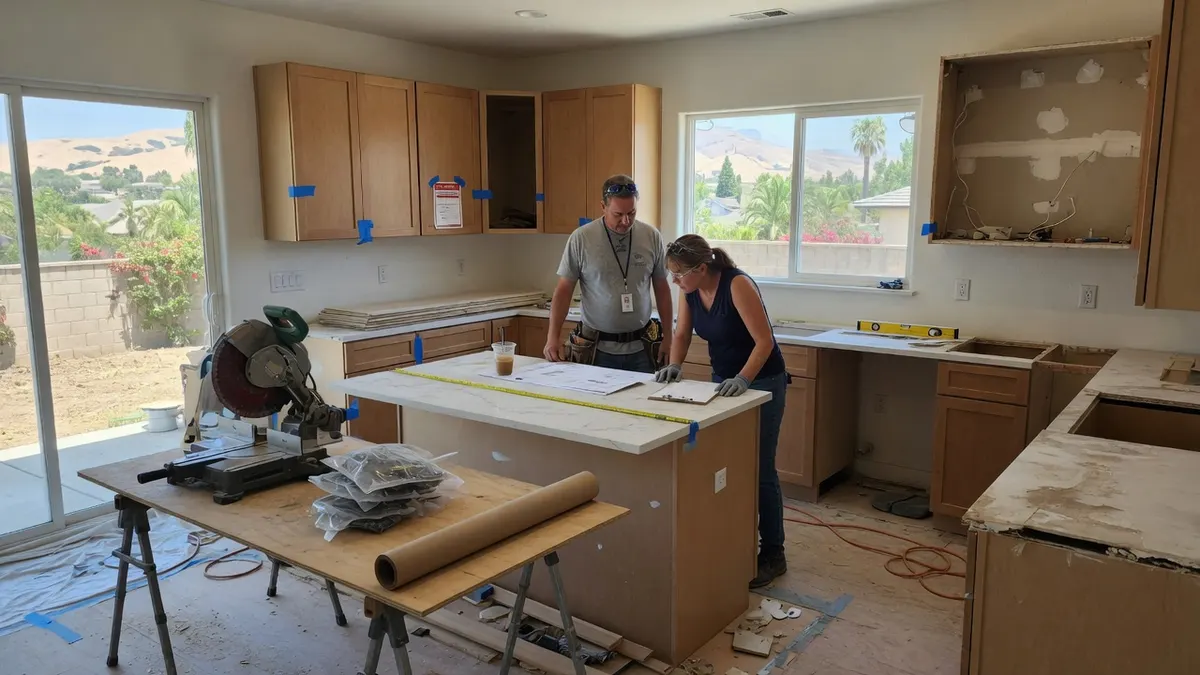
Elk Grove Kitchen Remodel Costs: Permits, Layout Changes, and Contractor Scope
Kitchen remodels in Elk Grove can look simple from the outside. New cabinets, new counters, better lighting, fresh flooring, and a nicer sink all sound like finish choices. The expensive part is usually what happens behind those finishes: electrical capacity, plumbing location, wall removal, ventilation, appliance circuits, subfloor condition, permits, and the order in which every trade has to show up.
Elk Grove has a wide mix of homes, from Laguna and Stonelake subdivisions to older rural properties, infill homes, and newer houses near Franklin, Sheldon, and East Elk Grove. A kitchen in a 1990s tract home may have different issues than a newer open-concept home or an older property with additions. Some kitchens mainly need better storage and surfaces. Others need a full systems plan before a single cabinet is ordered.
This guide explains realistic 2026 kitchen remodel cost ranges in Elk Grove, when permits commonly come into play, what layout changes usually add to the budget, and how to compare contractor bids without getting distracted by cabinet photos alone.
Typical 2026 Kitchen Remodel Cost Ranges in Elk Grove
Most Elk Grove kitchen projects fall into one of these planning ranges:
- Cosmetic refresh: $8,000 to $25,000 for paint, cabinet hardware, lighting swaps, faucet replacement, simple backsplash, and limited surface upgrades without moving plumbing or changing cabinets.
- Cabinet and surface replacement: $25,000 to $60,000 for new stock or semi-custom cabinets, counters, sink, backsplash, flooring tie-ins, basic electrical updates, and appliance reconnects.
- Mid-range full kitchen remodel: $60,000 to $120,000 for demolition, cabinets, counters, lighting, appliance circuits, plumbing adjustments, flooring, drywall, paint, permits, and coordinated trade work.
- Layout-change remodel: $110,000 to $220,000 or more when walls move, islands are added, windows or doors change, gas lines relocate, panel capacity is reviewed, structural work is needed, or the kitchen opens into adjacent rooms.
- High-end or whole-house connected remodel: $200,000 and up when custom cabinetry, premium appliances, structural beams, wide flooring replacement, major electrical work, and larger living area changes are included.
These ranges are not quotes. They are a way to spot whether a bid is in the right universe. A low kitchen price may exclude appliances, permits, counters, backsplash, flooring transitions, painting, electrical corrections, or change-order allowances. A higher price may be reasonable if the contractor is carrying a complete scope, managing permits, and planning for hidden conditions.
Why Layout Changes Cost More Than They Look
The biggest budget jump usually comes from changing the footprint. Moving a sink means drain, vent, water line, cabinet, counter, and often floor work. Moving a range can involve gas piping, a dedicated electrical circuit, hood ducting, fire clearances, and cabinet changes. Adding an island may require floor outlets, lighting changes, clear walkway planning, and slab or crawl space access.
Wall removal is even more sensitive. Many Elk Grove kitchens connect to family rooms, dining areas, or hallways. Removing a wall may require engineering, a beam, posts, footing review, rerouted electrical, HVAC adjustments, drywall blending, flooring patching, and ceiling texture work. The visible opening is only one part of the project.
Before committing to a layout, ask the contractor how they confirmed whether walls are load-bearing, where plumbing and electrical run, and whether the budget includes engineering or structural hardware if needed. A design that looks clean on paper can become expensive if it ignores the house underneath it.
Permits and Inspections
Permit requirements depend on the exact address and scope, but Elk Grove homeowners should expect permits when a kitchen remodel changes electrical, plumbing, mechanical ventilation, gas lines, framing, windows, doors, or structural elements. A simple cabinet refacing job may be different from a full gut remodel with new circuits and a moved sink.
A permitted kitchen remodel may involve rough electrical inspection, rough plumbing inspection, mechanical or hood ventilation review, framing inspection if walls change, insulation inspection if exterior walls are opened, and final inspection. If the project includes a service panel upgrade or new appliance loads, electrical planning may need to happen before cabinet orders are finalized.
Permits add time, but they also create a record of the work. That record matters for resale, insurance questions, and future projects. California contractor licensing rules also matter. Home improvement work over $1,000 in labor and materials generally requires a licensed contractor. Homeowners can verify a license, bond, and workers' compensation status through the Contractors State License Board at cslb.ca.gov.
Electrical Planning Is Not Optional
Modern kitchens use more power than older kitchens were designed for. Induction ranges, convection ovens, microwave drawers, wine refrigerators, dishwashers, disposals, under-cabinet lighting, dedicated coffee stations, and island outlets can all affect the electrical plan. Even if the main panel does not need replacement, the kitchen may need new dedicated circuits or GFCI and AFCI protection depending on the scope.
Older Elk Grove kitchens may have too few receptacles, awkward switching, limited lighting, or circuits shared with adjacent rooms. A remodel is the right time to fix those problems because walls, cabinets, and ceilings may already be open. Waiting until after the backsplash and cabinets are installed makes corrections harder and more expensive.
Ask whether the bid includes a written electrical scope. It should identify appliance circuits, outlet locations, island power, lighting zones, under-cabinet lighting, switches, code-required protections, and whether the existing panel has capacity. If EV charging, solar, battery storage, or electrification upgrades are planned later, mention them before the kitchen design is locked.
Plumbing, Ventilation, and Appliances
Plumbing scope can range from simple fixture replacement to major drain relocation. Moving a sink across the room is not just a water line change. The drain needs proper slope and venting, and the path may be limited by floor framing, slab conditions, or other rooms. Pot fillers, second sinks, ice makers, and filtered water systems add small conveniences but also add points of failure if they are poorly planned.
Ventilation deserves the same attention. A powerful range or cooktop should have a realistic hood plan, not just a decorative canopy. Duct route, exterior termination, make-up air questions, cabinet clearances, noise, and ceiling conditions can affect the final result. Recirculating hoods may be acceptable in some situations, but they do not remove moisture and cooking byproducts the same way a ducted hood does.
Appliance selection should happen early. Cabinet dimensions, outlet locations, gas connections, water lines, ventilation, panel capacity, and countertop openings all depend on real appliance specifications. Choosing appliances after cabinets are ordered is a reliable way to create expensive compromises.
Cabinets, Counters, and Flooring
Cabinets drive both cost and schedule. Stock cabinets may be faster and less expensive, but sizes and finishes are limited. Semi-custom cabinets offer more flexibility. Custom cabinets can solve difficult layouts but increase lead time and price. The bid should state whether cabinets are included, who measures, who handles design drawings, what hardware is included, and how damaged or out-of-square walls will be handled.
Countertops should be priced with edge detail, sink cutout, cooktop cutout, backsplash decisions, slab count, seams, and tear-out included. A simple quartz counter may be straightforward. A large island with waterfall panels, full-height backsplash, or difficult access can change the number quickly.
Flooring is another common hidden scope item. If cabinets are removed, the existing floor may not continue underneath. If walls move, old flooring may leave gaps. Matching older tile, laminate, or hardwood can be difficult. Some projects need new flooring through the kitchen, dining area, hallway, and family room so the remodel does not look patched.
Timeline Expectations
A cosmetic kitchen refresh can take a few days to a few weeks depending on materials. A full kitchen remodel commonly takes eight to sixteen weeks once construction begins, not counting design, cabinet lead time, permit review, or appliance delays. Layout changes, structural work, custom cabinets, inspections, and countertop fabrication can stretch the schedule.
The kitchen is usually the hardest room to live without. Before demolition, ask for a temporary kitchen plan, dust control plan, work-hour expectations, material staging area, and decision deadline calendar. The project should not begin until cabinets, appliances, plumbing fixtures, lighting, flooring, and tile are selected or at least ordered with confirmed lead times.
What a Complete Kitchen Bid Should Include
A useful kitchen remodel bid should identify:
- Demolition scope and debris hauling
- Cabinet line, layout drawings, hardware, trim, and installation details
- Countertop material, edge, backsplash, sink, cutouts, and fabrication scope
- Appliance models or allowances, including installation and connection assumptions
- Plumbing changes, sink location, disposal, dishwasher, water lines, and gas work
- Electrical circuits, lighting, outlets, panel capacity, and required protections
- Ventilation method, hood ducting, and exterior termination
- Wall removal, framing, engineering, beam work, and drywall repair if applicable
- Flooring removal, patching, replacement, and transitions to adjacent rooms
- Permit responsibility, inspection schedule, and code-related corrections
- Paint, texture, trim, cleanup, warranty, and change-order pricing
If one bid includes permits, electrical circuits, ventilation ducting, countertop fabrication, drywall, flooring transitions, and painting while another only lists cabinets and counters, they are not competing bids. They are different scopes.
Final Planning Advice
For most Elk Grove homeowners, the safest kitchen budget includes the contract price plus a 10% to 20% contingency for hidden conditions, layout discoveries, electrical corrections, and finish decisions that change after demolition. If walls are moving, plumbing is relocating, or the home has older wiring or prior remodel work, plan toward the higher end of that contingency.
A good kitchen remodel should improve daily life without creating future headaches. The best projects start with a clear scope, licensed contractors, real appliance selections, permit planning, and honest discussion about what the existing house can support. Photos matter, but the durable value is in the parts of the kitchen that still work after the novelty wears off.
Browse licensed kitchen remodel contractors in the Sacramento area, or search for professionals serving Elk Grove, Sacramento, Laguna, and nearby communities.
Who to Hire for This Project
For the work covered in this guide, these are the contractor types to contact and the CSLB classification to verify before you take quotes:
Questions to Ask Before You Sign
- "Is your CSLB license active and bonded?" Verify it yourself at cslb.ca.gov the license number must appear on their bid.
- "Who pulls the permit, and is it included in the bid?" The contractor should handle any required permits a pro who suggests skipping one is a red flag.
- "Can you itemize labor, materials, and allowances?" Itemized bids are the only way to compare quotes on the same scope.
- "What's the payment schedule?" California caps the down payment at $1,000 or 10%, whichever is less payments should track completed work.
- "Who from this area can I call as a reference?" Ask for a recent local job of similar scope, not just photos.
Sacramento Contractors for This Project
Related Articles
Natomas Kitchen Island Planning: Slab Cuts, Electrical, Plumbing, and Permit Questions
August 14, 2026
Sacramento Kitchen Ventilation and Range Hood Guide: Duct Routes, Makeup Air, Cabinets, and Remodel Planning
August 10, 2026
Sacramento Range Hood Installation Cost Guide: Ducting, Makeup Air, and Kitchen Remodel Planning
July 5, 2026
Frequently Asked Questions
How much does a kitchen remodel cost in Elk Grove? +
A cosmetic refresh may cost $8,000 to $25,000, cabinet and surface replacement often runs $25,000 to $60,000, and a full mid-range kitchen remodel commonly lands between $60,000 and $120,000. Layout changes, structural work, premium appliances, and custom cabinets can push projects well above $120,000.
Do Elk Grove kitchen remodels need permits? +
Permits are commonly needed when a kitchen remodel changes electrical, plumbing, gas, mechanical ventilation, framing, windows, doors, or structural elements. A simple cosmetic update may be different, but a full remodel should include a clear permit plan.
What is the biggest hidden cost in a kitchen remodel? +
Electrical and layout changes are common hidden cost drivers. New appliance circuits, island power, panel capacity questions, wall removal, plumbing relocation, ventilation ducting, and flooring patching can all add cost beyond cabinets and counters.
How long does a full kitchen remodel take? +
A full kitchen remodel often takes eight to sixteen weeks once construction starts. Design, permit review, cabinet lead times, appliance delays, countertop fabrication, inspections, and structural changes can extend the overall calendar.