Roseville Pool Equipment Upgrades Before Summer: Pumps, Electrical, and Noise
The pool usually looks ready before the equipment is ready.
In Roseville, that is how a lot of early-summer pool projects start. The water is clear enough, the kids are already asking when they can swim, and the backyard looks usable from the patio door. Then the pump starts whining, the filter pressure creeps up, the heater takes forever, the automation panel is half-mysterious, or a neighbor mentions that the equipment is louder than it used to be.
One contractor says a new pump will solve it. Another asks about electrical capacity, bonding, pipe layout, filter size, heater age, noise placement, drainage around the pad, and whether the project touches a permit. The second conversation is slower, but it is usually the one that protects your budget.
A pool equipment upgrade is not always a pool remodel. It can be a tight, practical project. But the estimate needs to separate equipment replacement from electrical work, plumbing changes, automation, concrete pad repair, code details, and warranty responsibility.
Use this chart before comparing pool equipment bids. A pump price is not ready to compare until filter capacity, electrical safety, heater scope, controls, noise, and pad access are visible.
Why Roseville Pool Equipment Deserves Its Own Scope
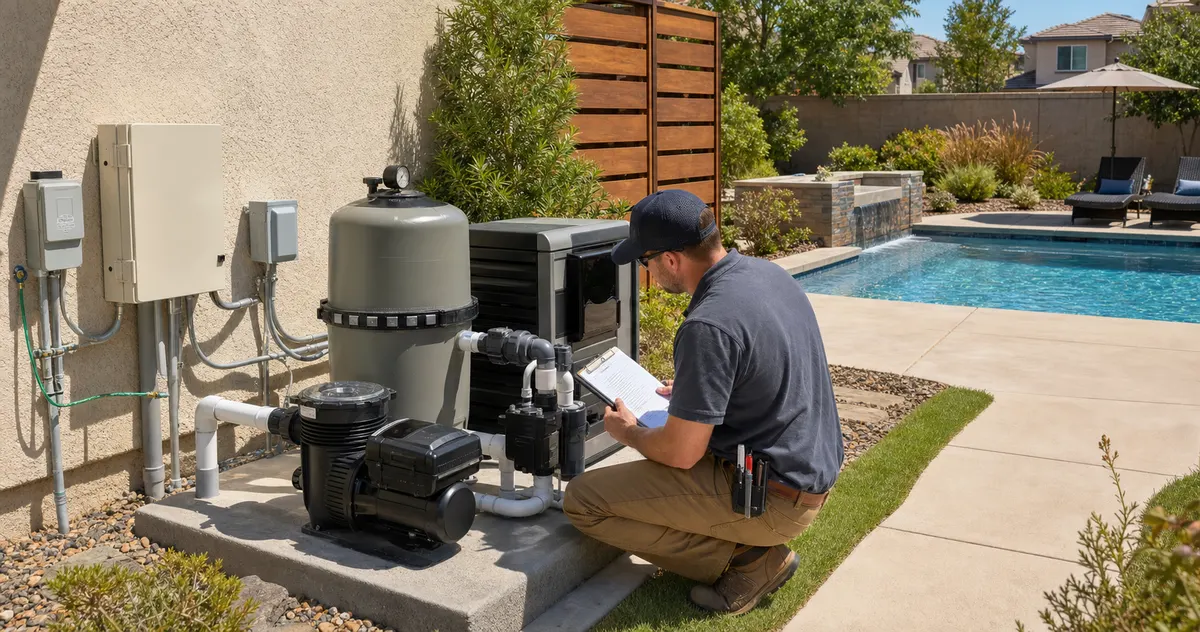
Roseville has plenty of backyard pools built during the 1990s, 2000s, and 2010s. Many still look current from the patio, but the equipment pad may be a mix of original parts, later repairs, aging valves, a single-speed pump that runs loud, a filter that needs constant cleaning, and controls that only one person in the household understands.
The equipment pad is where comfort, energy use, safety, and maintenance meet. A pool can have a beautiful deck and still be annoying to own if the pump schedule is wasteful, the filter is undersized, the heater is limping, or the electrical setup makes future service harder.
The mistake is treating the equipment pad like a shopping list. A variable-speed pump is often a good upgrade, but it should be selected around flow needs, filter size, pipe layout, pool features, cleaner type, heater requirements, automation, and how the homeowner actually uses the pool.
Start With the Symptom, Not the Product
Before asking for quotes, write down what is actually bothering you. Is the pump loud? Is the water cloudy even with normal chemistry? Does the pressure gauge climb quickly after cleaning? Is the heater unreliable? Are valves hard to move? Does the pool cleaner stall? Does the breaker trip? Are you trying to reduce electric bills, add phone controls, or prepare the pool before selling the house?
Those answers change the contractor you need. A noisy motor may be a straightforward pump replacement. Cloudy water may point to filtration, chemistry, run time, plumbing bypasses, or a maintenance problem. A heater issue may involve gas sizing, venting, electrical controls, or equipment age. A breaker trip or questionable bonding is not a pool-service guess; it needs a licensed electrical conversation.
Take photos of the equipment pad before calling. Include the pump label, filter model, heater label, electrical boxes, valves, plumbing runs, and the distance to fences, bedrooms, neighbors, and gates. A wide photo helps the contractor see access, pad condition, and whether a larger filter or sound screen will actually fit.
Match the Contractor to the Real Work
For equipment replacement, start with a licensed pool contractor or pool equipment specialist who can document recent pump, filter, heater, and automation work. In California, swimming pool construction and major pool equipment work commonly falls under a C-53 swimming pool contractor license. Some scopes may also involve a B general contractor when the work expands into concrete, drainage, fencing, or multiple trades.
Bring in a licensed electrician for new circuits, panel work, bonding corrections, GFCI protection, disconnects, automation wiring, or anything that changes the electrical system. Bring in a plumber or gas-qualified contractor if a gas heater replacement raises gas line sizing, shutoff, venting, or pressure questions. A concrete contractor may belong in the scope if the equipment pad is cracked, too small, poorly drained, or sinking.
A weekly pool service can be excellent for maintenance, cleaning, chemistry, and spotting problems early. That does not automatically make them the right lead for electrical changes, gas work, equipment-pad rebuilds, or permitted replacement work. Ask who performs each part of the job and whose license covers it.
What a Useful Estimate Should Separate
For Roseville homeowners, a simple pool pump replacement might land around $1,200 to $3,500 depending on model, controls, plumbing changes, and electrical condition. Pump plus filter upgrades often move into the $2,500 to $6,500 range. Add a heater, automation, pad repair, electrical work, or gas changes and the project can reach $6,500 to $18,000-plus.
Ask each bidder to separate:
- Pump selection. Variable-speed model, horsepower, flow assumptions, cleaner compatibility, schedule setup, warranty, and who registers the equipment.
- Filter capacity. Cartridge, DE, or sand filter choice, size, pressure gauge, cleaning clearance, and whether the filter is matched to the pump and pool volume.
- Heater scope. Gas or heat pump choice, BTU sizing, gas line assumptions, electrical needs, venting, clearances, and startup procedure.
- Automation. App controls, timers, freeze protection, pool and spa modes, lighting control, valve actuators, and who teaches the homeowner how to use it.
- Electrical and bonding. GFCI protection, disconnects, conduit, bonding wire, panel capacity, permits, inspections, and who owns corrections.
- Plumbing and valves. Pipe size, unions, bypasses, check valves, cleaner lines, leaks, valve labels, and whether old brittle plumbing will be replaced.
- Pad and access. Concrete pad condition, drainage, required clearances, gate access, sound screens, landscape repair, and debris removal.
If the bid only says "replace pool pump," it is not detailed enough for a full equipment-pad decision.
Permits, Electrical Safety, and Noise Questions
Routine maintenance is different from replacing equipment, altering wiring, adding circuits, changing gas connections, or rebuilding the equipment pad. Roseville homeowners should ask the contractor to confirm when the City of Roseville requires permits and inspections for the actual scope. Do not rely on what a neighbor did five years ago.
Electrical details deserve more respect than they often get. Pool equipment lives near water and requires proper protection, bonding, disconnect access, and weather-rated components. If the existing pad has old conduit, improvised wiring, tripped breakers, corroded boxes, or missing labels, ask for an electrical review before adding smarter equipment to a questionable setup.
Noise matters too. A new variable-speed pump can be much quieter than an old single-speed unit, but heater fans, equipment placement, fence reflection, bedroom walls, and neighbor setbacks still matter. If the pad sits beside a bedroom or property line, ask whether speed programming, equipment orientation, pad vibration, or a compliant sound screen belongs in the scope.
When a Pump Upgrade Is Not Enough
A pump is easy to blame because you can hear it. But the pump may not be the only problem. A filter that is too small can make the pump work harder. Old valves can restrict flow. A heater bypass can be wrong. A suction leak can create bubbles and poor priming. An oversized pump can waste energy and make plumbing noise worse.
Ask the contractor to explain how they will confirm the system is balanced after installation. That may include checking filter pressure, flow behavior, priming, valve positions, cleaner operation, heater startup, automation schedules, and visible leaks. The best finish is not just a quiet new motor. It is a system the homeowner understands and can maintain.
If you are planning a larger backyard project later, say that early. Pool equipment location affects patio work, outdoor kitchens, retaining walls, landscape lighting, drainage, and future pool remodels. Moving equipment later is much more expensive than planning clearance and access now.
Red Flags in Pool Equipment Bids
A few warning signs should slow the project down:
- The contractor recommends a pump model without looking at filter size, plumbing, heater, and cleaner setup.
- Electrical work is waved off even though breakers, conduit, bonding, or controls are being changed.
- The bid does not say who pulls permits or schedules inspections if they are required.
- A heater replacement is priced without gas line, venting, clearance, or startup assumptions.
- Automation is sold as simple, but no one will label valves or teach the household how to use it.
- The equipment pad has obvious cracks, drainage problems, or tight clearances and the estimate ignores them.
Good pool contractors are practical. They should be able to explain what is worth replacing now, what can wait, and what should be handled by another licensed trade.
Questions to Ask Before You Sign
- What problem are we solving first: noise, energy use, water clarity, heater reliability, automation, or safety?
- Is the pump being matched to my filter, plumbing, cleaner, heater, and pool features?
- Does this scope require a Roseville permit, electrical inspection, gas work, or another licensed trade?
- What electrical protection, bonding, disconnect, conduit, and panel details will you verify?
- Will the equipment be quieter at the speeds I actually need to run?
- Are valves, unions, labels, leak testing, startup, and homeowner training included?
- What happens if old plumbing cracks or the equipment pad needs repair after removal?
- Which warranties apply to equipment, installation labor, and any electrical or plumbing work?
If the written estimate cannot answer those questions, ask for a clearer scope before approving the work.
Internal Homework Before You Hire
For local context, start with our Roseville contractor guide, compare licensed pool contractors, electrical contractors, plumbing contractors, concrete contractors, and general contractors. Use the contractor search when you are ready to build a shortlist.
For related planning, pair this with our Sacramento pool cost guide, pool contractor guide, pool remodel decision guide, pool deck safety guide, electrical panel upgrade guide, and California permit basics.
The Bottom Line
A Roseville pool equipment upgrade should make the pool easier to own, not just newer to look at. Start with the symptom, match the pump and filter to the whole system, take electrical and bonding seriously, and make noise, permits, access, and training part of the written scope. The right contractor will leave you with equipment that is quieter, safer, easier to understand, and ready for the long summer run.
Who to Hire for This Project
For the work covered in this guide, these are the contractor types to contact and the CSLB classification to verify before you take quotes:
Questions to Ask Before You Sign
- "Is your CSLB license active and bonded?" Verify it yourself at cslb.ca.gov the license number must appear on their bid.
- "Who pulls the permit, and is it included in the bid?" The contractor should handle any required permits a pro who suggests skipping one is a red flag.
- "Can you itemize labor, materials, and allowances?" Itemized bids are the only way to compare quotes on the same scope.
- "What's the payment schedule?" California caps the down payment at $1,000 or 10%, whichever is less payments should track completed work.
- "Who from this area can I call as a reference?" Ask for a recent local job of similar scope, not just photos.