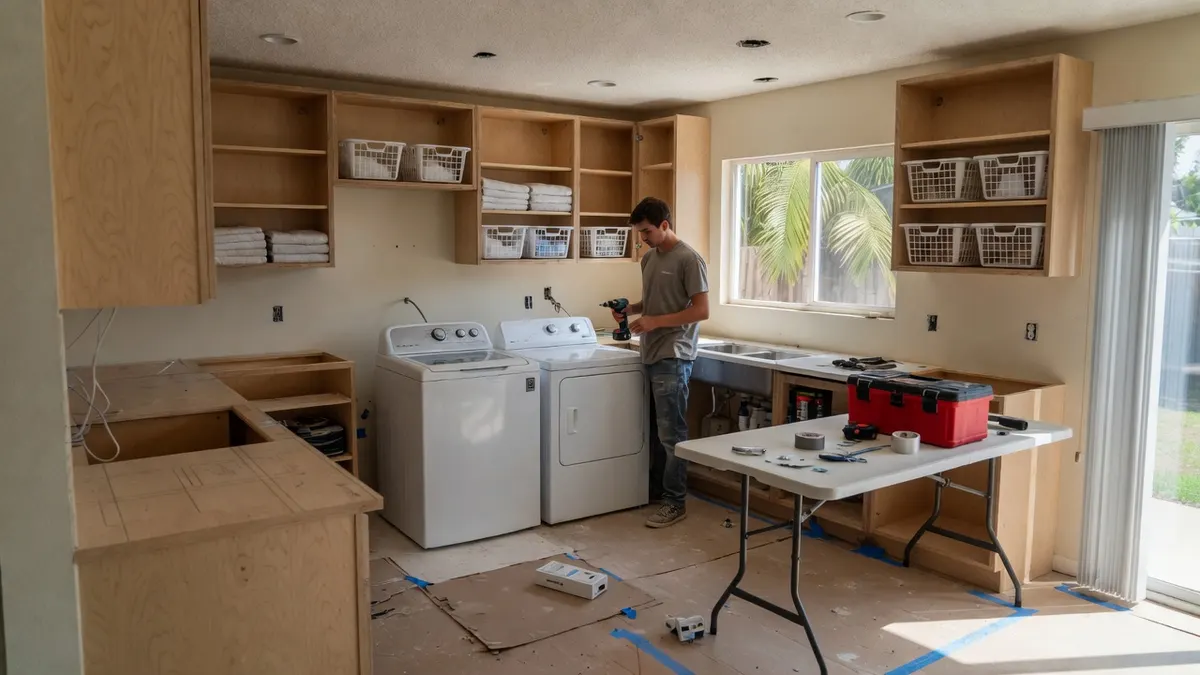
Roseville Laundry Room Remodels That Fix Storage and Workflow
A Roseville laundry room usually sits in one of two spots: a closet-sized cubby off the bedroom hall, or a pass-through between the garage and kitchen that quietly turns into the busiest square footage in the house. That second kind is where the trouble starts. Backpacks land on the dryer. The recycling stacks up by the door. There is one wobbly shelf above the machines holding three years of detergent and a single sock that nobody claims. None of it is a disaster, exactly, but every load of laundry becomes an obstacle course, and that is the real reason most people here finally decide to remodel.
The good news is that a laundry room is one of the few rooms where smart planning pays off immediately. You are not chasing trends. You are fixing the way the room works on a Tuesday night.
Start with the path your laundry actually travels
Before anyone talks cabinets or tile, walk the room with a basket in your hands. Where does the dirty laundry come in? Where do you sort it? Where does the clean, folded stuff go before it makes it back to a dresser? In a lot of Roseville homes, that flow is broken because the room was never designed for it; it was just the leftover space near the water hookups.
A remodel worth paying for solves that sequence. That usually means a stretch of counter deep enough to fold on, a hanging rod or two for shirts that cannot go in the dryer, and storage that puts the things you grab daily at arm level instead of on a step stool. Once the workflow is right, everything else is detail. Get it wrong and you will have a beautiful room that still annoys you every week.
What a Roseville laundry remodel actually runs
Pricing covers a wide range here, and the spread is honest rather than evasive. A straightforward refresh sits near the bottom; a full reconfiguration with relocated appliances sits near the top. Across the Sacramento Valley, plan for roughly $6,000 to $28,000 depending on scope. The big cost drivers are cabinetry, counter material, plumbing valves, dryer venting, durable flooring, and lighting you can actually see by.
The dividing line between a quick update and a real remodel is appliance movement. Leave the washer and dryer where they are and you stay cheap. Move them to the other wall and you are now into plumbing, venting, and possibly electrical, which is where the budget climbs. Whatever the number, set aside a contingency, especially in older homes where past work may not match current code or have any paperwork behind it.
When you collect estimates, the cheapest one is rarely the most useful. A good bid spells out materials, labor, what is excluded, permit responsibility, cleanup, and warranty terms. If two quotes are thousands apart, the gap usually lives in the assumptions, not the contractor's honesty. Compare those before you decide anyone is overcharging. You can build a shortlist of general contractors and licensed plumbing pros through our contractor search when you reach that stage.
The stuff hiding behind the drywall
Laundry rooms punch above their weight in surprises because so many systems converge in a small box: water supply, a drain, a gas or electric dryer connection, venting, and often a shared wall with the garage. Ask your contractor what they expect to find before they open anything up. Old galvanized supply lines, a dryer vent that runs too far or kinks behind the wall, a drain that was never properly trapped, the occasional patch of moisture damage under the machines, these are the things that turn a clean schedule into a change order.
A few details separate a professional job from a patch:
- A washer drain pan and a proper standpipe height, not a hose jammed into a floor drain.
- A dryer vent routed the short, smart way, because a long lazy run is a fire and lint problem.
- Cabinet clearances that still let you pull a machine out for service without dismantling the room.
- Moisture-resistant flooring that shrugs off the inevitable overflow.
Get every change in writing too. A change order should state the new price, the schedule hit, and the reason. That single habit prevents most end-of-job arguments.
License checks and Roseville permit reality
In California, the contractor's license is not a formality, it is your protection. Any home improvement work priced at $1,000 or more in combined labor and materials requires a contractor licensed by the CSLB. Verify that license number yourself at the CSLB website, and confirm the contractor carries liability insurance and workers' compensation. Take ten minutes on this; it is the cheapest insurance you will ever buy.
Permits depend on what you touch. Move or add plumbing, alter the gas line for a dryer, change electrical circuits, or reroute the vent, and the City of Roseville will want a permit and an inspection. If your laundry room shares a wall with the garage, the fire-rated separation has to be maintained when the wall is opened, and an inspector will look for it. Cosmetic-only updates, swapping cabinets and counters without moving systems, often skip the permit entirely, but let your contractor make that call and put their answer in the contract. If your project sits near a city line, remember that a Roseville job can follow different steps than the same work in Rocklin one neighborhood over.
On timing, interior work like this is easier to schedule in the cooler shoulder seasons, since spring and summer crews around here are buried in roofing, HVAC, and exterior jobs. Material lead times on cabinets and specialty counters still need confirming up front, no matter the season.
So before the first contractor walks in, do the homework yourself. Pull everything out of the room, take photos, and write down the three things that bother you most, whether that is no folding space, a vent that never dries clothes fully, or storage you cannot reach. Rank them. Then compare at least three licensed contractors and hand them that list. You will get sharper bids, fewer surprises, and a room that finally keeps up with how your household actually does laundry.
Who to Hire for This Project
For the work covered in this guide, these are the contractor types to contact and the CSLB classification to verify before you take quotes:
Questions to Ask Before You Sign
- "Is your CSLB license active and bonded?" Verify it yourself at cslb.ca.gov the license number must appear on their bid.
- "Who pulls the permit, and is it included in the bid?" The contractor should handle any required permits a pro who suggests skipping one is a red flag.
- "Can you itemize labor, materials, and allowances?" Itemized bids are the only way to compare quotes on the same scope.
- "What's the payment schedule?" California caps the down payment at $1,000 or 10%, whichever is less payments should track completed work.
- "Who from this area can I call as a reference?" Ask for a recent local job of similar scope, not just photos.
Sacramento Contractors for This Project
Related Articles
Frequently Asked Questions
How much does a laundry room remodel cost in Roseville? +
Across the Sacramento Valley, plan for roughly $6,000 to $28,000 depending on scope. A cosmetic refresh that keeps the washer and dryer in place sits near the bottom of that range, while a full reconfiguration that relocates appliances and adds cabinetry lands near the top. Cabinetry, counters, plumbing valves, dryer venting, flooring, and lighting are the main cost drivers.
Do I need a permit to remodel my laundry room in Roseville? +
It depends on what you touch. Moving or adding plumbing, altering the gas line for a dryer, changing electrical circuits, or rerouting the vent will require a permit and inspection from the City of Roseville. Purely cosmetic work, like swapping cabinets and counters without moving any systems, often does not. Have your contractor confirm the permit scope in writing before work begins.
Does a laundry room contractor in California need a CSLB license? +
Yes. Any home improvement work priced at $1,000 or more in combined labor and materials must be done by a contractor licensed through the California State License Board. Verify the license number directly on the CSLB website and confirm the contractor carries liability insurance and workers' compensation before signing anything.
What is the most important thing to plan in a laundry room remodel? +
The workflow, meaning the path your laundry travels from dirty to sorted to folded to put away. Many Roseville laundry rooms were never designed for that sequence; they were just the leftover space near the water hookups. Getting the counter space, hanging zones, and reachable storage right matters far more than the backsplash.
Why does moving the washer and dryer make a remodel so much more expensive? +
Relocating appliances turns a simple cosmetic update into a systems project. New positions require plumbing supply and drain work, dryer vent rerouting, and often electrical changes, all of which add labor and usually trigger permits and inspections. Keeping the machines on their existing wall is the single biggest way to control cost.
What hidden problems show up in older Roseville laundry rooms? +
Common surprises include aging galvanized supply lines, dryer vents that run too far or kink behind the wall, drains that were never properly trapped, and moisture damage under the machines. If the room shares a wall with the garage, the fire-rated separation also has to be preserved when the wall is opened. Set aside a contingency budget so these do not derail the project.