Roseville Exterior Paint Planning: HOA Colors, Summer Heat, and Prep That Lasts
The paint problem usually starts on the side of the house nobody photographs.
A Roseville homeowner gets the HOA reminder, notices chalky stucco near the garage, sees peeling fascia above a second-story window, and starts thinking the job is just color. Then the first painter asks whether the color change is approved, whether the hairline stucco cracks are cosmetic or moving, whether the trim is soft under the peeling paint, whether the patio cover posts need repair, and whether the work can be scheduled before the next run of 100-degree afternoons.
That is when an exterior paint project becomes a scope project. The color matters, but the prep, approvals, repairs, weather window, and license fit decide whether the paint still looks right after two Roseville summers.
Use this chart before comparing bids. A Roseville paint estimate is not ready until prep, HOA color approval, repair allowances, weather timing, access, and masking are visible.
Start With the Surfaces, Not the Color
Roseville has plenty of homes from the 1990s, 2000s, and newer master-planned neighborhoods where the original color schemes are aging at different speeds. South and west elevations take the hardest UV hit. Garage doors, fascia, foam trim, shutters, front doors, patio covers, and exposed stucco bands often show failure before the protected walls do.
Walk the house before choosing a color. Rub your hand across the stucco. If it comes away dusty, the surface is chalking. Look under window trim and along fascia boards for peeling paint, open joints, dark staining, or soft wood. Check stucco cracks at corners, hose bibs, garage returns, and where walls meet hardscape. If irrigation sprays the wall, note it. If a gate, side yard, or pool equipment blocks access, photograph that too.
Those details tell a painter whether the project is mostly wash, prep, prime, and repaint, or whether the house needs carpentry, stucco patching, siding repair, caulking, and better water control before paint goes on.
HOA Color Approval Can Be the Real Start Date
In many Roseville neighborhoods, exterior color is not just a design choice. The HOA may require an approved palette, a submittal form, sample board, neighbor-facing elevation notes, or architectural review before work starts. Some associations are relaxed when you repaint the same body and trim colors. Others care about front doors, garage doors, shutters, accent colors, sheen, and whether the color looks different in direct sun.
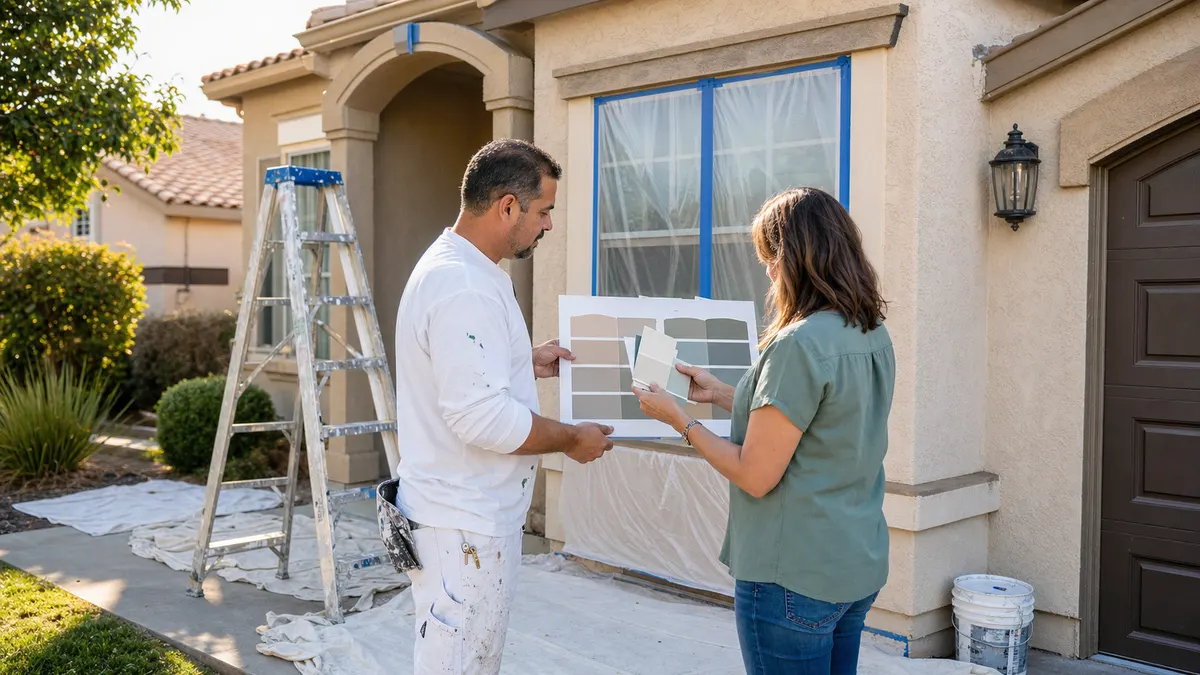
Do not buy gallons of paint based on a tiny chip. Ask for sample patches on the actual stucco and trim, then look at them morning, afternoon, and early evening. Roseville light can turn a warm gray beige, make a white look harsh, or make a dark accent read hotter than expected.
If you are changing colors, ask the painter whether the bid includes sample patches and whether the start date assumes HOA approval is already complete. A good contractor can help with color documentation, but the homeowner usually remains responsible for HOA approval unless the contract says otherwise.
Prep Is the Job You Are Paying For
Exterior painting fails early when the prep is vague. "Power wash and paint" is not enough detail for a house with chalking stucco, cracked caulk, peeling trim, and sun-baked fascia.
A useful Roseville exterior paint scope should explain:
- Cleaning. Whether the home will be washed, how mildew or dust will be handled, and how long surfaces dry before primer or paint.
- Scraping and sanding. Which peeling areas are scraped, feather-sanded, or spot-primed.
- Stucco cracks. Which cracks are patched, which are monitored, and which may point to movement, water, or drainage issues.
- Caulking. Which joints get caulked, what product is used, and whether failed old caulk is removed first.
- Primer. Whether chalky surfaces, bare wood, stains, and repairs get primer before finish coats.
- Masking. Windows, pavers, landscaping, light fixtures, cameras, solar equipment, and pool areas need protection.
- Wood repair. Who replaces soft fascia, trim, or siding before the painter seals it in.
- Finish coats. Paint brand or product line, sheen, number of coats, spray versus back-roll assumptions, and warranty terms.
If the estimate does not describe prep, you are comparing paint prices without knowing what is being painted over.
Heat, Wind, and Smoke Change the Schedule
Summer exterior painting in Roseville is possible, but it has to be managed. Paint manufacturers publish temperature and surface-condition limits, and the wall surface can be much hotter than the air temperature by midafternoon. Wind can push overspray toward cars, neighbors, pools, or fresh concrete. Wildfire smoke days can leave fine residue on surfaces that were clean the day before.
Ask how the crew works around heat. Some painters start early, follow the shade around the house, avoid painting sun-baked walls, and stop exterior application when conditions are outside the product range. That is not delay for its own sake. It is what keeps paint from flashing, drying too fast, or failing to bond.
Also ask how weather delays affect your schedule. A good bid should say whether the contractor will pause for heat, wind, smoke, rain, or surface moisture, and how they protect a partially prepped house if the schedule moves.
What a Useful Estimate Should Separate
A simple one-story Roseville repaint with sound surfaces may land in the mid-thousands. A larger two-story home with stucco cracks, trim repair, multiple colors, detailed masking, patio covers, and HOA sample work can move into the $10,000 to $25,000 range. If the project uncovers fascia replacement, siding repair, stucco patching, dry rot, scaffold access, or broader exterior repairs, the total can climb higher.
Ask each bidder to separate:
- Prep labor. Washing, scraping, sanding, caulking, priming, crack repair, and dry time.
- Repairs. Wood trim, fascia, siding, stucco, door frames, patio covers, and who performs each repair.
- Paint system. Product line, primer, finish coats, sheen, body/trim/accent colors, and sample patches.
- Access. Two-story elevations, tight side yards, pool areas, sloped lots, landscaping, solar equipment, and ladder or lift needs.
- Masking and protection. Windows, roof edges, pavers, plants, cameras, lights, and neighboring property.
- Approvals. HOA submittal assumptions, sample boards, city permit questions if repairs go beyond paint, and who handles them.
- Warranty. What is covered, for how long, and what maintenance or irrigation conditions can void it.
Two bids that differ by several thousand dollars may both be reasonable if one includes repair and primer that the other skipped. Compare the scope before the total.
Which Contractor Should You Call?
Start with a licensed painting contractor for a true exterior repaint. In California, that usually means a C-33 painting and decorating contractor. For a straightforward wash, prep, prime, and repaint, the painter can often be the lead.
Bring in another trade when the paint is exposing a different problem. A siding contractor or general contractor may be needed for damaged siding, fascia replacement, trim rebuilding, or water-damaged exterior details. A stucco specialist or general contractor may be needed when cracks, bulges, or delamination are more than cosmetic. A roofer may need to look at failed fascia, gutters, or roof-edge water paths if the damage starts at the eaves. A window contractor may belong in the conversation if leaks, failed trim, or window replacement are part of the scope.
The lead contractor does not have to personally perform every trade. They do need to say who is responsible for each part before work starts.
Permits and Licensing in Roseville
Ordinary repainting is usually not the same as structural exterior work. But do not treat every paint-adjacent repair as "just paint." Replacing siding, rebuilding trim, repairing dry rot, altering exterior walls, changing windows, moving exterior lights, or doing other construction can change the permit path. Roseville's Building Division handles permit applications digitally, and the city code separates many repair and maintenance items from discretionary design review, but your exact scope still matters.
Ask the painter:
- Is this only repainting, or are there repairs that may require another licensed trade?
- If we replace fascia, siding, stucco, or windows, who checks the permit requirement?
- Is HOA approval required before work starts?
- Are sample patches and color documentation included?
- Who is responsible if the HOA asks for a color correction?
California licensing also matters. CSLB guidance updated for 2025 raised the minor-work exemption to $1,000, but the exemption does not apply when the work requires a permit or when the unlicensed person hires workers for the project. A full exterior paint job will almost always exceed that threshold. Verify the license before signing.
Red Flags in Roseville Exterior Paint Bids
Slow down if you hear any of these:
- "The HOA will not care" without knowing your neighborhood.
- No one rubs the stucco or talks about chalking.
- The estimate says "prep included" but does not describe prep.
- The painter wants to paint over soft wood, open caulk joints, or obvious stucco cracks.
- There is no plan for heat, wind, smoke, overspray, or protecting pavers and pools.
- The bid does not name paint product line, primer assumptions, coats, or sheen.
- Repairs are included vaguely, with no license fit or separate allowance.
- Warranty terms ignore irrigation spray, surface condition, or homeowner maintenance.
Good painters are specific. They can explain what will be washed, scraped, patched, primed, masked, painted, and left for another trade.
Questions to Ask Before You Sign
- What surfaces are failing now, and why?
- Which elevations need the most prep because of sun exposure?
- Will you apply sample patches before final color approval?
- Are HOA color submittals, photos, or sample boards included?
- What primer and finish products are you using on stucco, trim, doors, and metal?
- What happens if you find soft fascia, siding damage, or stucco that is not sound?
- How do you handle painting during hot afternoons, wind, smoke, or surface dust?
- What exactly does the warranty cover, and what maintenance keeps it valid?
Those questions do not make the project complicated. They make the bid honest.
Internal Homework Before You Hire
For local context, start with our Roseville contractor guide, compare licensed painting contractors, siding contractors, roofing contractors, window contractors, and general contractors. Use the contractor search when you are ready to build a shortlist.
For related planning, pair this with our house painting cost guide, exterior painting cost guide, lead-safe exterior prep guide, stucco repair cost guide, siding material guide, California permit basics, and license verification guide.
The Bottom Line
A Roseville exterior paint job should start before the color is urgent. Check the sun-baked elevations, settle HOA approval, price the prep and repairs separately, respect the weather window, and hire the painter who can explain what they are doing before the first gallon is opened.
Who to Hire for This Project
For the work covered in this guide, these are the contractor types to contact and the CSLB classification to verify before you take quotes:
Questions to Ask Before You Sign
- "Is your CSLB license active and bonded?" Verify it yourself at cslb.ca.gov the license number must appear on their bid.
- "Who pulls the permit, and is it included in the bid?" The contractor should handle any required permits a pro who suggests skipping one is a red flag.
- "Can you itemize labor, materials, and allowances?" Itemized bids are the only way to compare quotes on the same scope.
- "What's the payment schedule?" California caps the down payment at $1,000 or 10%, whichever is less payments should track completed work.
- "Who from this area can I call as a reference?" Ask for a recent local job of similar scope, not just photos.