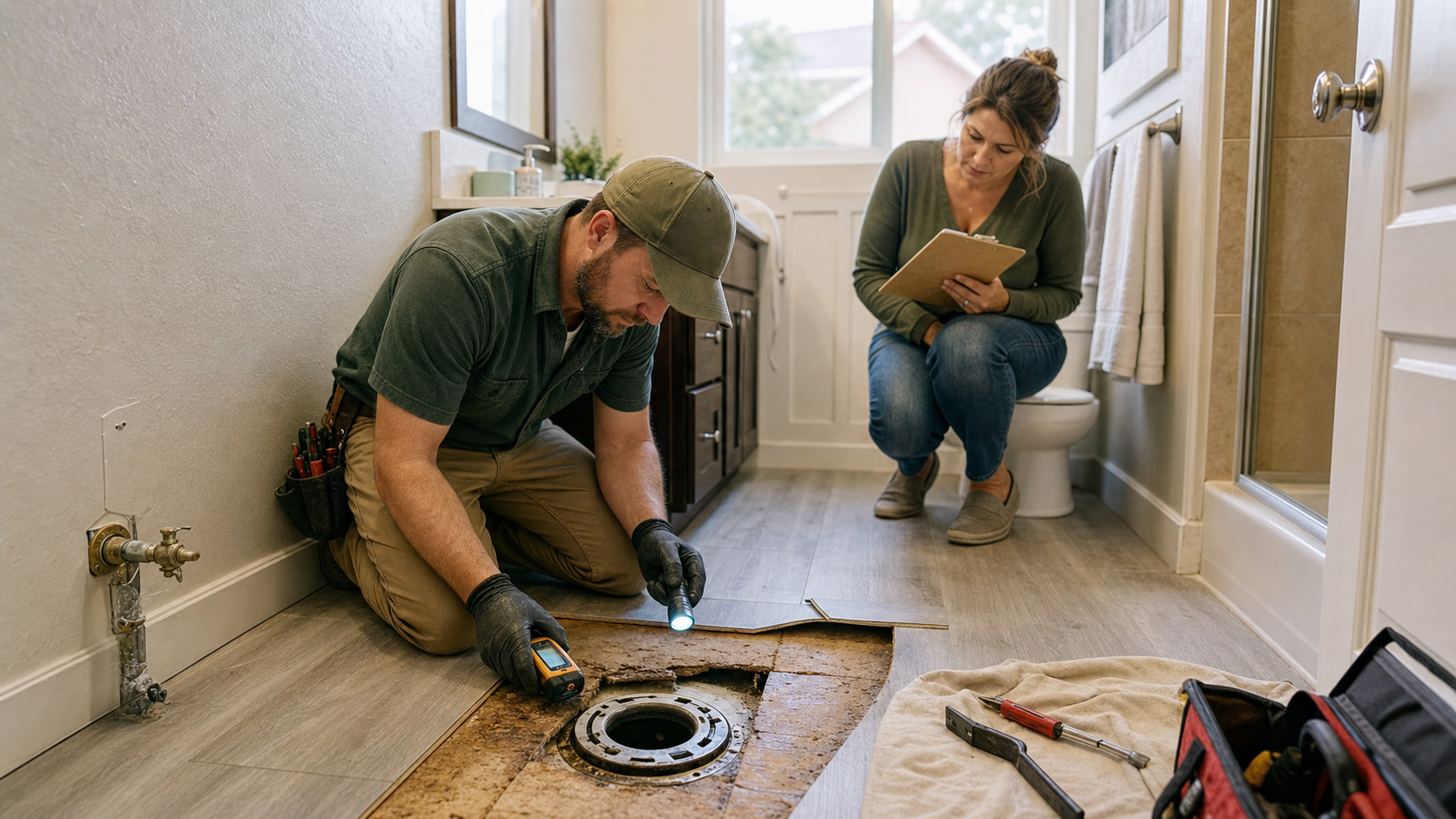
Rancho Cordova Toilet Flange Leaks: Subfloor Repair, Flooring, and Who to Call
The toilet only rocks a little. The floor looks fine if you do not look too closely. Then one Saturday morning, a dark crescent appears at the base, the vinyl plank seam swells, and the bathroom starts smelling damp even after it has been cleaned.
That is the moment a Rancho Cordova homeowner has to slow the project down. A loose toilet is not always a new-toilet problem. It can be a wax ring problem, a cracked flange, a flange set too low after new flooring, a soft subfloor, a leaking shutoff, a drain line issue, or a bathroom remodel that covered up an old mistake.
The right repair order matters. If the plumber resets the toilet before the floor is dry and solid, the leak can come back. If the flooring contractor installs new LVP over damaged wood, the finish hides the problem. If a general contractor opens the floor without knowing whether the plumbing is fixed, the scope can grow fast. This is a small bathroom issue that deserves a real contractor plan.
Use this chart before comparing bids. A bathroom floor repair is not complete until the leak, flange, drying, subfloor, and finish flooring are each assigned to the right trade.
Start With The Rocking Toilet
A toilet that rocks is a warning sign, not a personality trait. Before calling contractors, stop using that bathroom if water is visible, turn the shutoff valve gently if it works, and take photos of the base, the flooring seams, the wall behind the toilet, the ceiling below if this is upstairs, and any nearby vanity toe kick or baseboard swelling.
Do not keep tightening the closet bolts until the toilet stops moving. That can crack the toilet base, break the flange, or squeeze the wax ring unevenly. Do not caulk the whole base to hide the stain. Caulk can trap water and make it harder to see whether the leak is still active. A small bead at the front can be cosmetic after the repair is done, but it is not diagnosis.
The first useful question is simple: did water come from the toilet connection, the supply line, the shutoff valve, the tank, the shower, the vanity, or below the floor? A plumber can usually separate those possibilities faster than a flooring crew can. Once the water source is known, the rest of the scope becomes less chaotic.
Why Rancho Cordova Bathrooms Can Hide The Damage
Rancho Cordova has a lot of older ranch homes, slab-on-grade bathrooms, remodel layers, and newer subdivisions where finish flooring was upgraded after the original plumbing was set. Each version creates a different flange problem.
In an older bathroom, the flange may be corroded, cracked, loose, or set in flooring that has been patched more than once. In a home where LVP or tile was added over the old floor, the finished floor can sit higher than the original flange. That height mismatch can make the wax ring work harder than it should. In a slab bathroom, fixing a broken pipe or badly set flange may involve concrete work. In a raised-floor bathroom, the contractor may find wet sheathing, loose blocking, or joists that need repair before the toilet can be reset.
The visible stain is often smaller than the wet area. Water follows seams, underlayment, fastener holes, and low spots. That is why moisture readings and selective floor removal can matter more than guessing from the surface.
What It Might Cost In 2026
These are planning ranges for Rancho Cordova and nearby Sacramento County homes, not quotes:
- Pull and reset a toilet with a new wax or waxless seal: $250 to $700 when the flange is sound, the shutoff works, and the floor is dry and solid.
- Replace shutoff, supply line, bolts, or minor flange hardware: $450 to $1,200 depending on access, parts, and whether the toilet is already removed.
- Repair or replace a damaged toilet flange: $800 to $2,500 when the plumber has to cut, adapt, anchor, or correct height. Slab work, cast iron, or awkward access can raise the number.
- Dry out and document limited moisture damage: $500 to $2,500 for small contained areas, more if a restoration company is needed or insurance documentation is involved.
- Local subfloor patch and flooring reset: $1,500 to $6,500 when damaged sheathing, underlayment, baseboard, LVP, tile, or trim has to be removed and replaced.
- Bathroom floor rebuild tied to framing, plumbing, drywall, tile, vanity, or structural repair: $5,000 to $18,000-plus when several trades enter the room.
- Full bathroom remodel triggered by hidden damage: $18,000 to $55,000-plus depending on layout changes, shower work, electrical, ventilation, tile, and permits.
The cheapest bid can be the most expensive one if it only resets the toilet and leaves the wet subfloor behind. The bid you want separates the plumbing fix from the drying work, the subfloor repair, and the finish flooring.
Which Contractor Should Lead?
Start with a licensed plumbing contractor if the leak is active, the toilet rocks, the flange is loose, the shutoff valve is questionable, or the toilet has to be removed before anyone can inspect. The plumber should identify the leak source, confirm the flange condition, correct height, anchor the flange properly, replace the seal, and test before the bathroom is finished again.
A flooring contractor belongs later, after the leak is corrected and the subfloor or slab is ready. Flooring crews are good at demo, underlayment, transitions, tile, LVP, baseboards, and finish work. They should not be asked to decide whether a drain connection is sound.
A general contractor makes sense when the bathroom needs sequencing across plumbing, subfloor, framing, drywall, baseboards, paint, tile, vanity removal, or insurance-related restoration. If the damage extends under cabinets or into a hallway, someone needs to own the order of operations instead of letting each trade guess around the others.
Bring in a drywall contractor if the ceiling below or nearby walls are opened. Bring in a restoration company if the materials are still wet, the area is larger than expected, or you need drying logs for insurance. If pest or dry-rot clues appear beyond the wet footprint, do not cover them with new flooring until the cause is understood.
Permit And Licensing Questions
The City of Rancho Cordova's Building and Safety division says permits are available online, and its forms and downloads page lists a Plumbing PME residential permit among available residential permit forms. The city also points residents to Rancho Cordova Online for permit and plan submittals.
A simple toilet pull-and-reset may be a service repair. The answer can change when the contractor replaces drain piping, alters plumbing, opens structural floor framing, changes electrical, modifies a rated assembly, or rolls the work into a larger bathroom remodel. Ask the contractor to state the permit assumption in writing:
- Is this a toilet reset, flange repair, drain repair, flooring repair, structural floor repair, or bathroom remodel?
- Is any plumbing pipe being cut, replaced, moved, or reconnected below the floor?
- Is damaged subfloor only sheathing, or are joists, blocking, sill plates, or slab concrete involved?
- Who pulls any plumbing, building, or electrical permit if the scope requires it?
- Who schedules inspection and documents the finished work?
- What happens if hidden moisture or damaged framing is found after floor removal?
California licensing matters. The CSLB explains that a contractor license is generally required when the project requires a permit, uses employee labor, or totals $1,000 or more in combined labor, materials, and other costs. A real toilet flange and subfloor repair can cross that line quickly.
Red Flags In Bathroom Floor Quotes
Be cautious if a contractor says the toilet only needs more caulk. Be careful with a flooring bid that does not mention moisture readings, subfloor condition, or who resets the toilet. Slow down if the plumber resets the toilet on a soft floor and tells you the flooring person can handle the rest later.
Other warning signs include no written change-order rate for hidden subfloor damage, no plan for drying, no explanation of flange height after new flooring, no license number on the bid, and no answer for who owns the repair if the toilet leaks again after the finish floor is installed.
A useful bid says what gets removed, what gets tested, what gets dried, what gets repaired, who resets the toilet, what is excluded, and how the contractor will prove the leak stopped.
If New Flooring Started The Problem
Many leaks show up after a bathroom floor upgrade because the finished floor height changed. A flange that was acceptable with old sheet vinyl may sit too low once LVP, underlayment, or tile is added. A thicker floor can also make the toilet rock if the surface is uneven or if the toilet base lands on a transition edge.
This does not mean the flooring contractor caused the leak. It means the plumbing detail needed to be part of the flooring scope. Before new bathroom flooring goes in, ask whether the toilet will be removed, whether the flange height will be checked, whether an extender or new flange is needed, and who warranties the toilet reset.
If the bathroom is getting tile, the subfloor matters even more. Tile does not forgive movement. The contractor should talk about underlayment, deflection, waterproofing at the toilet area, transitions, and whether old damaged wood has been replaced before the first tile is set.
Internal Homework Before You Hire
Start with our Rancho Cordova contractor guide, compare licensed plumbing contractors, flooring contractors, drywall contractors, and general contractors. Use the contractor search when you are ready to build a shortlist.
For related planning, pair this with our flooring installation cost guide, drywall repair cost guide, bathroom remodel cost guide, Rancho Cordova shutoff and pressure regulator guide, contractor vs. handyman guide, and license verification guide.
The Bottom Line
A toilet flange leak is easy to underestimate because the fixture still flushes. In Rancho Cordova bathrooms, the expensive question is usually not the toilet itself. It is whether water reached the floor system, whether the flange height is right, and whether the next contractor is being asked to cover an unresolved plumbing problem.
Stop the water first. Prove the flange is sound. Let wet materials dry or be removed. Repair the subfloor before flooring. Then reset the toilet with the right seal, bolts, and support. That order is what keeps a small bathroom leak from becoming the reason you remodel the same floor twice.
Who to Hire for This Project
For the work covered in this guide, these are the contractor types to contact and the CSLB classification to verify before you take quotes:
Questions to Ask Before You Sign
- "Is your CSLB license active and bonded?" Verify it yourself at cslb.ca.gov the license number must appear on their bid.
- "Who pulls the permit, and is it included in the bid?" The contractor should handle any required permits a pro who suggests skipping one is a red flag.
- "Can you itemize labor, materials, and allowances?" Itemized bids are the only way to compare quotes on the same scope.
- "What's the payment schedule?" California caps the down payment at $1,000 or 10%, whichever is less payments should track completed work.
- "Who from this area can I call as a reference?" Ask for a recent local job of similar scope, not just photos.
Sacramento Contractors for This Project
Related Articles
Frequently Asked Questions
How do I know if my toilet flange is leaking? +
Common signs include water or staining around the toilet base, a rocking toilet, swollen flooring seams, damp odor, soft flooring, or ceiling stains below an upstairs bathroom. A plumber should pull the toilet and inspect the flange, seal, shutoff, supply line, and floor condition before the toilet is reset.
How much does toilet flange repair cost in Rancho Cordova? +
A simple pull-and-reset may cost $250 to $700 if the flange and floor are sound. Flange repair often runs $800 to $2,500, while subfloor repair, drying, flooring replacement, drywall, or framing work can move the total into the $1,500 to $18,000-plus range depending on damage.
Should I call a plumber or flooring contractor first? +
Call a plumber first if the toilet rocks, the leak is active, the shutoff valve is questionable, or the flange may be damaged. Bring in flooring after the water source is fixed and the subfloor or slab is confirmed ready. Use a general contractor when plumbing, framing, drywall, flooring, and finish repair all need sequencing.
Does toilet flange repair require a permit in Rancho Cordova? +
A simple toilet reset may be a service repair, but replacing drain piping, altering plumbing, opening structural floor framing, changing electrical, or including the work in a larger bathroom remodel can change the permit answer. Ask the contractor to state the permit assumption and check with Rancho Cordova Building and Safety when unsure.
Can new flooring cause a toilet leak? +
New flooring can reveal or contribute to a leak when the finished floor height changes and the toilet flange is no longer set correctly relative to the floor. Before installing bathroom flooring, ask who removes and resets the toilet, who checks flange height, and who warranties the final seal.
Can I just caulk around the toilet base? +
Caulk is not a leak repair. It can hide water and delay diagnosis. The toilet should be stable, the flange and seal should be correct, and the floor should be dry and solid before any cosmetic caulk is added.