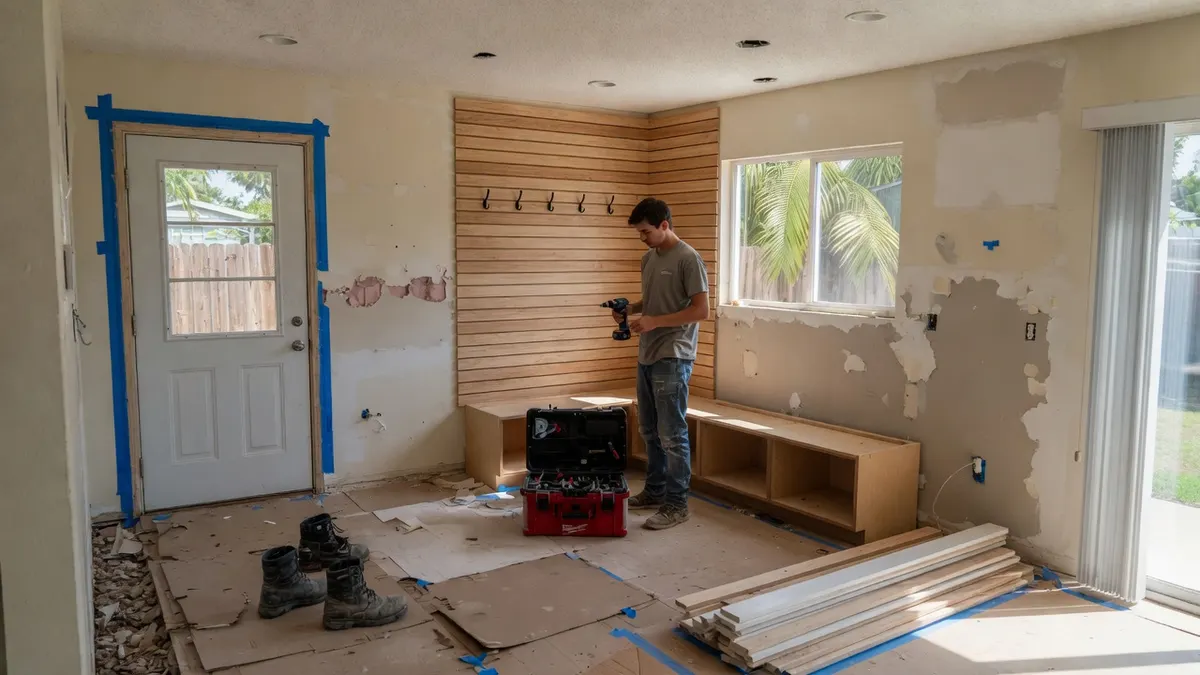
Orangevale Mudroom Additions for Rural-Suburban Living
Picture a January morning off Hazel Avenue. The fog hasn't burned off yet, the dog has already tracked half the backyard across the kitchen, and three pairs of muddy boots are wedged behind the door because nobody planned a place for them to go. If your Orangevale house has more land than the average tract home but no real transition zone between outside and inside, you already know the problem. A mudroom is the fix that sounds modest and ends up changing how the whole house feels.
Orangevale's half-rural rhythm asks more of an entry
Orangevale sits in that in-between zone: bigger lots, horse properties tucked behind newer subdivisions, gardens that actually produce, and the kind of yard work that follows you indoors. A lot of the housing stock here was built when a "back hall" meant a coat hook and nothing else. That's why a dedicated landing spot matters more here than it might in a denser neighborhood. You're not just storing shoes. You're corralling garden tools, pet supplies, sports gear, and the laundry overflow that always seems to migrate.
The smartest place for one is usually wherever your dirt actually enters the house: the garage pass-through, the rear door, or right alongside the laundry. A contractor worth hiring will walk that path with you before sketching anything, because the right location is half the battle. If you're still in the research stage, the Orangevale contractor guide is a reasonable place to see who works locally.
What you'll actually spend, and why the range is so wide
Here's the honest spread: a mudroom project in the Sacramento Valley typically runs anywhere from roughly $8,000 on the simple end to around $55,000 for a true addition with foundation, framing, and finishes. That gap isn't padding. It's the difference between converting an existing nook and bumping out new square footage.
Carving a mudroom out of space you already have, say, the end of a laundry room or an oversized hallway, lands near the bottom. The moment you add walls, a slab, an exterior door, and a roofline, the number climbs fast. Built-in benches, durable tile or luxury vinyl, a utility sink, good lighting, and proper cubbies all stack on top.
A piece of advice from people who've done this: build in a contingency. Older Orangevale homes occasionally hide surprises behind the drywall, outdated wiring, framing that doesn't match current code, or moisture nobody knew about. Set aside a buffer so a discovery doesn't derail the budget. And when you compare bids, don't just scan for the lowest total. Read what each one actually includes: allowances, exclusions, who pulls permits, cleanup, and warranty. Two estimates that look $10,000 apart are often just describing two different projects.
The details that separate a clean job from a headache
A few things, settled early, keep a mudroom build from going sideways:
- Lock in your finish level up front. Cabinet grade, tile pattern, sink type, and flooring all swing the price. Decide before the crew shows up, not during.
- Ask what's behind the wall. Plumbing, old wiring, insulation, and dry rot are where the surprises live. A good contractor pokes around before quoting.
- Get the permit responsibility in writing. The contract should name who files applications and meets the inspector.
- Keep your selections moving. A crew can stall on a half-stocked job site waiting for you to pick a faucet. Indecision costs days.
- Put every change in writing. A proper change order lists the new price, the schedule hit, and the reason. No handshake math.
If you're weighing flooring options, flooring contractors can talk through what holds up to wet boots and dog nails better than a glossy showroom photo will.
Permits, inspectors, and the California license question
A row of cubbies and a bench inside an existing room may not need a permit at all. But the second your project involves an actual addition, new plumbing for that utility sink, electrical for outlets and lighting, an exterior door, or any structural change, you're in permit territory with Sacramento County. That means inspections, and inspections mean the work has to be done right the first time.
This is where licensing stops being paperwork and starts protecting you. In California, any home-improvement work where labor plus materials totals $1,000 or more legally requires a licensed contractor. Verify that license yourself, free, through the Contractors State License Board (CSLB) at cslb.ca.gov. Confirm it's active, then check that they carry liability insurance and workers' compensation. Electrical, plumbing, and structural work especially should never go to someone operating without those credentials, because if something goes wrong, you're the one holding the liability. Hiring a vetted general contractor to run the whole job is often the cleanest path when multiple trades are involved.
Timing it so you're not waiting on a backlog
Season matters more than people expect. Spring and early summer are peak months for exterior crews, roofers, and concrete work across the valley, so if your mudroom needs a slab or new exterior wall, those trades may be booked out. An interior conversion is easier to slot into the quieter shoulder months, fall and late winter, but even then, confirm material lead times before you commit to a start date. A cabinet order that's eight weeks out can stall an otherwise quick job.
When you talk to candidates, ask the questions that reveal how they actually think: How will the space handle dripping wet gear and pet traffic? Is there ventilation so it doesn't turn musty? Do the storage dimensions match the stuff your household genuinely owns? Ask to see photos of similar mudrooms, request a payment schedule tied to real progress milestones, and get one named person you can call. A contractor who communicates clearly before the contract is signed tends to keep communicating when a complication shows up mid-build.
So before that first walkthrough, do a little homework yourself. Walk the entry path your family actually uses, photograph the clutter zones, and write down the three problems you most want solved, in priority order. Then line up at least three licensed bids through the Sacramento Valley contractor search and compare them on scope, not just sticker price. The goal isn't the cheapest mudroom. It's the one that quietly fixes your mornings for the next twenty years.
Who to Hire for This Project
For the work covered in this guide, these are the contractor types to contact and the CSLB classification to verify before you take quotes:
Questions to Ask Before You Sign
- "Is your CSLB license active and bonded?" Verify it yourself at cslb.ca.gov the license number must appear on their bid.
- "Who pulls the permit, and is it included in the bid?" The contractor should handle any required permits a pro who suggests skipping one is a red flag.
- "Can you itemize labor, materials, and allowances?" Itemized bids are the only way to compare quotes on the same scope.
- "What's the payment schedule?" California caps the down payment at $1,000 or 10%, whichever is less payments should track completed work.
- "Who from this area can I call as a reference?" Ask for a recent local job of similar scope, not just photos.
Sacramento Contractors for This Project
Related Articles
Frequently Asked Questions
How much does a mudroom addition cost in Orangevale? +
In the Sacramento Valley, mudroom projects typically run from roughly $8,000 for converting existing interior space up to around $55,000 for a full addition with foundation and framing. The big variable is whether you're reworking space you already have or building new square footage. Built-ins, durable flooring, a utility sink, and an exterior door all push the number higher.
Do I need a permit for a mudroom in Orangevale? +
Simple built-ins like a bench and cubbies inside an existing room often don't require one. But an actual addition, new plumbing for a sink, electrical work, an exterior door, or any structural change will require a permit through Sacramento County, along with inspections. Your contract should clearly state who pulls the permits and meets the inspector.
What license should an Orangevale mudroom contractor have? +
Any project where labor plus materials totals $1,000 or more legally requires a contractor licensed by the California Contractors State License Board (CSLB). You can verify a license for free at cslb.ca.gov to confirm it's active. Also check that they carry liability insurance and workers' compensation before signing anything.
Where is the best spot for a mudroom in an Orangevale home? +
The most effective location is wherever dirt actually enters your house, usually the garage pass-through, the rear door, or alongside the laundry room. Because many Orangevale properties sit on larger lots with real yard work, the entry that handles garden tools and pet traffic is the one worth converting. A good contractor will walk that path with you before drawing plans.
When is the best time to schedule a mudroom build in the Sacramento Valley? +
Interior conversions are easiest to schedule in the quieter fall and late-winter months. If your mudroom requires a concrete slab or exterior framing, avoid peak spring and early summer when those trades are booked solid across the valley. Either way, confirm material lead times, since a long cabinet order can delay even a simple job.
Why are mudroom bids in Orangevale sometimes thousands of dollars apart? +
Two estimates that look far apart are usually describing different projects, not different prices for the same work. One may include a utility sink, premium flooring, and permit handling while the other excludes them. Always compare the allowances, exclusions, warranty terms, and who's responsible for permits before assuming one contractor is simply cheaper.