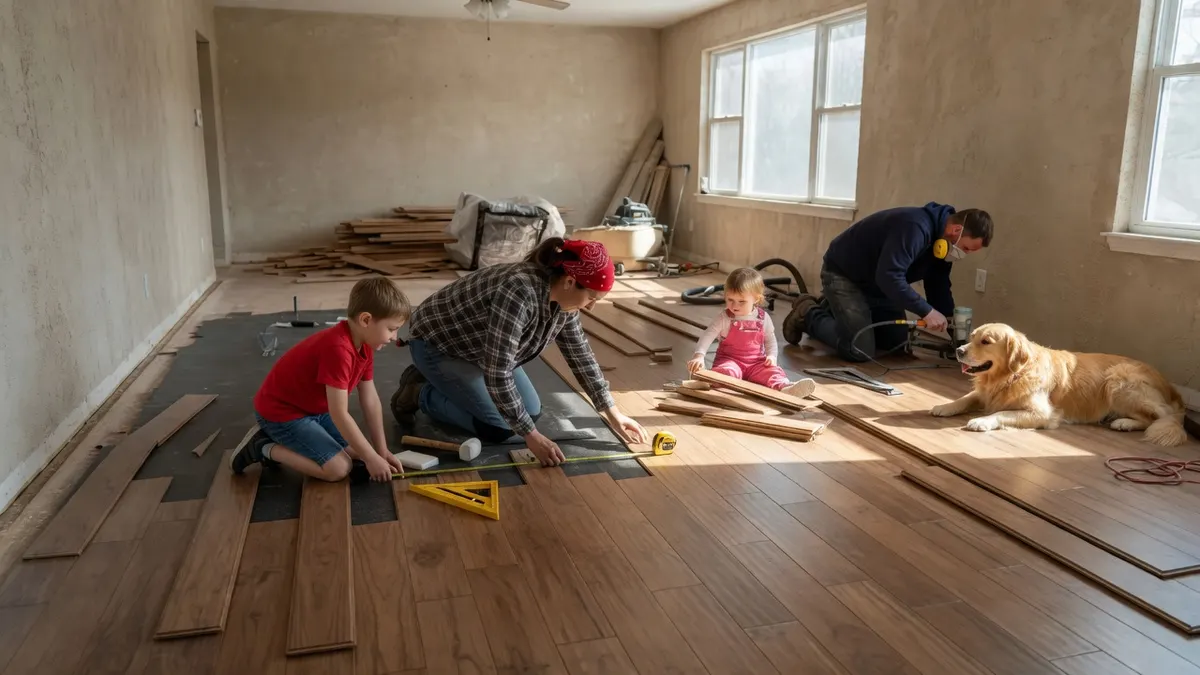
Natomas Flooring Choices for Kids, Pets, and Open Floor Plans
A toddler with a sippy cup, a rescue lab who tracks in mud from the green belt after a rainy week, and a kitchen that flows straight into the living room with no wall to hide a scuff. That's the everyday math a lot of Natomas families are doing when they think about new floors. In a neighborhood built largely in the late 90s and 2000s, where so many homes share that same builder-grade carpet-in-the-bedrooms, tile-in-the-bathrooms layout, replacing the flooring is one of the few changes that makes a house feel genuinely yours without moving a single wall.
The catch with an open floor plan is that the floor is the largest visible surface in the house, and it usually runs continuously through the kitchen, the living area, the hallway, and sometimes right up the stairs. One material has to survive a dropped toy, a dog's nails, a spilled juice box, and Sacramento's August heat coming through the slider. That's a tall order, so it pays to think it through before you fall for a photo on a showroom wall.
What actually survives a dog, a kid, and a Delta breeze summer
If you only remember one thing, make it this: in a home with pets and young kids, scratch resistance and water tolerance matter more than how the plank looks under perfect store lighting. Luxury vinyl plank has become the default for Natomas families for good reason. It shrugs off water, it's forgiving when a dog skids across it, and the better products mimic wood convincingly. Engineered hardwood gives you real wood character and adds resale appeal, but it dents and it's fussier about moisture. Laminate sits in between on price and feel. Tile is nearly bulletproof and stays cool in summer, though it's hard underfoot and a dropped glass shatters every time.
Sacramento's swing from triple-digit afternoons to cool Delta-breeze evenings also matters more than people expect. Wood and engineered products expand and contract with that humidity shift, which is exactly why your installer will insist on letting the material acclimate in the house for a few days before a single plank goes down. Skipping that step is how you end up with gaps or buckling by the next summer.
The number that trips people up: floor prep, not the planks
When folks ask me what flooring costs in the Natomas area, I tell them to plan on roughly $7,000 to $26,000 for a whole-house replacement, and then I watch their face. That's a wide range, and the reason is rarely the material itself. It's everything underneath and around it.
The slab has to be flat. If it isn't, self-leveling compound gets added and the price climbs. Old tile has to come out, which is loud, dusty work. Then there are the baseboards, the stair treads, and every doorway transition where one room meets another. In an open plan, you have more of those transitions than a chopped-up house, and each one is a small detail that a rushed crew gets wrong. Add in moving furniture and hauling away the old material, and you can see how two honest bids land thousands apart.
So when you compare estimates, read past the bottom line. A good quote spells out the material allowance, the subfloor prep, baseboard handling, stair work, cleanup, and the warranty. The cheapest number on the page is often the one that quietly left half of that out. You can line up several licensed flooring contractors and compare how they each describe the same job rather than just the price.
Why "do I even need a permit?" is the right question to ask
Here's some good news for an open-floor-plan refresh: laying new flooring over an existing subfloor generally doesn't require a building permit in the Sacramento area. Where it gets more involved is when the project grows. If pulling up old tile reveals a moisture problem, if the subfloor needs structural repair, or if you decide to tie the work into a kitchen or bath change while the floor is open, the scope and the permitting picture can change fast.
What you should never skip is checking the contractor's license. In California, any home-improvement job where labor and materials total $1,000 or more legally requires a contractor licensed by the CSLB. Verify that license number yourself at the CSLB website, confirm it's active, and ask for proof of liability insurance and workers' compensation. It takes five minutes and it's the single best protection you have. If a flooring crew is also doing any plumbing or electrical work as part of a bigger remodel, those trades carry their own licensing requirements on top of the flooring.
Color, transitions, and the open-plan look
Open floor plans reward a little restraint. Because one floor is visible from nearly everywhere, a busy plank pattern or a high-contrast color can make the whole downstairs feel smaller. Mid-tone, low-sheen finishes tend to hide dog hair and toddler smudges better than either very dark or very glossy floors, which show every paw print under that big Natomas afternoon light.
Pay attention to where the flooring meets the stairs and the tile in your entry or bathrooms, too. Those transition strips are where a tidy job and a sloppy one part ways. Ask any contractor to walk you through exactly how they'll handle the stair nosing and the doorways, and ask to see photos of similar open-plan work they've finished nearby. While you're planning, it's worth thinking about whether you'll repaint baseboards once the new floor is in, since fresh floors have a way of making old trim look tired; a painting pro can tackle that in the same window.
When you're ready to move, walk every room with your phone, photograph the current floors and any soft or stained spots, and jot down which rooms see the heaviest kid-and-dog traffic so installers can recommend the right product per zone. Then pull together at least three licensed bids and compare them on scope, not just dollars. You can start with our Natomas contractor guide, browse vetted local flooring crews, and use the contractor search to build your shortlist. The floor you'll live on for the next fifteen years deserves more than a quick showroom decision.
Who to Hire for This Project
For the work covered in this guide, these are the contractor types to contact and the CSLB classification to verify before you take quotes:
Questions to Ask Before You Sign
- "Is your CSLB license active and bonded?" Verify it yourself at cslb.ca.gov the license number must appear on their bid.
- "Who pulls the permit, and is it included in the bid?" The contractor should handle any required permits a pro who suggests skipping one is a red flag.
- "Can you itemize labor, materials, and allowances?" Itemized bids are the only way to compare quotes on the same scope.
- "What's the payment schedule?" California caps the down payment at $1,000 or 10%, whichever is less payments should track completed work.
- "Who from this area can I call as a reference?" Ask for a recent local job of similar scope, not just photos.
Sacramento Contractors for This Project
Related Articles
Frequently Asked Questions
What flooring holds up best for homes with dogs and kids in Natomas? +
Luxury vinyl plank is the most popular choice for Natomas families because it resists water, scratches, and the skidding of a dog's nails while still looking like wood. Tile is even more durable and stays cool in summer, but it's hard underfoot. Engineered hardwood looks beautiful and helps resale, but it dents more easily and is fussier about moisture, so it's a weaker fit for very active households.
How much does it cost to replace flooring in a Natomas open floor plan? +
For a whole-house replacement in the Sacramento Valley, plan on roughly $7,000 to $26,000, depending heavily on the material and the prep work. The planks themselves are often the smaller part of the bill; subfloor leveling, old-tile removal, stair treads, transitions, baseboards, and furniture moving drive the range. Always compare what each estimate includes, not just the bottom-line number.
Do I need a permit to replace flooring in Natomas? +
Installing new flooring over an existing subfloor generally does not require a building permit in the Sacramento area. A permit can come into play if the project expands, such as discovering a moisture problem, needing structural subfloor repair, or tying the work into a kitchen or bathroom remodel. Ask your contractor to confirm the scope before work begins so there are no surprises.
How do I verify a flooring contractor's license in California? +
Any home-improvement job where labor and materials total $1,000 or more legally requires a contractor licensed by the CSLB. You can verify the license number for free on the CSLB website to confirm it's active and unrestricted. Also ask for current proof of liability insurance and workers' compensation before signing anything.
Why does Sacramento's heat matter for wood and engineered floors? +
The region's swing from triple-digit afternoons to cool Delta-breeze evenings changes indoor humidity, and wood-based products expand and contract with it. That's why installers require the material to acclimate inside your home for a few days before installation. Skipping acclimation is a common cause of gaps or buckling that show up the following summer.
What flooring color works best for an open floor plan with pets? +
Because one floor is visible from nearly every room in an open plan, mid-tone, low-sheen finishes tend to work best. They hide dog hair, paw prints, and toddler smudges far better than very dark or very glossy floors, which show everything under bright Natomas afternoon light. Restrained, lower-contrast plank patterns also help the downstairs feel larger.