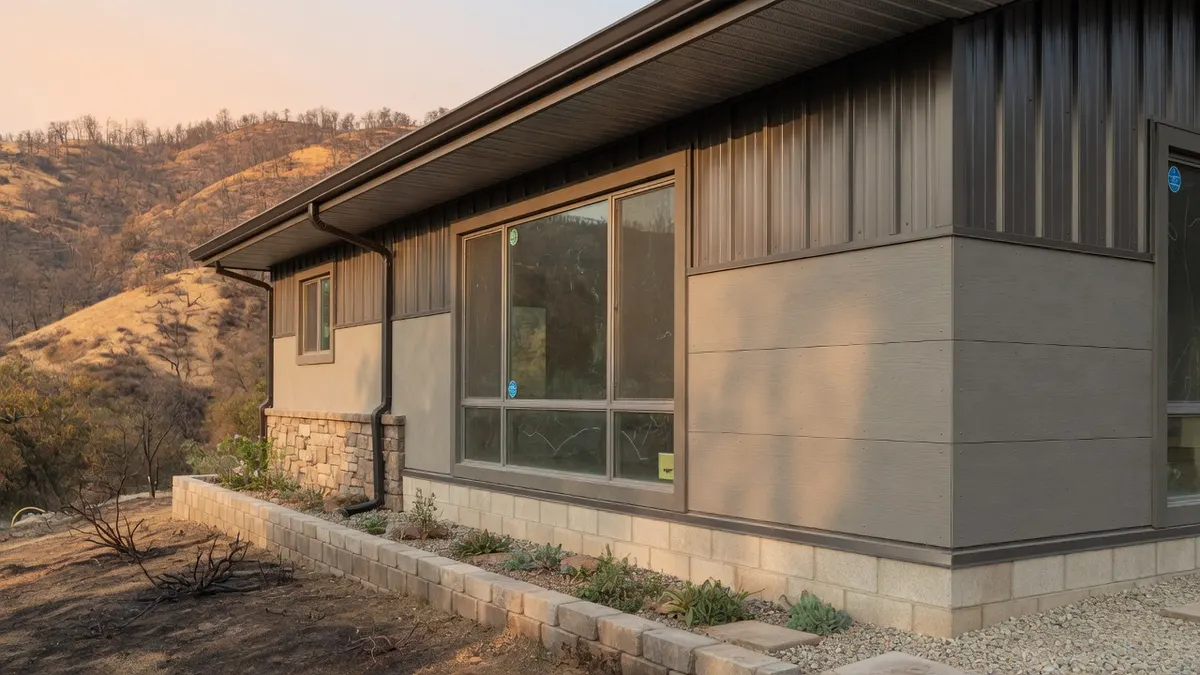
Auburn Fire-Smart Exterior Materials for Remodels Near Open Space
The smell of summer in the Auburn foothills is part dry grass, part warm oak bark, and by July it carries a low-grade tension that anyone living near open space recognizes. If your home backs up to a ravine off Auburn-Folsom Road, sits on a sloped lot above Hidden Falls, or shares a fence line with unmanaged grassland, an exterior remodel stops being purely about curb appeal. It becomes a quiet question of how your house behaves when embers ride the wind on a red-flag afternoon.
That shift in thinking is the whole point of a fire-smart exterior. You're not buying a look. You're buying the way siding, vents, roofing, gutters, and a deck connection respond to heat and flying embers months after the crew packs up.
What an ember actually does to a foothill house
Most homes near wildland don't ignite from a wall of flame rolling over the hill. They ignite from embers, sometimes carried more than a mile ahead of a fire, that land in a clogged gutter, slip through an unscreened attic vent, or settle into the gap where a wood deck meets the wall. Knowing that changes your priorities. A Class A roof assembly matters, but so does the half-inch vent opening you'd never think twice about.
When you walk your property before talking to anyone, look at it the way an ember would. Where would it land and find something to chew on? Dry leaves on the roof valley, a wood-trimmed window sill, the underside of a deck, the bark mulch hugging the foundation. Those landing spots are your real project scope.
The materials that earn their keep
Fiber cement siding tends to be the workhorse here. It shrugs off heat far better than wood or vinyl and holds up to the temperature swings the foothills throw at it, from 105-degree afternoons to frosty January mornings. Pair it with ember-resistant vents (the kind with fine mesh screening that blocks the small stuff), metal gutters instead of plastic, and a Class A roof, and you've covered the openings embers exploit most.
Decks deserve their own conversation. The connection where a deck ties into the house is a notorious weak point, so noncombustible or fire-rated decking and a clean, debris-free under-deck area carry real weight. None of this replaces defensible space and ongoing maintenance, but good materials buy you a margin that habits alone can't.
If you want to compare what licensed crews in the region actually install, browse siding contractors and roofing contractors before you commit to a material spec. It's easier to write a tight scope when you've seen what's standard.
Putting honest numbers around it
A fire-smart exterior upgrade in the Sacramento Valley typically runs somewhere between $12,000 and $70,000, and that's a wide band for a reason. A homeowner swapping siding and adding ember-resistant vents lands near the bottom; someone redoing roofing, gutters, deck details, and full siding sits toward the top. Auburn's older housing stock adds a wrinkle, because work done decades ago often doesn't match current code or come with clean documentation, so set aside a contingency for whatever turns up behind the wall.
Here's the part people skip: the cheapest bid is rarely the clearest one. A useful estimate spells out materials, labor, exclusions, allowances, who pulls permits, cleanup, and warranty terms. When two bids are thousands apart, the gap usually lives in the assumptions, not in one contractor being generous. Read the exclusions first.
Licenses, permits, and the foothill paperwork
This is California, so a few things are non-negotiable. Any contractor doing roofing, siding, structural, electrical, or really any project where labor and materials top $1,000 must hold an active CSLB license. Verify it yourself at the Contractors State License Board site, and while you're there confirm the license class fits the work, plus liability insurance and workers' compensation. The $1,000 threshold trips people up because they've heard an older, lower number floating around; $1,000 is the figure that matters now.
Auburn and much of Placer County fall inside or near wildland-urban interface zones, which means exterior replacements, decks, and roof assemblies may face requirements a flatland house in Roseville or Rocklin never sees. Expect a building permit for most roof and structural work, and expect inspections. The contract should state plainly who files the applications, who schedules the inspections, and who fixes anything a corrections notice flags. A homeowner one jurisdiction over can have a genuinely different process, so don't assume your neighbor's experience maps onto yours.
Timing plays in too. Spring and early summer are the busy season for exterior trades, roofing, and concrete across the region, so the best crews book out. Pin down material lead times early; ember-resistant vents and certain siding profiles aren't always sitting on a shelf.
Questions that separate a pro from a price
When you interview contractors, get specific. Ask how their proposed materials handle embers at the vents, the deck-to-wall joint, and the gutter line. Ask them to show photos of similar foothill work, not a glossy suburban remodel. Ask for a payment schedule tied to real progress and a single named contact you can call when something gets complicated. A contractor who explains the ember-exposure logic clearly before the job starts is the one most likely to communicate well once the surprises show up, and on an older Auburn home, they will.
When you're ready to act, walk the lot one more time, photograph every weak point you found, write down your priorities in order, and then gather at least three licensed bids. You can start building that shortlist through the Sacramento Valley contractor search, and it's worth pulling estimates from crews who regularly work Auburn-area properties near open space rather than whoever's cheapest this week. The goal isn't the lowest line item. It's a clean scope, fewer mid-project surprises, and a house that handles a smoky August afternoon a little better than it did the year before.
Who to Hire for This Project
For the work covered in this guide, these are the contractor types to contact and the CSLB classification to verify before you take quotes:
Questions to Ask Before You Sign
- "Is your CSLB license active and bonded?" Verify it yourself at cslb.ca.gov the license number must appear on their bid.
- "Who pulls the permit, and is it included in the bid?" The contractor should handle any required permits a pro who suggests skipping one is a red flag.
- "Can you itemize labor, materials, and allowances?" Itemized bids are the only way to compare quotes on the same scope.
- "What's the payment schedule?" California caps the down payment at $1,000 or 10%, whichever is less payments should track completed work.
- "Who from this area can I call as a reference?" Ask for a recent local job of similar scope, not just photos.
Sacramento Contractors for This Project
Related Articles
Frequently Asked Questions
Do Auburn homes near open space need special permits for an exterior remodel? +
Often, yes. Much of Auburn and Placer County sits in or near a wildland-urban interface zone, which can add fire-material and assembly requirements that flatland communities don't face. Most roofing and structural work also requires a standard building permit plus inspections, so confirm with the local building department and put permit responsibility in writing in your contract.
What exterior materials are best for fire resistance in the Auburn foothills? +
Fiber cement siding, a Class A roof assembly, ember-resistant (fine-mesh) attic and foundation vents, metal gutters, and noncombustible or fire-rated decking are the common fire-smart choices. They resist embers and heat far better than wood or vinyl. Materials work best alongside defensible space and regular maintenance, not as a replacement for them.
How much does a fire-smart exterior upgrade cost in the Sacramento Valley? +
Budgets typically range from roughly $12,000 to $70,000 depending on scope. A siding-and-vent upgrade sits near the low end, while a full package of roofing, gutters, siding, and deck details climbs toward the top. Because Auburn has older housing stock, set aside a contingency for hidden conditions found once walls or roofs are opened up.
How do I verify a contractor is licensed for this work in California? +
Check the contractor's license directly on the Contractors State License Board (CSLB) website and confirm the license class matches the work, such as roofing or siding. Also verify active liability insurance and workers' compensation. In California, any project where combined labor and materials exceed $1,000 must be performed by a licensed contractor.
Where do embers usually ignite a foothill home, and how does a remodel address that? +
Embers most often ignite homes at clogged gutters, unscreened or coarse-mesh vents, and the gap where a wood deck meets the wall, rather than from a direct flame front. A fire-smart remodel targets exactly those points with metal gutters, fine-mesh ember-resistant vents, and noncombustible deck-to-wall details. Identifying your own weak spots before getting bids helps you write a tighter scope.
When is the best time to schedule exterior work in the Auburn area? +
Spring and early summer are peak season for roofing, siding, and concrete crews across the Sacramento Valley, so the strongest contractors book out early. Scheduling in a shoulder season can give you more flexibility, but you'll still need to confirm material lead times. Some ember-resistant vents and siding profiles aren't always in stock, so order early.