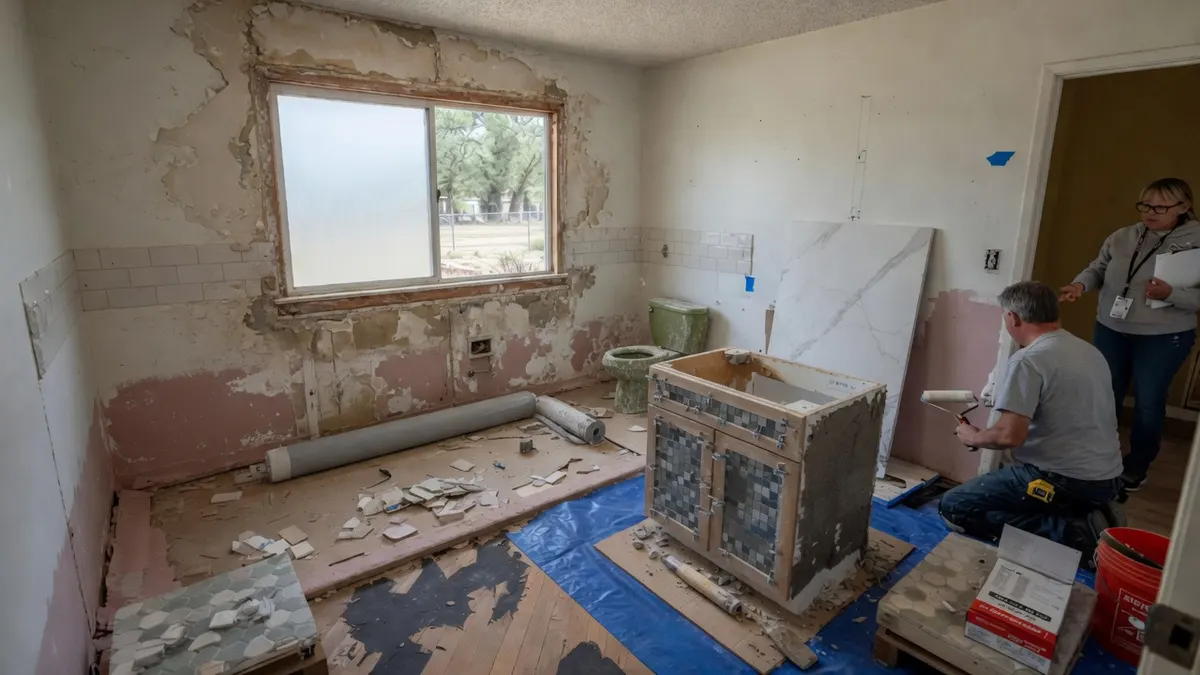
Lincoln Bathroom Tile Choices That Handle Hard Water and Daily Use
Anyone who has scrubbed a glass shower door in a Lincoln home knows the enemy by name: hard water. The wells and municipal supply that feed neighborhoods from Twelve Bridges to the older parts of town near downtown carry a heavy mineral load, and that mineral load doesn't care how expensive your tile was. Calcium and magnesium dry into chalky white film on every surface they touch. So before you fall in love with a tile because of how it photographs, it's worth asking a blunter question: how will this look after three years of Lincoln water hitting it every single day?
That question changes the whole conversation. Tile is one of the few remodel choices where the maintenance reality matters more than the showroom moment.
How Lincoln's mineral-heavy water picks your tile for you
Hard water leaves deposits, and deposits cling to anything porous or textured. That single fact eliminates a surprising number of pretty options. Natural stone, particularly honed marble and travertine, is gorgeous and miserable here. It etches when mineral residue sits on it, and it needs sealing on a schedule most homeowners forget. Tumbled-stone mosaics with deep texture become a toothbrush-and-vinegar chore.
Porcelain, especially through-body porcelain with a low absorption rating, shrugs the deposits off. A damp microfiber cloth handles most of what Lincoln water throws at it. Glazed ceramic does well too, as long as the glaze is smooth rather than heavily structured. The trade-off is that the dead-flat polished finishes that resist staining can also be slick underfoot, which matters in a shower or a bathroom floor that gets splashed.
If you want the marble look without the marble headache, large-format porcelain that mimics stone has gotten genuinely convincing. You get the veining and none of the etching panic.
Slip resistance, texture, and the daily-cleaning tug-of-war
Here's the tension nobody warns you about: the textures that grip your feet also grip mineral scale. A floor tile with a high slip rating and a matte, gritty surface is safer, but those tiny valleys in the texture collect the same hard-water residue that wipes off a smooth wall tile in one pass.
The usual answer in a Lincoln bathroom is to split the difference by surface. Walls and shower surrounds get a smoother, easier-to-wipe tile. The shower floor and the main bathroom floor get a textured or smaller-format tile, because more grout joints between smaller pieces means more traction. Mosaic penny rounds or two-inch squares on a shower pan aren't just a style choice; the grout grid is what keeps you upright on a wet, soapy surface.
That brings up grout, which is where most of the long-term cleaning battle is actually won or lost.
Grout, sealing, and the part most people skip
Standard cement grout is porous, and in hard-water country it stains and discolors faster than the tile around it. Epoxy grout costs more and is fussier to install, but it's effectively waterproof and resists the mineral buildup that turns white grout lines a grim gray. For a Lincoln shower especially, the upcharge is usually worth it.
Whatever grout you choose, ask your installer two specifics: how they plan to handle movement joints (the flexible joints in corners and changes of plane that keep tile from cracking as the house shifts on our expansive Sacramento Valley clay soil), and what their sealing recommendation and re-seal interval are for the exact tile and grout combo you picked. A contractor who can answer that crisply has thought about your house living through years of use, not just looking good on handoff day.
Ventilation belongs in this conversation too. A properly sized exhaust fan pulls humid air out fast, and less standing moisture means less mineral residue drying onto your surfaces. It's a small line item that quietly protects everything else.
What a tile job in Lincoln actually runs
A full bathroom tile upgrade in the Sacramento Valley typically lands somewhere between roughly $9,000 and $35,000. That's a wide range on purpose. Tile-only work on a modest layout sits near the bottom; large-format rectified tile, a custom shower pan, niches, epoxy grout, and intricate patterns push toward the top. Large-format tile in particular costs more to install well because the substrate has to be dead-flat for the panels to lie right.
Lincoln's housing stock skews newer than, say, the older neighborhoods over in Roseville, but plenty of those late-90s and 2000s builds came with oversized builder-grade bathrooms and dated tile that needs careful relayout. Budget a contingency for what's hiding behind the wall. Once tile comes off, old waterproofing, the occasional bit of dry rot, or a previous remodel that didn't quite meet code can all surface.
When you compare estimates, read the assumptions, not just the bottom line. A real estimate names the waterproofing method, the grout type, allowances, who pulls permits, and the warranty. Two bids that look far apart often just made different assumptions about scope.
Permits, licenses, and the California fine print
Pure tile swap on existing, sound walls often needs no permit. But the moment your project touches a shower pan replacement, a plumbing relocation, new electrical for a fan or lighting, or a ventilation upgrade, you're likely into permit and inspection territory with the City of Lincoln. Your bathroom remodel contractor should spell out in the contract who files for permits and who handles inspections and any corrections.
On the licensing side, California is strict for good reason. Any project where labor plus materials runs $1,000 or more must be handled by a contractor holding a current CSLB license. Verify that license number yourself at the CSLB website, and confirm the contractor carries liability insurance and workers' compensation before signing anything. If your job involves moving water lines or drains, that work should go to a licensed plumbing pro, not a generalist winging it.
Once you've sketched what you want and snapped photos of the existing bathroom, line up at least three licensed bids through the Sacramento Valley contractor search and walk each contractor through the same hard-water reality you now understand. The best choice usually isn't the cheapest number on the page; it's the installer who talks about grout sealing, slip ratings, and movement joints without being prompted, because that's the person whose work will still look clean after Lincoln water has had a few years to do its worst.
Who to Hire for This Project
For the work covered in this guide, these are the contractor types to contact and the CSLB classification to verify before you take quotes:
Questions to Ask Before You Sign
- "Is your CSLB license active and bonded?" Verify it yourself at cslb.ca.gov the license number must appear on their bid.
- "Who pulls the permit, and is it included in the bid?" The contractor should handle any required permits a pro who suggests skipping one is a red flag.
- "Can you itemize labor, materials, and allowances?" Itemized bids are the only way to compare quotes on the same scope.
- "What's the payment schedule?" California caps the down payment at $1,000 or 10%, whichever is less payments should track completed work.
- "Who from this area can I call as a reference?" Ask for a recent local job of similar scope, not just photos.
Sacramento Contractors for This Project
Related Articles
Frequently Asked Questions
What bathroom tile holds up best against Lincoln's hard water? +
Low-absorption porcelain and smooth glazed ceramic resist hard-water mineral buildup far better than natural stone. Marble and travertine etch and stain when calcium and magnesium deposits sit on them, and they need frequent resealing. Large-format porcelain that mimics stone gives you the look without the high-maintenance reality of real stone in mineral-heavy water.
Should I use epoxy grout in a Lincoln shower? +
For showers in hard-water areas like Lincoln, epoxy grout is usually worth the upcharge. It's effectively waterproof and resists the mineral staining that turns standard cement grout lines gray over time. It costs more and is trickier to install, so make sure your contractor has experience with it before committing.
Do I need a permit to retile my bathroom in Lincoln? +
A straightforward tile swap on existing sound walls often needs no permit. But replacing a shower pan, relocating plumbing, adding electrical for a fan or light, or upgrading ventilation typically requires a permit and inspection from the City of Lincoln. Your contract should state clearly who pulls permits and handles inspections.
How much does a bathroom tile upgrade cost in the Sacramento Valley? +
A full bathroom tile upgrade typically runs roughly $9,000 to $35,000 in the Sacramento Valley. Tile-only work on a simple layout sits at the low end, while large-format rectified tile, custom shower pans, niches, epoxy grout, and complex patterns push toward the top. Always budget a contingency for hidden conditions behind the wall.
Does a tile contractor in California need to be licensed? +
Yes. Any project where combined labor and materials totals $1,000 or more must be performed by a contractor with a current CSLB license. You can verify the license number directly on the CSLB website, and you should also confirm liability insurance and workers' compensation coverage before signing a contract.
How do I balance slip resistance with easy cleaning in a hard-water bathroom? +
Textured, high-grip tile is safer underfoot but traps more mineral residue, while smooth tile wipes clean but can be slick when wet. A common Lincoln solution is to use smoother tile on walls and surrounds and reserve textured or small-format tile for the shower floor, where extra grout joints add traction. A good exhaust fan also reduces standing moisture and mineral buildup overall.