Folsom Outdoor Living Upgrades for Hot Afternoons and Cool Evenings
By four in the afternoon in July, the back of a Folsom house facing west turns into a frying pan. The patio slab radiates heat, the lawn browns out, and nobody sets foot outside until the sun drops behind the oaks around eight. Then the air cools fast and the yard becomes the best room in the house. The whole trick to outdoor living here is bridging those two extremes: surviving a 102-degree afternoon and actually enjoying a 72-degree evening. The yards that pull it off were designed around the sun, not around a furniture catalog.
The afternoon problem nobody warns you about
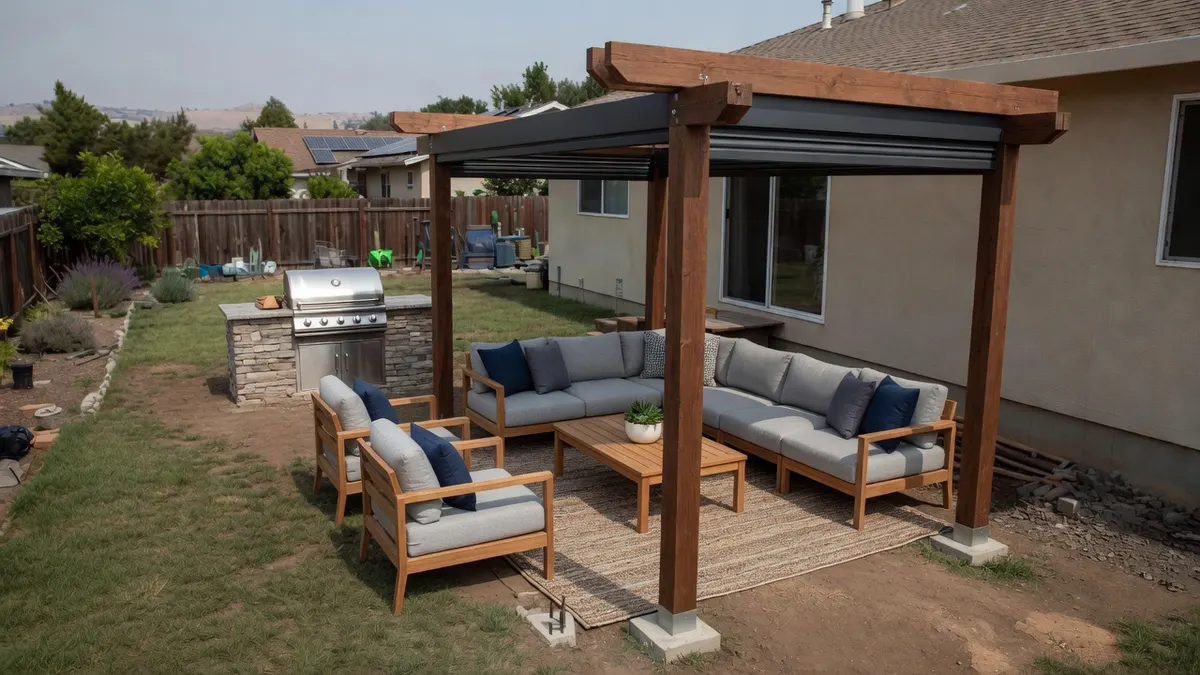
Folsom gets a lot of direct, low-angle western light. In neighborhoods like Empire Ranch, Broadstone, and the streets sloping toward Folsom Lake, a patio that faces the wrong way can be unusable for the hottest five hours of the day. That is why shade structure usually deserves the first conversation, ahead of the pretty stuff. A solid patio cover, a pergola with adjustable louvers, or a wall of well-placed trees changes how many hours the space is actually livable.
The mistake I see most often is people spending the whole budget on a fire pit and string lights, then realizing they still can't sit outside until dinnertime. Comfort comes from shade and airflow first. Decoration is the layer you add once the bones work. If you're building a shortlist of pros, start with licensed landscaping contractors and the local Folsom contractor guide so you're comparing people who already understand this climate.
What a Folsom backyard actually costs to upgrade
A full outdoor living project in the Sacramento Valley tends to land somewhere between roughly $12,000 and $65,000, and that spread is real, not vague. A pergola, some pavers, and drought-tolerant planting might sit near the low end. An outdoor kitchen with a gas line, a covered structure, retaining walls for a sloped lot, and lighting can climb past the top of that range fast.
Here's the order that saves you money: hardscape, drainage, shade, and utilities get budgeted before a single decorative plant. Trenching for gas or electrical after you've laid expensive pavers means tearing up work you just paid for. Put the conduit and the gas stub in the ground while the dirt is open. And keep a contingency in your back pocket, usually ten to fifteen percent, because older Folsom yards hide surprises like buried irrigation, undocumented prior work, or fill dirt that doesn't drain.
When estimates come back, the shortest one is rarely the most honest. A useful bid spells out materials, labor, what's excluded, allowance amounts, who pulls permits, cleanup, and warranty. If two quotes are thousands apart, the gap usually lives in the assumptions, not in one contractor being greedy. Read the fine print before you decide.
Slope, drainage, and the things that go wrong underground
A lot of Folsom lots have grade to them, which is part of why the views are nice and also why drainage can't be an afterthought. Water needs somewhere to go, or it ends up against the foundation or pooling on your new patio. A good landscape plan accounts for where stormwater runs, where the irrigation zones sit, and how the finished surfaces pitch.
This is also where the hardscape decision lives. Poured concrete and paver systems behave differently on a slope and over our clay-heavy valley soil, which expands and contracts with the seasons. It's worth talking through both with a concrete contractor before you commit, because cracking and settling are almost always a base-prep and drainage story, not a bad-luck story. The work you can't see after it's buried is the work that determines whether the patio still looks good in five years.
Permits, HOAs, and the CSLB box you should check first
Not every outdoor project needs a permit, but several common ones do: patio covers, gas lines for a built-in grill, new electrical circuits for lighting or an outlet, and retaining walls above a certain height. Folsom's building department handles those inspections, and an honest contractor will tell you up front who's responsible for applications and corrections. Put that in the contract.
Then there's the HOA layer, which catches Folsom homeowners off guard more than the city does. Design review for structures, fencing, and sometimes even planting can take weeks, and it often runs slower than the permit itself. Start that approval early so it isn't the thing holding up your crew.
On the licensing side, California rules are simple to remember: any home-improvement job where labor plus materials totals $1,000 or more must be done by a contractor holding an active CSLB license. Anything involving electrical, gas, or structural work belongs with a licensed pro regardless. Before you sign, look up the license number on the CSLB website, confirm it's current, and check that they carry liability insurance and workers' compensation. That two-minute search is the cheapest protection you'll ever buy.
Lighting the yard for the cool hours
The whole point of all this is the evening, so don't let lighting be the line item you cut. Once the sun goes down, low-voltage path lights, downlights tucked into a pergola, and a couple of well-aimed uplights on a tree turn the space from a daytime patio into somewhere you linger. Plan the wiring with the hardscape so you're not surface-mounting cables later. Layer warm, dimmable light rather than one bright floodlight, and you get a backyard that works for a quiet glass of wine and a kid's birthday party alike.
When you're ready to move, walk your yard with your phone and take photos of the sun at three in the afternoon and again at dusk, then write down the problems you want solved and rank them. Bring that list to at least three licensed contractors you find through the Sacramento Valley contractor search, and if your project sits near a city line, glance at neighboring jurisdictions like Granite Bay since permit steps can differ block to block. The goal isn't the lowest number. It's a clear scope, fewer surprises in the ground, and a yard you actually use from the hottest afternoon straight through the best part of the evening.
Who to Hire for This Project
For the work covered in this guide, these are the contractor types to contact and the CSLB classification to verify before you take quotes:
Questions to Ask Before You Sign
- "Is your CSLB license active and bonded?" Verify it yourself at cslb.ca.gov the license number must appear on their bid.
- "Who pulls the permit, and is it included in the bid?" The contractor should handle any required permits a pro who suggests skipping one is a red flag.
- "Can you itemize labor, materials, and allowances?" Itemized bids are the only way to compare quotes on the same scope.
- "What's the payment schedule?" California caps the down payment at $1,000 or 10%, whichever is less payments should track completed work.
- "Who from this area can I call as a reference?" Ask for a recent local job of similar scope, not just photos.
Sacramento Contractors for This Project
Related Articles
Sacramento Irrigation Backflow and Sprinkler Valve Repair Guide: Leaks, Testing, Costs, and Practical Bid Questions
August 12, 2026
Sacramento Paver Patio Cost Guide: Base Prep, Drainage, Permits, and When Pavers Beat Concrete
July 11, 2026
Rocklin Retaining Wall Repairs: Drainage, Permits, and Contractor Scope
July 9, 2026
Frequently Asked Questions
How much does an outdoor living upgrade cost in Folsom? +
Most full projects in the Sacramento Valley run roughly $12,000 to $65,000, depending on how much hardscape, shade structure, and utility work is involved. A pergola with pavers and low-water planting sits near the low end, while a covered outdoor kitchen with gas, electrical, and retaining walls on a sloped lot pushes toward the top. Budget the hardscape, drainage, shade, and utilities before any decorative planting, and hold back ten to fifteen percent for hidden site conditions.
Do I need a permit for a patio cover or outdoor kitchen in Folsom? +
Often yes. Patio covers, new gas lines for a built-in grill, added electrical circuits, and retaining walls above a set height typically require a permit and inspection from Folsom's building department. Your contractor should state in writing who handles the applications and any corrections. Many Folsom neighborhoods also require HOA design approval, which can take longer than the city permit, so start that process early.
Does my landscaping contractor need to be CSLB licensed? +
If the labor and materials for the job total $1,000 or more, California law requires an active CSLB-licensed contractor. Any work involving electrical, gas, or structural elements should go to a licensed pro regardless of the price. Look up the license number on the CSLB website to confirm it is current, and verify they carry liability insurance and workers' compensation before you sign.
What is the best way to handle the hot afternoon sun in a Folsom backyard? +
Lead with shade and airflow rather than decoration. A solid patio cover, a louvered pergola, or strategically placed shade trees can reclaim the hottest five hours of the day, especially on west-facing yards common near Folsom Lake. Once the structure makes the space usable, you can add the fire pit, lighting, and furniture as the finishing layer.
Why does drainage matter so much for sloped Folsom lots? +
Many Folsom lots have grade, and the valley's clay-heavy soil expands and contracts with the seasons, so water needs a planned path away from the house and patio. Poor drainage is the most common reason concrete cracks, pavers settle, or water ends up against the foundation. A good landscape plan maps stormwater runoff, irrigation zones, and surface pitch before any hardscape goes down.
Should I install lighting and gas lines before or after the patio? +
Before. Trenching for gas, electrical, or low-voltage lighting after pavers or concrete are installed means tearing up work you just paid for. Run conduit and stub out utilities while the ground is still open, then plan your evening lighting layout with the hardscape so cables aren't surface-mounted later. This sequencing is one of the biggest money-savers in any outdoor project.