Folsom Garage Floor Coatings: Slab Prep, Moisture, and Storage Plans
The garage floor looks like the easiest part of the house to upgrade. A Folsom homeowner sees oil stains, tire marks, hairline cracks, and boxes stacked against bare drywall, then sees a glossy flake floor online and thinks the project is mostly about picking a color.
That is where garage floor coating jobs go sideways. The coating is the finish. The real work is the slab: grinding, crack repair, moisture checks, control joints, stem wall edges, dust control, cure time, storage logistics, and whether the garage still needs to function while everything is moved out. A pretty sample chip does not tell you whether the installer knows how to prep a hot Sacramento Valley garage slab that sees summer tires, winter moisture, yard equipment, bicycles, and the occasional leaking water heater.
Folsom homes make this decision especially common. Many garages are attached two- and three-car spaces in Broadstone, Empire Ranch, Briggs Ranch, Natoma Station, and Folsom Ranch neighborhoods where homeowners use the garage as parking, gym, storage, workshop, lake gear staging area, and sometimes a laundry overflow zone. A floor coating can make that space cleaner and easier to maintain, but only if the contractor scopes it as a concrete preparation job, not just a decorative finish.
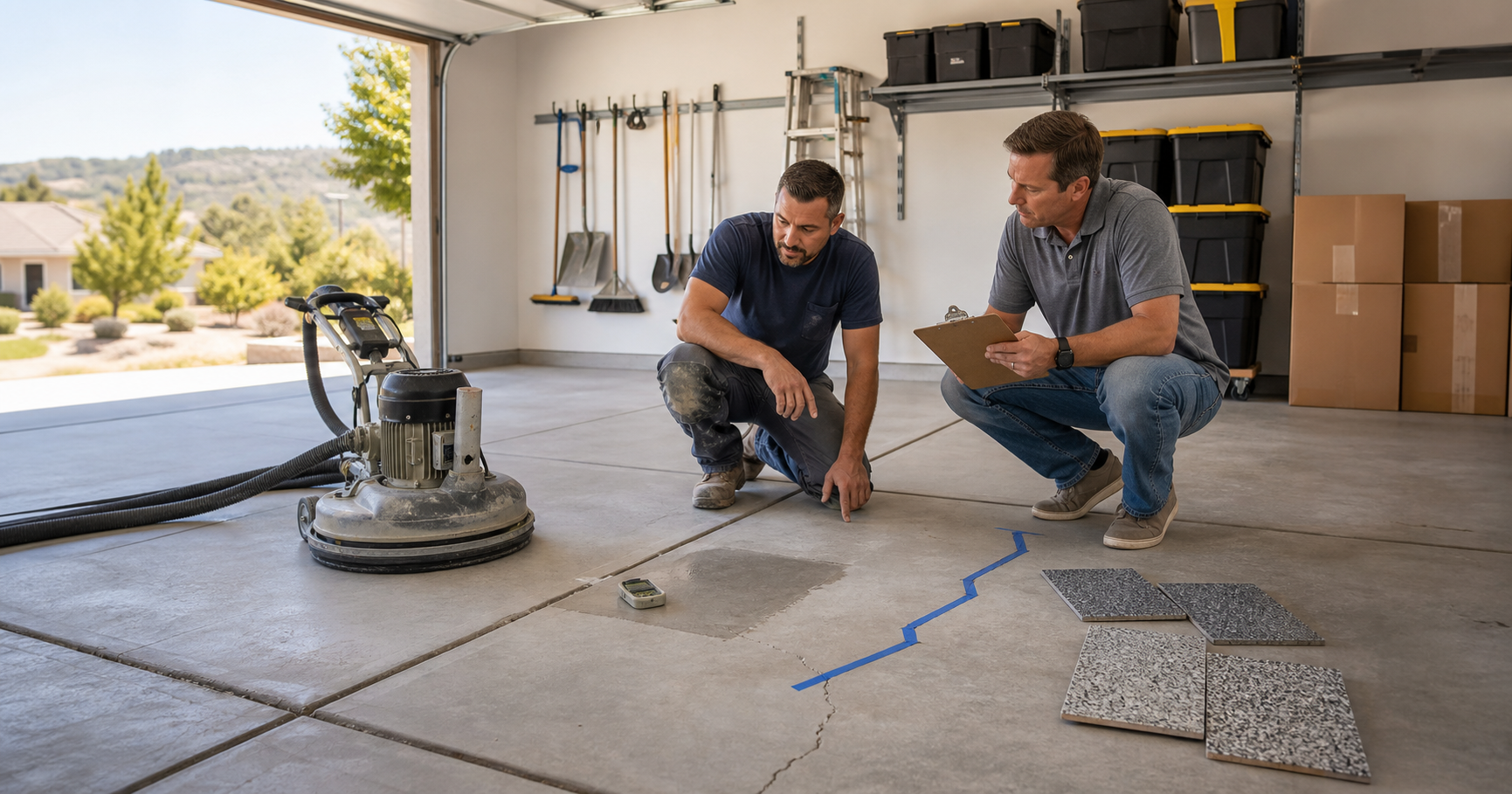
Use this chart before comparing bids. Color comes late. Prep, moisture, cracks, joints, storage, and product limits decide whether the coating still looks good after the first hot season.
Start With How The Garage Actually Gets Used
Before calling contractors, take everything off the floor and photograph the garage while it is still full. That sounds backward, but it helps the installer see the real use pattern: where cars park, where tires turn, where bikes scrape the wall, where the freezer sits, where yard chemicals are stored, where storage bins touch the slab, and whether a water heater, laundry area, utility sink, or garage refrigerator could leak.
Then take photos after the floor is clear. Mark oil spots, old paint, sealer, cracks, control joints, rust stains, low spots, soft concrete, spalling, and damp areas near the garage door. If the garage slopes toward the driveway, photograph that transition too. If the house sits on a slope or the driveway sends water toward the garage during winter storms, make a note.
A useful estimate starts with that real use. A coating for a parking-only garage is not the same as a workshop floor that sees jacks, rolling toolboxes, welding sparks, dog crates, lake equipment, and storage shelves dragged across the surface.
Epoxy, Polyaspartic, Or Something Else?
Homeowners use "epoxy floor" as a catchall, but contractors may be proposing different systems. Traditional epoxy can be durable and attractive when the slab is prepped correctly, but some epoxies can yellow with UV exposure and may need a compatible topcoat. Polyaspartic and polyurea systems often cure faster and may offer better UV stability, but speed is not automatically better if the crew rushes preparation or ignores moisture.
Flake systems hide small cosmetic imperfections better than a solid color. A full broadcast flake floor can add traction and make dirt less visible. Metallic finishes look dramatic online but may show scratches, hot-tire pickup, or roller marks more clearly in a working garage. Clear sealers, grind-and-seal systems, and polished concrete can make sense in some garages, but they are different scopes with different maintenance and slip-resistance expectations.
Ask the contractor to explain the full system: primer or base coat, flake broadcast, grout coat if any, topcoat, slip additive, cure schedule, odor, ventilation, UV limits, chemical resistance, and what products are actually being installed. If the bid only says "epoxy garage floor," it is not detailed enough.
The Slab Prep Matters More Than The Color
Good coating work usually starts with mechanical preparation, often diamond grinding with dust collection. Acid washing or pressure washing alone is not the same thing. The goal is to open the concrete surface enough for the coating system to bond. Old paint, tire dressing residue, oil, silicone, curing compounds, sealer, and dusty weak concrete can all interfere with adhesion.
Cracks need their own plan. A hairline shrinkage crack may be routed and filled, then hidden under flake. A moving crack or control joint should not be treated like a cosmetic scratch. Some joints should remain honored through the coating so the slab can move. If the contractor fills every joint flush without explaining movement, ask more questions.
Garage edges are easy to overlook. The stem wall, step into the house, garage door threshold, apron, side door, water heater platform, and cabinet bases all need clean termination details. A beautiful field coat with ragged edges around the threshold will bother you every time the garage door opens.
Moisture Is The Quiet Failure Risk
Folsom garages are dry much of the year, but moisture still matters. Winter rain, irrigation overspray, driveway slope, poor door seals, slab vapor transmission, and water heater or appliance leaks can affect coatings. A slab can look dry on the surface and still have enough vapor movement to create bubbles, whitening, or adhesion failure later.
Ask whether the installer performs a moisture test or at least screens for moisture risk before choosing the system. Ask what happens if the test is high. The answer may be a moisture-tolerant primer, a different coating system, drainage correction, waiting for the slab to dry, or not coating until the source is fixed. Be careful with anyone who says moisture never matters in Folsom because the summers are hot.
If the garage has recurring water at the door, fix that before coating. Door seals, slab slope, driveway drainage, gutter discharge, irrigation heads, and low spots outside the garage can all send water where the coating has to terminate.
What It Might Cost In 2026
These are planning ranges for Folsom and nearby Sacramento-area homes, not quotes:
- Basic two-car garage coating over a sound slab: $2,500 to $5,500 for professional prep, coating, flake, and topcoat when the floor is mostly clear and damage is minor.
- Larger two- or three-car garage with full broadcast flake: $4,500 to $9,500 depending on square footage, product system, edge details, and cure schedule.
- Heavy crack repair, oil remediation, old coating removal, or spalling repair: $1,000 to $6,000-plus added to the coating scope depending on severity.
- Moisture mitigation primer or specialty system: often $1,500 to $5,000-plus added when testing shows elevated risk.
- Garage storage coordination: $800 to $8,000-plus if wall rails, cabinets, overhead racks, slatwall, electrical outlets, or lighting are installed before or after the floor.
- Temporary storage, moving, or haul-off: varies, but it should be named if the garage is full.
The cheapest bid is often the one that skips prep, leaves moving to the homeowner, excludes crack repair, or uses vague product names. A more expensive bid may be the only one pricing the project you actually need.
Which Contractor Should Lead?
For a straightforward coating, look for a contractor who can show garage floor coating work, explain the specific coating system, and describe how they prepare concrete. Depending on the company and scope, the relevant California license may include C-61/D-12 Synthetic Products for resin and epoxy products, C-15 Flooring and Floor Covering, C-8 Concrete when concrete restoration is part of the work, C-33 Painting and Decorating for coating-related scopes, or a B general contractor when the floor is part of a broader garage remodel.
A concrete contractor should be involved when the slab is spalling, settling, badly cracked, or needs grinding, patching, or resurfacing beyond normal coating prep. A general contractor makes more sense when the garage plan also includes cabinets, drywall, insulation, lighting, electrical circuits, laundry changes, water heater work, or a conversion conversation. A C-10 electrical contractor should handle new outlets, EV-ready circuits, hardwired lighting, or dedicated circuits for tools and freezers.
Do not judge by the sample board alone. Ask who will be on site, whether the crew is trained on that product, how they handle dust, what warranty excludes, and whether hot-tire pickup, peeling, bubbling, yellowing, and moisture vapor are addressed in writing.
Permits, Licensing, And Folsom Logistics
A floor coating by itself is usually more like finish work than a structural remodel, but the permit conversation changes if the project adds electrical, plumbing, mechanical work, walls, built-in storage attached in a way that affects structure, a garage conversion, or work tied to fire separation between the garage and living space. Folsom's ePermit Center is the right place to confirm how the city wants minor permits, inspections, and plan review handled for the actual scope.
California licensing is more direct. CSLB says contractors generally need a license when a project requires a building permit, uses additional workers, or totals $1,000 or more in labor and materials. The limited under-$1,000 exemption does not let a contractor split a larger job into smaller invoices. For coating work specifically, the CSLB's D-12 Synthetic Products classification includes resin and epoxy application, but the right license fit still depends on the full scope.
For Folsom homeowners, HOA rules can matter too. Interior garage floors may not trigger the same review as exterior work, but cabinets visible from the street, driveway work, exterior storage, or changes near the garage opening can. If you live in a managed neighborhood, check before ordering materials.
What A Useful Bid Should Include
Ask each contractor to separate:
- Garage square footage, number of stalls, stem wall edges, steps, thresholds, and apron limits
- Existing slab condition: cracks, joints, spalling, oil, old coatings, sealers, soft concrete, and moisture clues
- Preparation method, including grinding equipment, dust collection, edge grinding, and cleanup
- Crack and joint treatment, including which joints stay visible or flexible
- Product system by name: primer, base coat, flake, topcoat, slip additive, and cure schedule
- Moisture testing assumptions and what happens if moisture readings are high
- Moving, temporary storage, disposal, and how long cars must stay out
- Odor, ventilation, pet and child access, and occupied-home scheduling
- Warranty terms and exclusions for moisture, moving cracks, hot tires, chemical spills, UV exposure, and owner abuse
- Any related work by electrical, concrete, drywall, cabinet, storage, or general contractors
If one bid is a single line and another reads like a work plan, compare them carefully. The work plan may be less risky even if it costs more.
Red Flags In Garage Floor Coating Quotes
Slow down if the contractor says grinding is not needed, will not name the product system, gives a lifetime warranty with no exclusions, or says every crack disappears permanently. Be careful with bids that ignore moisture, do not discuss joint movement, or promise same-day return to service without explaining cure limits.
Other warning signs include no dust-control plan, no edge detail, no written storage responsibilities, no proof of license and insurance, and no explanation of how oil-contaminated areas are handled. A garage floor coating failure is frustrating because it usually fails in the places you see every day: tire paths, cracks, thresholds, and the first square foot inside the garage door.
Internal Homework Before You Hire
For local context, start with our Folsom contractor guide, compare licensed flooring contractors, concrete contractors, painting contractors, general contractors, and electrical contractors. Use the contractor search when you are ready to build a shortlist.
For related planning, pair this with our Sacramento flooring material guide, garage heat and storage planning guide, concrete repair and replacement guide, garage conversion and ADU guide, California permit basics, and license verification guide.
The Bottom Line
A Folsom garage floor coating is not just a color upgrade. It is a slab prep, moisture, storage, and product-selection project. Clear the floor, document the cracks and stains, ask how the slab will be prepared, and compare bids by the system and warranty instead of the sample chip. The best result is a garage that still works like a garage, just cleaner, brighter, easier to sweep, and less frustrating every time you pull in.
Who to Hire for This Project
For the work covered in this guide, these are the contractor types to contact and the CSLB classification to verify before you take quotes:
Questions to Ask Before You Sign
- "Is your CSLB license active and bonded?" Verify it yourself at cslb.ca.gov the license number must appear on their bid.
- "Who pulls the permit, and is it included in the bid?" The contractor should handle any required permits a pro who suggests skipping one is a red flag.
- "Can you itemize labor, materials, and allowances?" Itemized bids are the only way to compare quotes on the same scope.
- "What's the payment schedule?" California caps the down payment at $1,000 or 10%, whichever is less payments should track completed work.
- "Who from this area can I call as a reference?" Ask for a recent local job of similar scope, not just photos.
Sacramento Contractors for This Project
Related Articles
Frequently Asked Questions
How much does a garage floor coating cost in Folsom? +
A professional two-car garage coating often ranges from $2,500 to $5,500 when the slab is sound. Larger garages, full broadcast flake systems, old coating removal, crack repair, oil remediation, or moisture mitigation can push the project into the $4,500 to $12,000-plus range.
Is epoxy or polyaspartic better for a Folsom garage? +
Neither is automatically better. Epoxy can be durable with correct prep and a compatible topcoat, while polyaspartic or polyurea systems often cure faster and may offer better UV stability. The right choice depends on slab condition, moisture risk, use, cure schedule, and installer skill.
Does a garage floor coating need a permit in Folsom? +
A coating-only project is usually finish work, but permits can matter if the project includes electrical, plumbing, mechanical work, walls, built-in changes, fire-rated garage assemblies, or a garage conversion. Confirm the permit path with Folsom for the exact scope.
What license should a garage floor coating contractor have in California? +
The right license depends on the full scope. For resin and epoxy application, CSLB lists C-61/D-12 Synthetic Products. Flooring, concrete repair, painting, electrical, or general remodel work may involve other classifications such as C-15, C-8, C-33, C-10, or B. Verify the active license before signing.