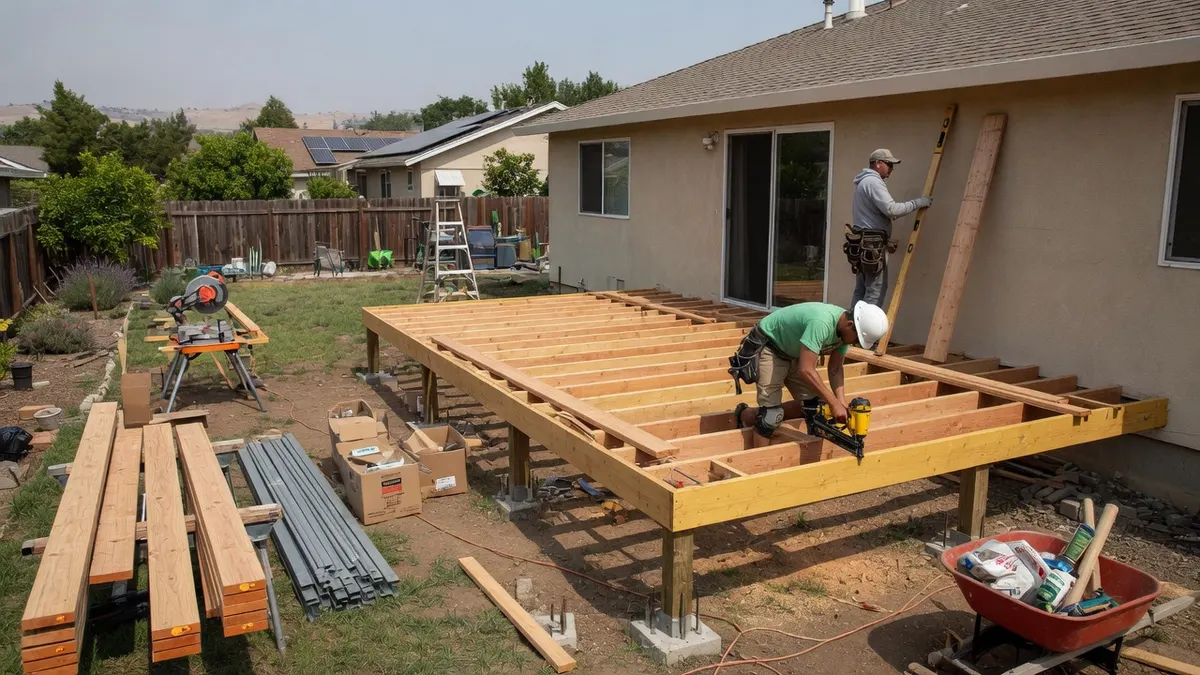
Folsom Deck Replacement Costs: Permits, Materials, and Contractor Scope
Deck replacement in Folsom is not just an outdoor upgrade. It is often a structural project tied to summer heat, sloped lots, drainage, dry rot, railing safety, wildfire exposure near open space, and how the deck connects to the house. A small ground-level platform behind a newer subdivision home is a very different job from an elevated deck on a hillside lot near the American River corridor.
Folsom homeowners usually start with a simple question: should I repair the old deck or replace it? The honest answer depends on the framing, ledger connection, posts, footings, fasteners, stairs, railings, drainage, and whether the existing deck was permitted and built for today's expectations. Surface boards can make a worn deck look bad, but the expensive decisions are underneath.
This guide explains realistic 2026 deck replacement cost ranges in Folsom, when permits commonly matter, how material choices affect long-term maintenance, and what a complete contractor bid should include before demolition begins.
Typical 2026 Deck Replacement Cost Ranges in Folsom
Most Folsom deck projects fall into these planning ranges:
- Small repair or partial surface replacement: $2,500 to $9,000 for replacing selected boards, tightening railings, repairing a few steps, or addressing limited dry rot where the framing is otherwise sound.
- Ground-level wood deck replacement: $12,000 to $30,000 for a modest backyard deck with pressure-treated framing, wood surface boards, simple stairs, and limited site work.
- Ground-level composite deck replacement: $18,000 to $45,000 for composite or PVC decking, hidden fasteners, picture-frame borders, upgraded fascia, and better low-maintenance performance in summer sun.
- Elevated deck replacement: $35,000 to $90,000 or more when the project includes taller posts, engineered framing, guardrails, stairs, concrete footings, ledger work, hillside access, or drainage corrections.
- Large outdoor living deck: $75,000 to $160,000 or more when the deck includes multiple levels, lighting, covered areas, outdoor kitchen rough-ins, glass or cable railings, waterproof under-deck systems, or extensive structural work.
These are planning numbers, not quotes. Deck pricing is highly site-specific because labor access matters so much. A flat backyard with open side-yard access is one cost profile. A tight hillside yard with limited staging, mature landscaping, boulders, retaining walls, and long material carries is another.
Repair or Replace: How to Make the Call
A deck can look rough and still be structurally reasonable, or it can look acceptable on top while hiding serious framing problems. Before choosing repair, ask the contractor to inspect the ledger board where the deck attaches to the house, joist ends, beam connections, post bases, stair stringers, guardrail posts, fasteners, flashing, and footings.
Replacement usually becomes the safer decision when multiple structural components are compromised. Common warning signs include soft or bouncing areas, guardrails that move when pushed, posts sitting directly in soil, rusted connectors, cracked concrete footings, water stains at the house connection, stair movement, fungal decay, or old framing that no longer matches the planned surface material.
Do not judge the decision only by the deck boards. Replacing boards over weak framing can waste money because composite decking and modern railing systems may outlast the structure below them. If the frame is old, poorly flashed, or built with undersized members, a surface-only project can leave the homeowner with a prettier but still risky deck.
Permits and Structural Review
Permit requirements depend on address, deck height, attachment to the house, structural scope, railings, stairs, electrical work, covered areas, and whether the deck is being rebuilt like-for-like. In general, Folsom homeowners should expect permit questions when a deck is attached to the home, elevated above grade, changes size, changes structural members, adds stairs or guardrails, or includes electrical or roofed features.
A permitted deck project may require drawings that show dimensions, footing sizes, post and beam layout, joist spacing, ledger attachment, flashing, stair geometry, railing height, and connection hardware. Elevated decks, hillside decks, and decks supporting heavy features may require more detailed structural planning.
Permits add paperwork, but they also protect the homeowner. Deck failures are often connection failures: ledger bolts, flashing, post bases, rail posts, and stair attachment. A permit process forces those details onto the plan instead of leaving them to field improvisation. California work over $1,000 in labor and materials generally requires a licensed contractor, and homeowners can verify licensing through the Contractors State License Board at cslb.ca.gov.
Material Choices for Folsom Heat
Folsom summers are hard on outdoor materials. Full-sun decks can see intense UV exposure, surface heat, and fast drying cycles. Traditional wood can still work, but it needs maintenance. Pressure-treated framing is common, while surface boards may be redwood, cedar, pressure-treated lumber, composite, PVC, or hardwood.
Wood decking usually has the lowest upfront cost, but it needs staining or sealing and can check, cup, splinter, or fade. Composite decking costs more at installation but reduces regular maintenance. PVC decking often handles moisture well and may be lighter, but pricing and surface feel vary by product. Dark colors can become uncomfortable under bare feet, especially on south-facing decks with no shade.
Ask for actual product names, board profiles, fastening method, fascia details, color samples, slip resistance, heat performance, and warranty terms. A bid that only says "composite deck" is incomplete. Different product lines have different cap layers, span ratings, heat behavior, and installation requirements.
Framing, Footings, and Ledger Details
The surface gets the attention, but the frame decides whether the deck lasts. A good replacement scope should identify joist spacing, beam sizing, post size, footing size, lateral bracing, hardware type, and how the deck will drain. Composite decking may require tighter joist spacing than the old wood boards. Changing materials without checking span requirements can create a deck that feels springy.
The ledger is especially important on attached decks. Water intrusion at the ledger can damage both the deck and the house. Proper flashing, spacing, fasteners, and wall integration matter more than most homeowners realize. If stucco, siding, or trim must be opened to correct the ledger, the bid should say who repairs it and how weatherproofing will be restored.
Footings also deserve attention. Old posts may sit on undersized pads, unreinforced concrete, or soil that moves during wet winters and dry summers. Sloped lots can require deeper footings, better drainage, erosion control, or engineering. If a contractor plans to reuse existing footings, ask how they verified size, depth, condition, and layout.
Railings, Stairs, Lighting, and Shade
Deck replacement is the right time to fix the features people touch every day. Railings should feel solid, meet height and spacing requirements, and fit the deck's use. Wood railings are economical but need maintenance. Aluminum, composite, cable, and glass systems can look cleaner and require less upkeep, but each has different cost, cleaning, view, and installation tradeoffs.
Stairs are often more complicated than expected. A safe stair plan needs consistent riser height, adequate tread depth, sturdy stringers, landings where needed, handrails, lighting, and a clear path to the yard. If the old stairs were steep, uneven, or awkward, do not assume they should be rebuilt the same way.
Folsom decks also benefit from shade planning. A deck that is unusable at 4 p.m. in July is not a great investment. Options include a freestanding shade structure, attached patio cover, pergola, retractable awning, shade sail, or future-ready post layout. Electrical planning for stair lights, outlets, fans under a cover, or low-voltage lighting should happen before framing is closed.
Hidden Costs That Change the Budget
Common deck replacement surprises include dry rot at the house wall, termite damage, poor drainage below the deck, buried concrete, undersized footings, unpermitted prior work, damaged stucco or siding, railing code corrections, and landscaping that must be removed for access. Dump fees and material hauling can also be higher than expected because old pressure-treated lumber and composite boards are heavy.
Access is another major cost driver. If crews can park close, stage lumber nearby, and move debris easily, labor is lower. If materials must be carried down narrow side yards, through the house, or around a steep slope, the same deck can cost much more.
A realistic budget should include a 10% to 20% contingency, and more if the deck is elevated, attached to an older wall, or built over a slope. The contractor should provide unit pricing for likely changes such as framing replacement, footing upgrades, fascia repair, additional railing sections, and stair modifications.
What a Complete Deck Bid Should Include
A useful Folsom deck replacement estimate should identify:
- Demolition, hauling, and disposal scope
- Whether existing framing, posts, footings, or ledger will be reused or replaced
- Deck dimensions, height, stairs, landings, railing type, and surface area
- Framing lumber, joist spacing, beams, posts, connectors, and fasteners
- Footing size, concrete scope, drainage needs, and hillside access assumptions
- Decking brand, product line, color, board pattern, fascia, and fastener system
- Ledger flashing, house wall repair, stucco or siding patching, and weatherproofing
- Permit responsibility, drawings, inspections, and engineering if needed
- Lighting, outlets, shade structure coordination, and future utility rough-ins
- Warranty, cleanup, change-order pricing, and start-to-finish schedule
If one bid includes permits, new footings, structural connectors, ledger flashing, railings, stairs, fascia, and cleanup while another only lists square footage and decking boards, they are not comparable bids.
Final Planning Advice
For most Folsom homeowners, the smartest deck project starts with structure and use, not color. Decide how the deck will be used, how much shade it needs, whether the view matters, how often you want to maintain it, and whether the existing frame deserves trust. Then price the visible finishes.
A well-built deck should handle Sacramento Valley heat, winter rain, family traffic, and years of outdoor meals without constant worry. The best projects are permitted when required, properly flashed at the house, supported by sound footings, detailed with durable hardware, and scoped clearly enough that the homeowner knows what is included before the old deck comes apart.
Browse licensed deck contractors in the Sacramento area, or search for professionals serving Folsom, El Dorado Hills, Fair Oaks, and nearby communities.
Who to Hire for This Project
For the work covered in this guide, these are the contractor types to contact and the CSLB classification to verify before you take quotes:
Questions to Ask Before You Sign
- "Is your CSLB license active and bonded?" Verify it yourself at cslb.ca.gov the license number must appear on their bid.
- "Who pulls the permit, and is it included in the bid?" The contractor should handle any required permits a pro who suggests skipping one is a red flag.
- "Can you itemize labor, materials, and allowances?" Itemized bids are the only way to compare quotes on the same scope.
- "What's the payment schedule?" California caps the down payment at $1,000 or 10%, whichever is less payments should track completed work.
- "Who from this area can I call as a reference?" Ask for a recent local job of similar scope, not just photos.
Sacramento Contractors for This Project
Related Articles
Frequently Asked Questions
How much does deck replacement cost in Folsom? +
A small repair may cost $2,500 to $9,000. Ground-level deck replacement often ranges from $12,000 to $45,000 depending on wood versus composite materials. Elevated or hillside decks commonly run $35,000 to $90,000 or more because of footings, framing, stairs, railings, access, and structural details.
Do I need a permit to replace a deck in Folsom? +
Permits are commonly needed when a deck is attached to the house, elevated, structurally rebuilt, expanded, or includes stairs, guardrails, electrical work, or a roofed feature. Requirements depend on the exact address and scope, so the contractor should state who checks permits and who schedules inspections.
Is composite decking worth it in Folsom? +
Composite decking can be worth it for homeowners who want lower maintenance and better long-term appearance than stained wood. It costs more upfront, and darker colors can get hot in full sun, so product line, color, shade, and warranty details should be reviewed before ordering.
What is the biggest hidden cost in deck replacement? +
Hidden framing damage is the biggest surprise. Dry rot at the ledger, weak joists, undersized footings, rusted connectors, damaged siding or stucco, and unsafe rail or stair connections can add significant cost once the old deck boards are removed.