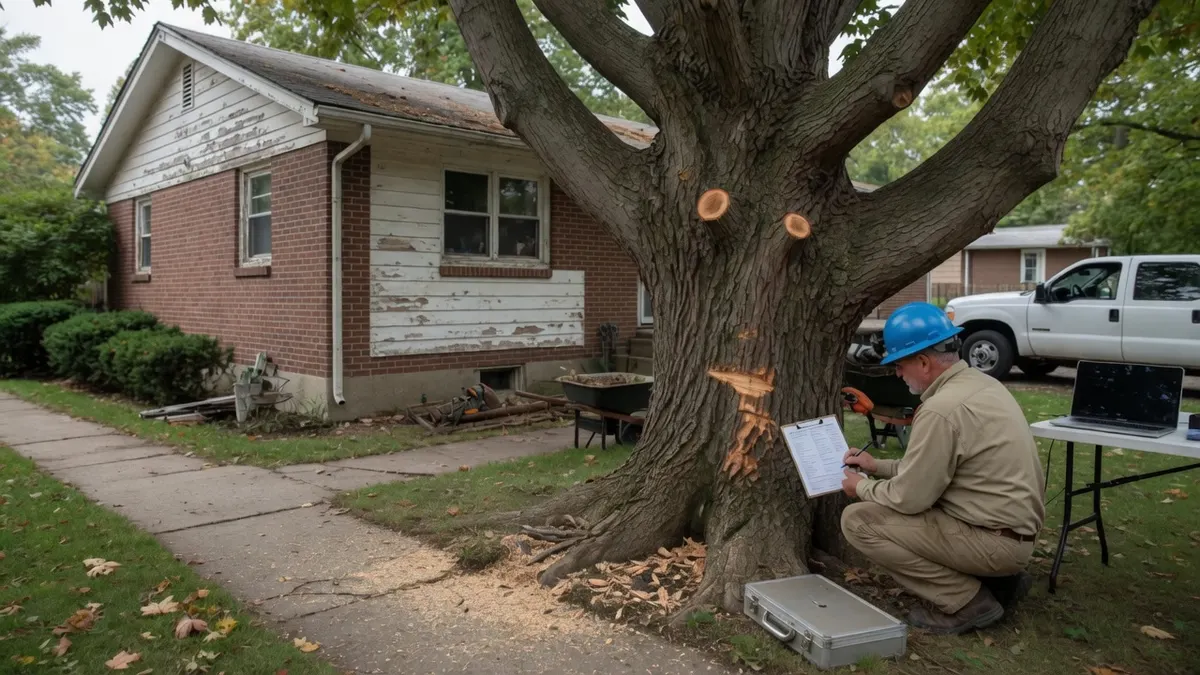
Fair Oaks Tree Work Before Remodels: Roots, Shade, and Access
The first time a Fair Oaks remodel goes sideways, it's usually not the framing or the cabinets. It's a root. A crew breaks ground for a new foundation footing or a slab pour, and eight inches down they hit a structural root from a valley oak that was here long before the house. Now the schedule stops, an arborist gets called in, and a homeowner who budgeted for a kitchen is suddenly negotiating tree protection. None of that has to happen. In a town built around mature oaks and riverside lots, the trees deserve a seat at the planning table before the first wall comes down.
The oaks were here first, and the county knows it
Fair Oaks earned its name honestly. Older neighborhoods near the American River bluffs are shaded by heritage oaks, and a lot of them are protected. That's the detail people miss. You can't always treat a tree on your own property as yours to cut. Depending on the species, trunk size, and whether it's a native oak, removing or heavily pruning it can require a permit, an arborist's report, and sometimes replacement planting as a condition of approval.
Sacramento County tends to look closely at native oaks, and the rules around drip lines and root zones are stricter than most homeowners expect. So before you sketch an addition that crowds a 60-year-old oak, find out what's legally and biologically protected. A good tree service contractor who knows Fair Oaks can usually tell you in a single site visit whether you're looking at a routine trim or a permitting situation. Starting that conversation early is the difference between a two-week delay and a project that stalls for a season.
Can the crane even get to the backyard?
Here's a question that almost never makes it into early remodel talks: how does the heavy equipment reach the work? On the deep, narrow, tree-lined lots common in older Fair Oaks tracts, access is everything. A second-story addition might need a crane or a lift. A foundation repair might need an excavator. And if a low oak limb or a tight side yard blocks the path, that's a problem you want solved before demolition, not during it.
This is why access pruning is its own line item, separate from cosmetic trimming. The goal isn't to make the tree look nice. It's to clear a route for trucks, booms, and material staging without butchering the canopy. A careful contractor will walk the property, figure out where equipment has to travel, and prune only what's necessary to open that corridor. Done right, the tree stays healthy and the general contractor running your remodel never loses a day waiting on access.
Protecting roots you can't see
The part of the tree that wrecks remodels is the part nobody looks at. Roots from a mature oak spread far past the canopy, often well beyond where you'd guess, and they sit shallow. Trench through them for a utility line or compact the soil over them with a parked Bobcat, and you may not kill the tree this year. You might kill it three summers from now, long after the contractor's warranty has lapsed and no one connects the dead oak to the remodel.
Root protection is mostly about restraint. Fencing off the critical root zone, hand-digging near big roots instead of trenching, keeping heavy equipment and material piles off the soil above them. If your plans put excavation, foundation work, or new hardscape anywhere near a significant tree, get an arborist's input on where you can dig and where you genuinely can't. That report can also change your design while changes are still cheap, on paper instead of in concrete.
Shade is a feature, so spend it on purpose
In the Sacramento Valley, a mature shade tree on the west or south side of a house is doing real work. Through a string of 100-plus-degree July afternoons, that canopy can keep a room livable and pull noticeable load off the air conditioning. So before anyone removes a tree for a sightline or a wider patio, do the honest math on what you're giving up. Sometimes the right answer is selective pruning that opens a view while keeping the cooling. Sometimes a tree really does have to go, but that should be a deliberate trade, not a default.
What it tends to cost, and who's allowed to do it
Tree work tied to a remodel usually runs somewhere from roughly $500 for straightforward trimming up to $12,000 or more when you're dealing with large removals, crane work, arborist reports, root protection, and replacement planting. Treat those as directional Sacramento Valley figures, not quotes. A single oak overhanging a roofline can cost more to take down safely than a yard full of small trees. Build in a contingency, because remodels near mature trees have a way of surfacing surprises once the ground is open.
On licensing, don't shrug it off. In California, anyone performing construction or tree work that totals $1,000 or more in combined labor and materials must hold a CSLB contractor's license. (That threshold is $1,000, not the old $500 figure that still floats around online.) Tree service and landscaping work commonly falls under the C-27 or C-61/D-49 classifications. Verify the license number directly on the CSLB website, and confirm the contractor carries liability insurance and workers' compensation, because a person dropping limbs over your roof with a chainsaw is exactly the wrong place to economize on coverage.
Permits add another layer. Beyond protected-tree approvals, the remodel itself will likely need its own building permits and inspections, and you want one clear answer in writing about who's pulling what. The tree contractor handles the tree permit, the remodeling contractor handles the building permit, and a written scope keeps those lines from blurring at the worst moment.
The practical move is simple. Before you get serious about a remodel, walk your lot with someone who reads trees for a living, mark which ones are protected, which need access pruning, and which roots your plans have to dodge. Then carry that information into your remodel bids so every contractor is pricing the same reality. When you're ready to line up licensed, insured help in your area, start with the Fair Oaks contractor guide and the Sacramento Valley contractor search to build a shortlist worth comparing.
Who to Hire for This Project
For the work covered in this guide, these are the contractor types to contact and the CSLB classification to verify before you take quotes:
Questions to Ask Before You Sign
- "Is your CSLB license active and bonded?" Verify it yourself at cslb.ca.gov the license number must appear on their bid.
- "Who pulls the permit, and is it included in the bid?" The contractor should handle any required permits a pro who suggests skipping one is a red flag.
- "Can you itemize labor, materials, and allowances?" Itemized bids are the only way to compare quotes on the same scope.
- "What's the payment schedule?" California caps the down payment at $1,000 or 10%, whichever is less payments should track completed work.
- "Who from this area can I call as a reference?" Ask for a recent local job of similar scope, not just photos.
Sacramento Contractors for This Project
Related Articles
Sacramento Irrigation Backflow and Sprinkler Valve Repair Guide: Leaks, Testing, Costs, and Practical Bid Questions
August 12, 2026
Sacramento Paver Patio Cost Guide: Base Prep, Drainage, Permits, and When Pavers Beat Concrete
July 11, 2026
Rocklin Retaining Wall Repairs: Drainage, Permits, and Contractor Scope
July 9, 2026
Frequently Asked Questions
Do I need a permit to remove an oak tree before remodeling in Fair Oaks? +
Often yes. Many native oaks in the Fair Oaks and Sacramento County area are protected, and removing or heavily pruning them can require a permit, an arborist's report, and sometimes replacement planting. Check with Sacramento County and have a qualified arborist or tree contractor assess the tree before you finalize remodel plans, since approval can affect your timeline.
How much does tree work before a Fair Oaks remodel typically cost? +
As a directional range for the Sacramento Valley, expect roughly $500 for basic trimming up to $12,000 or more for large removals, crane work, arborist reports, and root protection. A single large oak over a roofline can cost more to remove safely than several small trees. Always get itemized bids and set aside a contingency for surprises uncovered once excavation begins.
Does the tree contractor need a CSLB license in California? +
Yes, if the work totals $1,000 or more in combined labor and materials, the contractor must hold a valid California CSLB license, commonly a C-27 landscaping or C-61/D-49 tree service classification. Verify the license number directly on the CSLB website and confirm liability insurance and workers' compensation. The licensing threshold is $1,000, not the outdated $500 figure still cited in some places.
Why does tree access matter for a remodel in older Fair Oaks neighborhoods? +
Many older Fair Oaks lots are deep, narrow, and tree-lined, which can block cranes, lifts, and excavators needed for additions or foundation work. Access pruning clears a route for equipment before demolition so the crew doesn't lose days waiting. Planning this early prevents schedule delays and avoids over-cutting a healthy tree under time pressure.
Can construction damage a tree's roots even if the tree looks fine afterward? +
Yes. Oak roots spread far past the canopy and sit shallow, so trenching for utilities or compacting soil with heavy equipment can damage them in ways that don't show for two or three years. By then the warranty is gone and the cause is easy to miss. Fence off the critical root zone, hand-dig near major roots, and get arborist input before excavating near significant trees.
Should I keep a shade tree near my house in the Sacramento Valley heat? +
Usually it's worth protecting. A mature tree on the west or south side can meaningfully cool a room and reduce air-conditioning load during the valley's 100-plus-degree summers. Before removing one for a view or patio, weigh that cooling benefit. Selective pruning can sometimes open a sightline while preserving most of the shade.