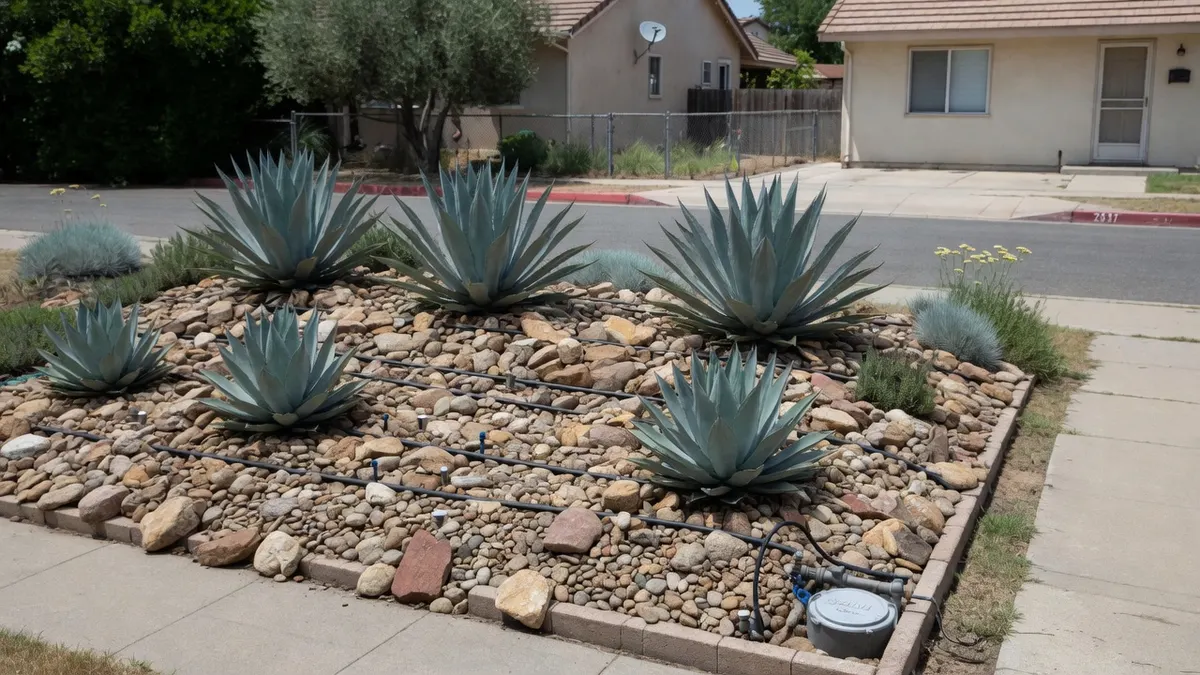
Drought-Tolerant Landscaping for Sacramento Homes: The Complete 2026 Guide
Drought-tolerant landscaping in Sacramento works best when it is designed as a living system, not a lawn removal shortcut.
A homeowner in Roseville may want lower water bills, but they also want curb appeal, shade, and plants that survive the first two summers. A Davis homeowner may care more about habitat and cooling. A Fair Oaks yard with mature trees may need root protection before new planting.
Use this guide to plan a low-water yard that still feels finished.
Drought-Tolerant Landscape Chart
| Design Choice | Why It Matters | Ask the Contractor |
| --- | --- | --- |
| Plant zones | Groups plants by water need | Are hydrozones shown on the plan? |
| Shade trees | Lower heat and protect plants | What mature size and root space are expected? |
| Mulch and soil | Reduces evaporation | Is soil prep included or just planting? |
| Drip irrigation | Targets water at roots | How will establishment watering be programmed? |
| Hardscape balance | Too much stone increases heat | What keeps the yard from becoming hotter? |
| Drainage | Winter storms still matter | Where does runoff go? |
Low-water does not mean no planning.
Start With How the Yard Is Used
Before choosing plants, decide what the yard needs to do: kids, dogs, shade, front-yard curb appeal, pollinator planting, seating, privacy, vegetable beds, or lower maintenance.
Then decide what lawn, if any, should remain. A small useful lawn can be better than replacing everything with hardscape that radiates heat.
Irrigation and Establishment
Even drought-tolerant plants need water while they establish. Ask how long establishment takes, how the controller will be programmed, what happens during heat waves, and who checks plant health after installation.
For a related water-efficiency overview, read water-efficient landscaping for Sacramento homes.
Contractor Fit and Scope
Ask whether the project includes design, demolition, grading, soil amendments, irrigation conversion, planting, mulch, boulders, lighting, drainage, and maintenance instructions. If retaining walls, electrical lighting, tree work, or concrete are involved, additional trades or permits may be needed.
Use landscaping contractors for full-scope yard work, and verify licensing for larger projects.
The Bottom Line
Good drought-tolerant landscaping saves water while preserving shade, curb appeal, drainage, and plant health. The best projects start with use, irrigation, soil, and heat before choosing finishes.
Compare Sacramento, Roseville, and Davis landscaping options, or search drought-tolerant landscaping contractors.
Who to Hire for This Project
For the work covered in this guide, these are the contractor types to contact and the CSLB classification to verify before you take quotes:
Questions to Ask Before You Sign
- "Is your CSLB license active and bonded?" Verify it yourself at cslb.ca.gov the license number must appear on their bid.
- "Who pulls the permit, and is it included in the bid?" The contractor should handle any required permits a pro who suggests skipping one is a red flag.
- "Can you itemize labor, materials, and allowances?" Itemized bids are the only way to compare quotes on the same scope.
- "What's the payment schedule?" California caps the down payment at $1,000 or 10%, whichever is less payments should track completed work.
- "Who from this area can I call as a reference?" Ask for a recent local job of similar scope, not just photos.
Sacramento Contractors for This Project
Related Articles
Sacramento Irrigation Backflow and Sprinkler Valve Repair Guide: Leaks, Testing, Costs, and Practical Bid Questions
August 12, 2026
Sacramento Paver Patio Cost Guide: Base Prep, Drainage, Permits, and When Pavers Beat Concrete
July 11, 2026
Rocklin Retaining Wall Repairs: Drainage, Permits, and Contractor Scope
July 9, 2026
Frequently Asked Questions
How much does drought-tolerant landscaping cost in Sacramento? +
Professional drought-tolerant landscape installation in Sacramento typically costs $5-$15 per square foot, depending on hardscape complexity and plant selections. A front yard conversion averages $8,000-$25,000, while a full property conversion can range from $15,000-$50,000+. Available rebates of $1-$2 per square foot for turf removal can offset costs significantly.
What are the best drought-tolerant plants for Sacramento? +
Top performers in Sacramento include California natives like Manzanita, California Lilac (Ceanothus), Cleveland Sage, and Deer Grass, along with Mediterranean plants like Lavender, Rosemary, and Olive trees. For lawn alternatives, Kurapia and UC Verde Buffalo Grass use 60-75% less water than traditional fescue. Crape Myrtles and Chinese Pistache are excellent drought-tolerant shade trees.
Are there rebates for removing my lawn in Sacramento? +
Yes. Sacramento-area water providers offer turf replacement rebates of $1-$2 per square foot of lawn removed and replaced with drought-tolerant landscaping. Smart irrigation controller rebates of $50-$100 are also available. Check BeWaterSmart.info for current regional programs. Important: apply for rebates before removing your lawn, as most programs require pre-approval.
How much water does drought-tolerant landscaping save? +
A well-designed drought-tolerant landscape reduces outdoor water use by 50-75% compared to a traditional lawn. For the average Sacramento homeowner, that translates to $600-$1,500+ per year in water bill savings, depending on lot size and previous water usage.
Do I need a licensed contractor for landscaping in Sacramento? +
Yes, for any landscaping project over $1,000 in total cost (labor + materials), California law requires a CSLB-licensed contractor with a C-27 Landscaping classification. Always verify your contractor's license at cslb.ca.gov before hiring. Licensed contractors carry bond and insurance protections that safeguard your investment.
How long does it take for drought-tolerant plants to establish? +
Most drought-tolerant plants need 1-2 years of regular watering to establish deep root systems. After establishment, many California natives require zero supplemental water, while Mediterranean plants typically need only occasional deep watering (once or twice monthly) during Sacramento's hottest summer months.