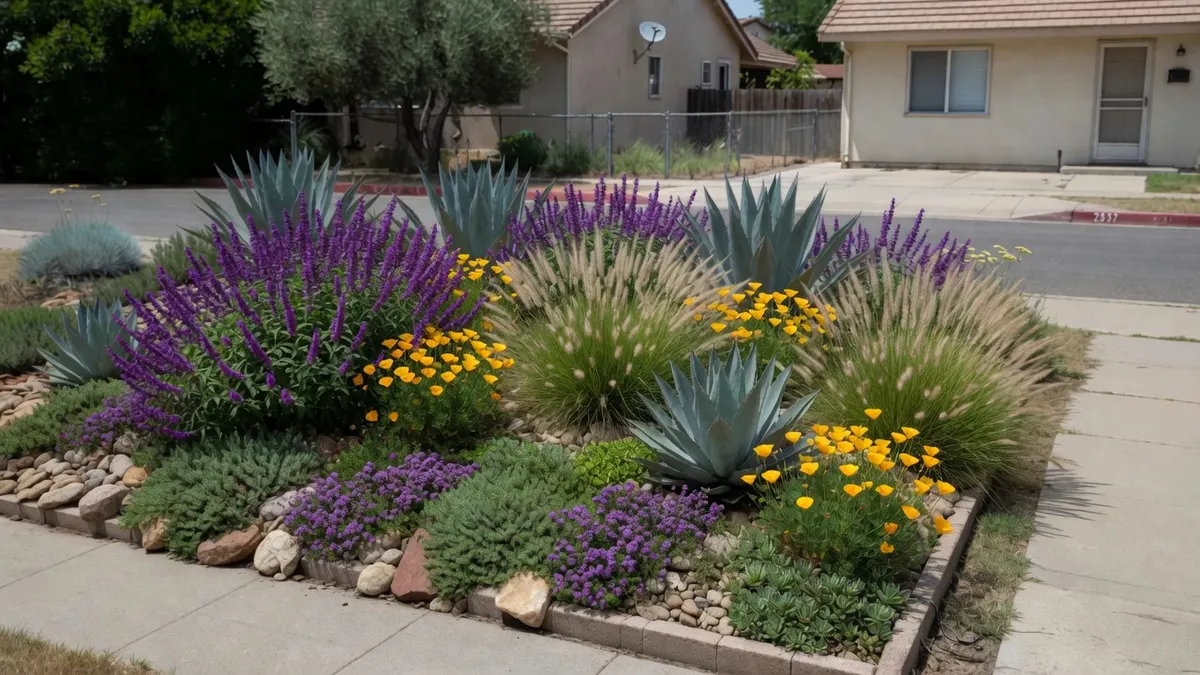
Davis Low-Water Landscape Refreshes That Still Feel Lush
Drive through Old North Davis in late July and you'll spot the contrast immediately: one yard is a crunchy beige lawn on life support, the next is a quiet tangle of toyon, deer grass, and California fuchsia humming with bees, barely sipping water. The second yard isn't a sacrifice. It's a choice that happens to look better in 105-degree heat. Low-water landscaping in Davis has shed its reputation as a gravel desert with three sad agaves, and the homes pulling it off well share a few habits worth copying.
The "lush without a lawn" trick most Davis yards miss
Lushness is really about layering and density, not gallons. A yard reads as full when plants touch, when there's a canopy tree throwing dappled shade, and when groundcover knits the bare dirt together. Davis sits in a hot inland valley where afternoon sun is brutal, so a single shade tree, often an existing one worth preserving, does more for the look and feel of a space than another row of thirsty shrubs.
Group plants by how much water they actually want. Designers call these hydrozones, and they're the difference between an irrigation system that wastes half its output and one that's tuned. Your manzanita and your salvia should not be on the same drip line as a row of edible blueberries. When the zones are honest, you water less and everything looks healthier, because nothing is drowning or starving to keep a neighbor alive.
What a Davis refresh actually runs
For a low-water makeover across the Sacramento Valley, plan on something in the range of $7,500 to $35,000, and treat that as directional rather than a quote. The spread is wide because the line items vary so much: converting overhead spray to drip, amending our heavy valley clay, preserving and protecting mature trees, laying decomposed-granite paths, mulching deeply, and choosing plant sizes all move the number.
Plant size is the sneakiest budget lever. One-gallon plants are cheap and fill in within a couple of seasons; five-gallon and boxed specimens give you instant maturity but can quietly double a plant order. Decide early how much patience you have, because that single choice shapes the whole estimate. And build in a contingency, especially with older Davis bungalows where a previous owner's buried irrigation or a forgotten patio footing surfaces mid-dig.
The most useful bid isn't the cheapest or the shortest. It spells out materials, labor, what's excluded, plant and material allowances, who's responsible for any permits, cleanup, and warranty terms. If two estimates are thousands apart, the gap usually lives in the assumptions, not in one contractor being generous. Read the fine print before you read the total. When you're ready to line up comparisons, the Davis contractor guide and a shortlist of licensed landscaping pros are a sane place to start.
License checks and the permit questions that catch people
California requires a CSLB license for any home-improvement job where labor and materials total $1,000 or more, which nearly every real landscape refresh clears. Verify the license number yourself at the CSLB website rather than taking a business card's word for it, and confirm the contractor carries both liability insurance and workers' compensation. That last one matters more than people think: if an uninsured worker gets hurt in your yard, the liability can land on you.
Pure planting and drip work usually doesn't need a permit. The moment you start changing the bones of the site, though, the rules wake up. In Davis that often means retaining walls above a certain height, grading or drainage changes that redirect runoff, significant tree removal, and anything electrical, like low-voltage lighting transformers or a new GFCI circuit for a water feature. If your design touches wiring, that portion should be handled by a licensed electrician, and a permit with inspection is the norm, not optional. Ask flatly who pulls permits and who sits through the inspection. The contract should name that person.
Designing for our actual weather, not the brochure
Davis weather is two extremes pretending to be one climate. Summers are long, dry, and punishing; winters bring real storms that can pond water against a foundation overnight. A low-water yard has to survive both. That means drip and soil prep for the dry stretch, and grading, swales, or a dry creek so January runoff has somewhere to go instead of pooling at your back door.
Timing the work pays off too. Fall is the sweet spot for planting natives here, because roots establish through the cool, wet months and face their first brutal summer already settled in. Spring and early summer, by contrast, are peak season for every exterior crew in town, so booking can stretch. If a hardscape element like a patio or path edges into concrete work, confirm those material lead times early; they're often the thing that quietly delays a crew, not the plants.
Before you hand over a deposit
Ask for a plant list and an irrigation zone map, not just a pretty rendering. Get the maintenance expectations in plain language, because "low water" still means some pruning and a controller you'll need to adjust seasonally. Ask how the design handles a heavy winter storm, request photos of similar Davis-area work, and insist on a payment schedule tied to real progress rather than a big chunk up front. A contractor who communicates clearly before the first shovel goes in tends to keep communicating when something unexpected turns up underground.
A practical first move costs nothing: walk your yard with your phone, photograph the spots that bake, the corners that flood, and the views you want to keep, then rank what bothers you most. Bring that to your first conversations and you'll get far sharper estimates. From there, compare at least three licensed crews through the Sacramento Valley contractor search, and weigh them on clarity of scope, not just bottom-line price. The yard you want isn't the one that uses the least water on paper; it's the one that still feels alive in August and holds up through a wet Davis winter.
Who to Hire for This Project
For the work covered in this guide, these are the contractor types to contact and the CSLB classification to verify before you take quotes:
Questions to Ask Before You Sign
- "Is your CSLB license active and bonded?" Verify it yourself at cslb.ca.gov the license number must appear on their bid.
- "Who pulls the permit, and is it included in the bid?" The contractor should handle any required permits a pro who suggests skipping one is a red flag.
- "Can you itemize labor, materials, and allowances?" Itemized bids are the only way to compare quotes on the same scope.
- "What's the payment schedule?" California caps the down payment at $1,000 or 10%, whichever is less payments should track completed work.
- "Who from this area can I call as a reference?" Ask for a recent local job of similar scope, not just photos.
Sacramento Contractors for This Project
Related Articles
Sacramento Irrigation Backflow and Sprinkler Valve Repair Guide: Leaks, Testing, Costs, and Practical Bid Questions
August 12, 2026
Sacramento Paver Patio Cost Guide: Base Prep, Drainage, Permits, and When Pavers Beat Concrete
July 11, 2026
Rocklin Retaining Wall Repairs: Drainage, Permits, and Contractor Scope
July 9, 2026
Frequently Asked Questions
Do I need a permit for a low-water landscape refresh in Davis? +
Basic planting and drip irrigation work typically does not require a permit. However, Davis does regulate things like taller retaining walls, grading or drainage changes that redirect runoff, significant tree removal, and any electrical work such as lighting transformers or new circuits. Ask your contractor directly who is responsible for pulling permits and attending inspections, and make sure the contract names that person.
How much does a low-water yard makeover cost in the Sacramento Valley? +
It generally runs roughly $7,500 to $35,000, depending on scope. The biggest cost drivers are converting old spray systems to drip, amending the area's heavy clay soil, hardscape like paths and patios, and how mature you want the plants on day one. Treat any single number as directional until a contractor walks your specific site.
Why are larger plants so much more expensive than small ones? +
One-gallon plants are inexpensive and fill in over a season or two, while five-gallon and boxed specimens give an instant mature look but can roughly double a plant order. Choosing plant size early is one of the clearest ways to control your budget. Many Davis homeowners mix sizes, using larger specimens only for focal points and key shade trees.
How do I verify a Davis landscaping contractor is properly licensed? +
In California, any home-improvement job where labor and materials total $1,000 or more requires a CSLB-licensed contractor, which covers nearly every real landscape refresh. Look up the license number yourself on the CSLB website rather than trusting a business card. Also confirm the contractor carries liability insurance and workers' compensation, since an uninsured worker injured on your property can become your financial problem.
When is the best time of year to install a drought-tolerant landscape in Davis? +
Fall is ideal for planting California natives and adapted species here, because roots establish through the cool, wet winter and are settled before their first hot summer. Spring and early summer are peak season for exterior crews, so scheduling can stretch out. If your project includes concrete or hardscape, confirm material lead times early, since those often cause delays more than the planting itself.
Can a low-water yard actually handle Davis winter storms? +
Yes, if it's designed for both extremes. Davis swings between long dry summers and winters that can pond water against a foundation overnight, so a good plan combines drip and soil prep with grading, swales, or a dry creek to move runoff away from the house. Ask any contractor specifically how their design handles a heavy storm before you sign.