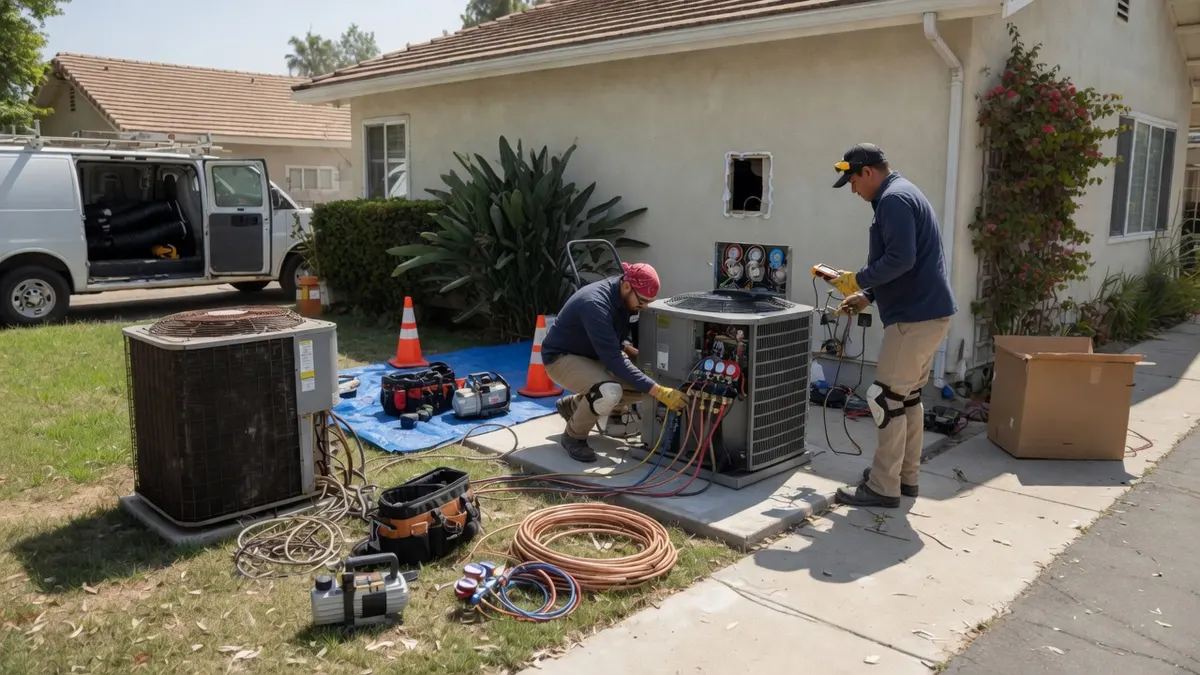
Davis Heat Pump Conversions: Comfort, Noise, and Panel Planning
A Davis bungalow built in the 1950s near Old North Davis usually has one thing in common with a tract home out in Wildhorse: a gas furnace that has quietly done its job for decades, and a homeowner who has started reading about heat pumps. Maybe the AC died in the middle of an August stretch when the thermometer parked at 104. Maybe a SMUD or PG&E rebate email landed in the inbox. Either way, the question is the same. Can one all-electric system handle both the summer roast and the damp, foggy January mornings, and what does it actually take to make the swap?
Here is the honest version, written for people who live in Yolo County, not for a brochure.
What the Yolo climate asks of your equipment
Davis throws a wide temperature spread at any heating and cooling system. Triple-digit afternoons in summer, tule fog and 30-something nights in winter. Modern variable-speed heat pumps handle that range comfortably, but the sizing has to be right. An oversized unit short-cycles, runs loud, and never dehumidifies properly. An undersized one leans on backup electric resistance heat on the coldest mornings, which is where your electric bill can sting.
That is why a real conversion starts with a Manual J load calculation, not a guess based on your old furnace's BTU rating. Furnaces in older Davis homes were frequently oversized to begin with, so matching new equipment to the old nameplate just repeats an old mistake. A good HVAC contractor will measure, ask about your insulation and windows, and right-size from there.
Your panel is part of the project, whether you planned for it or not
This is the step that surprises people. A heat pump and its air handler or backup heat strips draw real amperage, and a lot of older Davis homes still run a 100-amp panel that is already carrying an EV charger, maybe a future induction range, and the rest of the house. Before anyone talks equipment brands, someone needs to do a load calculation on the electrical side too.
Sometimes the answer is a simple breaker swap. Sometimes it is a 200-amp service upgrade, which is its own permitted job and adds meaningfully to the budget. Either way, the panel review should happen during the estimate, not as a $3,000 surprise on install day. If a service upgrade is in the cards, loop in a licensed electrical contractor early so the timelines line up.
Where the outdoor unit goes, and why your neighbors care
Heat pumps run a condenser outside, and unlike an old AC that only kicked on in summer, this one runs in winter too. Placement matters more than people expect. On Davis's tighter infill lots and in tree-lined neighborhoods, the side yard between you and a neighbor is often the only spot, and that is exactly where noise complaints start.
A few things to confirm with your installer. Modern units are rated for sound, often in the low-to-mid 50s in decibels on a sound power scale, but real-world quiet depends on mounting it on a solid pad away from bedroom windows, leaving service clearance, and avoiding a spot where a fence or wall bounces sound back. Ask where the unit will sit, how it will be mounted, and what the noise rating actually is. If your lot crosses near a setback line, it is worth checking the rules before the pad gets poured, since a project near the Davis edge can sit close to a different jurisdiction's expectations.
The duct question nobody asks until it is too late
You can buy the best heat pump made and still be cold in February if the ducts are leaky or undersized. Heat pumps move air at a lower temperature than a gas furnace, so airflow and duct condition matter more, not less. Many Davis homes have ductwork in a hot attic that has not been sealed or tested in 30 years.
In California, replacing the system usually triggers HERS testing, which includes a duct leakage test and sometimes a refrigerant charge verification, performed by an independent rater. That is not red tape for its own sake. It is the thing that confirms the system you paid for actually performs. Budget for duct sealing or partial replacement as a real line item rather than hoping the old runs will be fine.
What a fair Davis estimate looks like
For a full heat pump conversion in the Sacramento Valley, a realistic range runs roughly $9,000 to $24,000, and where you land depends almost entirely on the things above: panel work, duct condition, backup heat strategy, and how many zones you need. A ductless mini-split for an addition sits at the lower end; a whole-house ducted system with a service upgrade pushes the top.
The most useful bid is rarely the cheapest one. It should spell out equipment model and capacity, the load calculation, duct scope, electrical scope, permit responsibility, HERS testing, rebate assumptions, and a contingency for what is hidden behind walls and in the attic. If two quotes are thousands apart, compare the assumptions before you decide one contractor is just expensive.
A note on licensing, because it protects you. Any home-improvement job in California over $1,000 in combined labor and materials must be done by a CSLB-licensed contractor, and an HVAC conversion clears that line many times over. Verify the license number yourself at the CSLB website, confirm it is active and classified for HVAC, and ask for proof of workers' compensation and liability insurance. The permit and inspection trail, including that HERS verification, is your paper record that the work was done to code.
When you are ready to move, do the unglamorous prep first. Photograph your existing furnace and panel, note your hottest and coldest rooms, write down whether an EV charger or electric range is in your future, and bring all of that to the first walkthrough. Then line up at least three licensed installers to compare, scope against scope. You can start building that shortlist through the contractor search and the Davis city guide. The goal is not just a number on a page. It is a system sized for how Davis weather actually behaves, quiet enough that your neighbor never mentions it, and documented well enough that the next owner thanks you.
Who to Hire for This Project
For the work covered in this guide, these are the contractor types to contact and the CSLB classification to verify before you take quotes:
Questions to Ask Before You Sign
- "Is your CSLB license active and bonded?" Verify it yourself at cslb.ca.gov the license number must appear on their bid.
- "Who pulls the permit, and is it included in the bid?" The contractor should handle any required permits a pro who suggests skipping one is a red flag.
- "Can you itemize labor, materials, and allowances?" Itemized bids are the only way to compare quotes on the same scope.
- "What's the payment schedule?" California caps the down payment at $1,000 or 10%, whichever is less payments should track completed work.
- "Who from this area can I call as a reference?" Ask for a recent local job of similar scope, not just photos.
Sacramento Contractors for This Project
Related Articles
Sacramento Attic Insulation and Air Sealing Guide: Costs, Rebates, Ducts, Venting, and Summer Comfort
August 9, 2026
Sacramento Attic Insulation and Air Sealing Guide: Costs, Rebates, Comfort, and Contractor Questions
August 5, 2026
Arden Arcade Mini-Split Installation: Permits & Summer Cooling
July 18, 2026
Frequently Asked Questions
Will one heat pump really handle both Davis summers and winter tule fog? +
Yes, a properly sized variable-speed heat pump handles the full Davis range, from triple-digit summer afternoons to frosty foggy mornings. The key is a Manual J load calculation rather than copying your old furnace's BTU rating, since older Davis furnaces were often oversized. On the rare coldest mornings, electric backup heat strips cover the gap, which is why right-sizing both the unit and the backup strategy matters.
Do I need to upgrade my electrical panel for a heat pump in Davis? +
Maybe. Many older Davis homes run a 100-amp panel that may already be carrying an EV charger or other loads, and a heat pump with backup heat draws meaningful amperage. The installer should run an electrical load calculation during the estimate. Sometimes a breaker change is enough; other times a 200-amp service upgrade is needed, which is a separate permitted job that adds to the budget.
How loud is the outdoor unit, and will it bother my neighbors? +
Modern heat pump condensers are rated for sound and are fairly quiet, but real-world noise depends on placement and mounting. On tighter Davis infill lots the unit often sits in a narrow side yard near a neighbor, so it should be mounted on a solid pad, kept away from bedroom windows, and positioned so fences don't bounce sound back. Ask your installer for the unit's noise rating and exact placement before install day.
What permits and testing does a Davis heat pump conversion require? +
A heat pump conversion typically requires a mechanical permit, plus an electrical permit if panel or service work is involved. California also requires HERS testing performed by an independent rater, which usually includes a duct leakage test and may include refrigerant charge verification. That inspection and HERS trail is your proof the system was installed to code and performs as promised.
Does my Davis contractor need a CSLB license for this work? +
Yes. Any California home-improvement project over $1,000 in combined labor and materials must be performed by a CSLB-licensed contractor, and a heat pump conversion far exceeds that threshold. Verify the license number directly on the CSLB website, confirm it is active and classified for HVAC, and ask for current workers' compensation and liability insurance before signing anything.
What should a heat pump conversion cost in the Sacramento Valley? +
A full conversion in the Davis area typically runs roughly $9,000 to $24,000, with the spread driven by panel work, duct condition, backup heat, and the number of zones. A small ductless mini-split sits near the low end, while a whole-house ducted system paired with a 200-amp service upgrade reaches the top. Compare at least three bids on scope, not just price, including duct sealing, electrical work, and rebate assumptions.