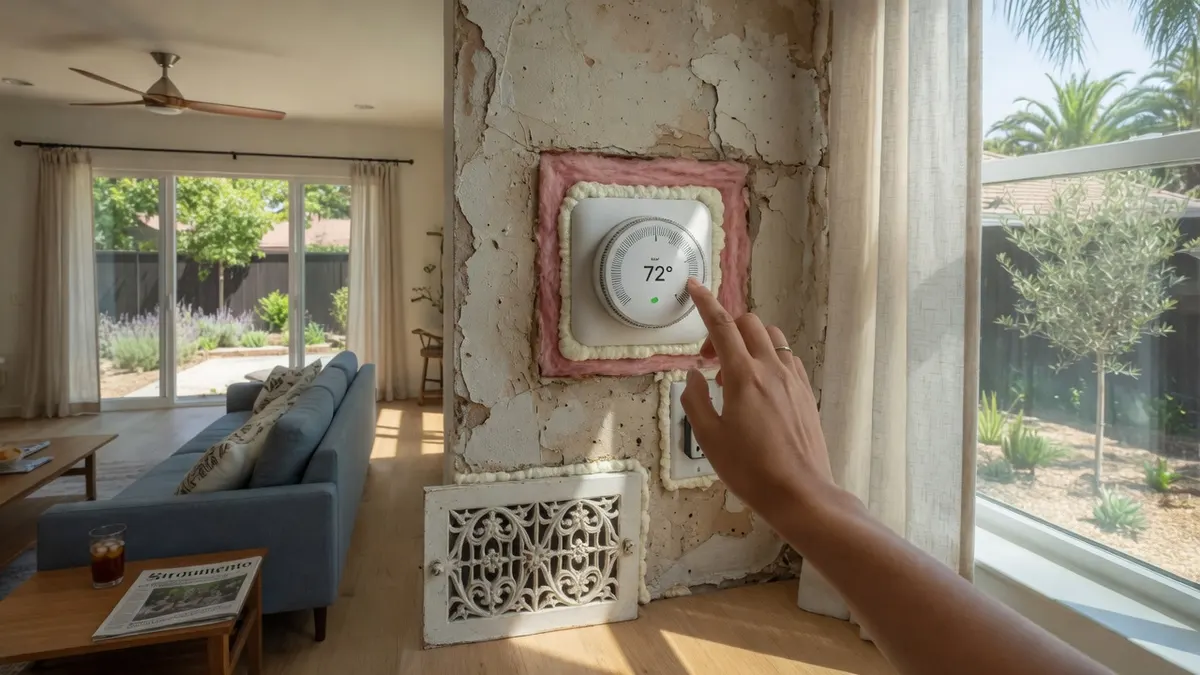
Davis Energy Upgrades That Make Older Homes More Comfortable
By July, a lot of older Davis houses develop the same personality split: the front bedroom that catches afternoon sun turns into an oven, the hallway off the kitchen stays vaguely clammy, and the air conditioner cycles like it's auditioning for overtime. You close the vents you can reach, drag a box fan upstairs, and tell yourself it's just an old house. It usually isn't the house's fault, though. It's the envelope around it.
That's the part people get backwards. Folks in Davis tend to chase efficiency first, because efficiency is what shows up on the PG&E bill. But comfort is the honest diagnostic. If one room runs hot while another feels drafty and the system never seems to rest, no single gadget fixes that. The whole shell of the home, attic to floor to window frame, needs to be looked at as one system.
The drafty-house personality test
Walk your place on a hot afternoon and pay attention to where it goes wrong. The neighborhoods built out decades ago, Central Davis, Old East Davis, the eclectic stretches of Village Homes, share a few recurring habits: attics that leak conditioned air like a sieve, insulation that someone added in one corner and forgot in another, and original windows that were perfectly normal in 1968 and underwhelming now. None of that means tearing the character out of the house. It means finding the leaks and the thin spots before you spend a dollar on anything shiny.
A contractor worth hiring will talk about your specific situation, not recite a generic upgrade menu. Ask how Davis heat, your home's age, attic access, and current California code actually shape the plan. If the answer sounds identical to what they'd tell anyone in any town, keep looking. A good starting point for vetting is the Davis contractor guide and a shortlist of licensed insulation contractors.
What deserves your money first
Here's the order that tends to pay off in the Sacramento Valley, and it surprises people. Air sealing and attic insulation usually buy you more comfort per dollar than anything else. They're unglamorous. Nobody throws a party because the can lights in the ceiling got gasketed and the attic finally hit a real R-value. But that work quiets the hot-room problem faster than a window swap ever will.
Windows do matter. They're just rarely the right first move. Replacing them before you've understood the attic, the ducts, and the dozens of small penetrations around plumbing and wiring is like buying a new front door for a house with the windows open. Sort the cheap, high-impact stuff first, then decide whether glass is still worth it.
A full envelope project across the valley commonly lands somewhere between roughly $4,000 and $30,000, which is a wide range for a reason. Air sealing alone might be a modest line item. A package that includes attic insulation, duct repair, and a heat pump sits at the upper end. Treat any number you hear as directional until a contractor has actually been in your attic. And set aside a contingency, because older Davis homes hide things, prior work that never matched code, ducts that were patched and forgotten, insulation that's more rumor than fact.
Reading an estimate without getting fooled
The shortest bid is almost never the most useful one. A good estimate reads like a plan: materials, labor, what's excluded, allowances, who's responsible for permits, cleanup, and warranty terms spelled out. When two bids land far apart, resist the urge to assume one contractor is just cheaper. Nine times out of ten they're quoting different scopes. Line up the assumptions side by side and the gap usually explains itself.
A few questions separate the pros from the guessers. Does the contractor do blower-door testing and duct-leakage testing before recommending anything, or are they eyeballing it? Will they handle the rebate and HERS verification paperwork, or is that on you? Can they show photos of similar older-home work, give you a payment schedule tied to actual progress, and name one person you'll deal with? Someone who communicates clearly before the job starts is the same someone who'll call you when a surprise turns up mid-project.
The California paperwork nobody mentions upfront
Some of this work is plain maintenance. Some of it trips permits and inspections the moment you touch it. Swapping in a heat pump, reworking ductwork, or upsizing an electrical panel all need to be coordinated early, not discovered halfway through. In California, licensed trades genuinely matter for electrical, HVAC, ducting, and structural work, and this is where a homeowner can protect themselves with about ten minutes of effort.
Verify the contractor's CSLB license number on the state board's site before you sign anything. Any job, labor and materials combined, that runs $1,000 or more legally requires a licensed contractor in California, so most real energy upgrades clear that bar easily. Confirm they carry insurance and workers' comp too, because an uninsured crew in your attic is your liability, not theirs. If your project leans heavily on mechanical systems, it's worth comparing HVAC contractors the same way you'd compare the insulation crews.
Timing is its own quiet factor. Spring and early summer are crowded for HVAC, roofing, and exterior work, so the good crews book out. Interior-leaning envelope work can sometimes slot into the shoulder seasons more easily, though material lead times still need confirming before you bank on a start date. And remember that permit steps in Davis can differ from a project one city over, so if your work crosses jurisdictions, ask early.
So before that first estimate, do the cheap homework yourself. Walk the house on a hot day, photograph the rooms that misbehave, write down the problems you actually want solved, and rank them. Then put at least three licensed contractors against that list using the Sacramento Valley contractor search. The win isn't the lowest number on the page. It's a clean scope, a crew that returns your calls, and a house that finally feels the same temperature in every room you live in.
Who to Hire for This Project
For the work covered in this guide, these are the contractor types to contact and the CSLB classification to verify before you take quotes:
Questions to Ask Before You Sign
- "Is your CSLB license active and bonded?" Verify it yourself at cslb.ca.gov the license number must appear on their bid.
- "Who pulls the permit, and is it included in the bid?" The contractor should handle any required permits a pro who suggests skipping one is a red flag.
- "Can you itemize labor, materials, and allowances?" Itemized bids are the only way to compare quotes on the same scope.
- "What's the payment schedule?" California caps the down payment at $1,000 or 10%, whichever is less payments should track completed work.
- "Who from this area can I call as a reference?" Ask for a recent local job of similar scope, not just photos.
Sacramento Contractors for This Project
Related Articles
Sacramento Attic Insulation and Air Sealing Guide: Costs, Rebates, Ducts, Venting, and Summer Comfort
August 9, 2026
Sacramento Attic Insulation and Air Sealing Guide: Costs, Rebates, Comfort, and Contractor Questions
August 5, 2026
Arden Arcade Mini-Split Installation: Permits & Summer Cooling
July 18, 2026
Frequently Asked Questions
Which energy upgrade should an older Davis home do first? +
In most older Davis houses, air sealing and attic insulation come first because they deliver the most comfort per dollar. They directly fix the hot-room and drafty-hallway problems common in Central Davis and Old East Davis. Windows and other upgrades make more sense once the attic, ducts, and air leaks are understood. Doing it in that order keeps you from paying for premium glass while air still escapes through the attic.
How much does an energy upgrade cost in the Davis area? +
A whole-envelope project in the Sacramento Valley typically runs somewhere between roughly $4,000 and $30,000, depending on scope. Air sealing alone is a modest line item, while a package with attic insulation, duct repair, and a heat pump sits at the higher end. Treat any quoted figure as directional until a contractor has actually inspected your attic and ducts, and budget a contingency for surprises hidden in older homes.
Do I need a permit for energy upgrades in Davis? +
It depends on the work. Simple air sealing or added insulation often doesn't, but heat pumps, duct changes, and electrical panel work commonly require permits and inspections, and may need HERS verification. Coordinate those early with your contractor rather than discovering it mid-project. Keep in mind that Davis permit steps can differ from neighboring jurisdictions if your project crosses city lines.
How do I verify a contractor is licensed in California? +
Look up the contractor's CSLB license number on the California State License Board website and confirm it's active and matches the trade. Also verify they carry liability insurance and workers' compensation, since an uninsured crew working in your home can become your liability. Any project costing $1,000 or more in combined labor and materials legally requires a licensed contractor in California, which covers nearly all real energy upgrades.
Why does my Davis house feel hot in one room and cold in another? +
Uneven temperatures usually point to envelope problems rather than a failing AC unit. Older Davis homes often have leaky attics, patchy insulation, and duct leakage that let conditioned air escape unevenly. A contractor can confirm this with blower-door and duct-leakage testing before recommending fixes. Addressing those leaks typically evens out the temperature far more effectively than adjusting vents or adding fans.
Should I replace my windows to make my older Davis home more comfortable? +
Windows matter, but they're rarely the right first step. Replacing them before sealing the attic and fixing duct leaks is like buying a new door for a house with the windows open. Handle the cheaper, high-impact air sealing and insulation work first, then decide whether window replacement still adds enough comfort to justify the cost. In many older Davis homes, the envelope work alone solves most of the discomfort.