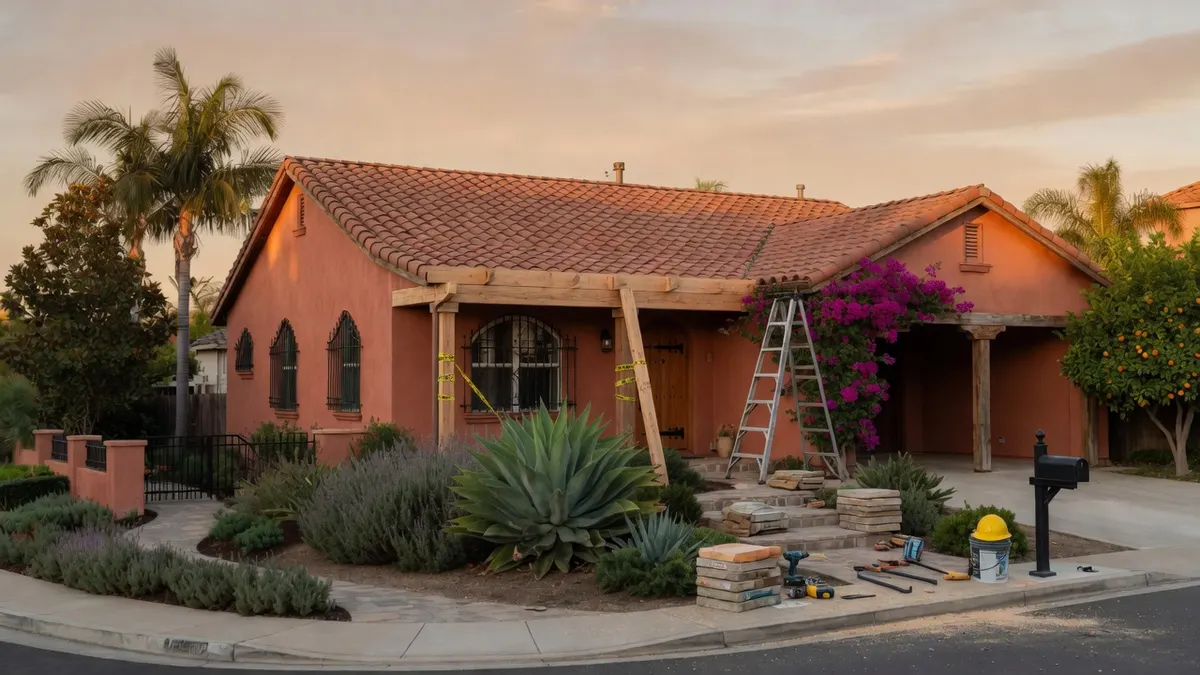
Woodland Porch Repairs That Preserve Curb Appeal
Drive through the older blocks near Woodland's downtown, off Dead Cat Alley or along the streets near the Gibson House, and you'll spot the porches that built this town's character: deep wraparounds, turned columns, tongue-and-groove decking that has carried a century of foot traffic. You'll also spot the ones quietly failing. A column base that's gone spongy at the bottom. A step that flexes when you stand on it. Paint flaking off a railing in long curls after another 105-degree August. None of it happens overnight, and almost none of it means the whole porch needs to come down.
When the wood is telling you something
Yolo County summers are brutal on exterior wood, and the freeze-thaw is mild but the swing from bone-dry July to a soggy delta-fog January is hard on anything sitting close to grade. Most porch trouble in Woodland traces back to water that didn't drain and sun that baked the finish off. Press a screwdriver into the bottom of a post or the outer edge of the decking. If it sinks in easily, you've found rot, and rot spreads inward where you can't see it.
The mistake I see homeowners make is treating a porch as a paint problem. Fresh paint over soft wood just hides the decay for a season or two. A good repair walks the whole structure: the framing underneath, the stair stringers, the railing connections, the column bases where they meet concrete, and the drainage that's feeding the whole mess. Fix the water first, then the wood, then the finish. In that order, the repair lasts.
Repair, don't replace, when the bones are good
On these older homes, the proportions matter as much as the lumber. The width of a baluster, the taper of a column, the overhang of the porch roof, those details are why the house reads as historic instead of generic. A contractor worth hiring will look at a rotted column and talk about matching the profile, splicing in new material at the base, or sourcing a replacement that fits the original, rather than reaching for a stock big-box post that throws the whole front of the house off.
That's also where budget gets real. Across the Sacramento Valley, porch repair lands anywhere from roughly $3,000 for targeted work, decking boards, a couple of railings, a paint refresh, up toward $40,000 when framing, stairs, columns, and drainage all need attention at once on a larger wraparound. The spread is enormous because porches hide their problems. Set aside a contingency, especially on an older Woodland home where a previous owner's weekend fix might not match anything resembling current code. A licensed decks and porches contractor should price the visible work and tell you honestly how they'll handle the rot they can't see yet, by allowance or by unit price, not by surprise.
Reading an estimate without getting burned
The cheapest bid is rarely the clearest one. A good estimate spells out materials, the labor it covers, what it specifically excludes, who pulls permits, who hauls the debris, and what the warranty actually promises. If one contractor quotes $8,000 and another quotes $16,000, don't assume the second one is gouging you, read the assumptions. One might be replacing three boards; the other might be rebuilding the stair stringers and re-flashing where the porch ties into the house.
Ask to see photos of similar porch work, ideally on homes of a similar vintage. Ask for a payment schedule tied to milestones rather than a big chunk up front. And get a single named contact, the person who actually answers when, two weeks in, the crew opens up a joist and finds more damage than anyone expected. How a contractor communicates before the job is the best preview of how they'll communicate when it gets complicated.
The California paperwork that actually applies
Here's the rule that trips people up: in California, anyone doing more than $1,000 in combined labor and materials needs to be licensed by the CSLB. That threshold used to be $500, and you'll still see the old number floating around online, but it's $1,000 now. Verify any contractor's license at the CSLB website before you sign anything, and confirm they carry both liability insurance and workers' compensation. If someone's working on your porch without comp coverage and gets hurt, that can become your problem.
Permits depend on scope. Cosmetic repairs, swapping decking, repainting, replacing a few balusters, usually don't need one. But structural work, rebuilding stairs, altering railing height, or anything touching the framing typically does, and the City of Woodland may want an inspection. If your home sits in or near a designated historic district, exterior changes can also trigger design review, which adds time but exists to protect exactly the curb appeal you're trying to preserve. Build that into your timeline. Spring and early summer are the busiest stretch for exterior crews, so a porch you want finished by fall is worth booking in late winter.
Where the porch meets the rest of the house
A porch repair rarely stays neatly inside its own boundary. Once you've stabilized the structure, the finish work, the paint system that has to survive Woodland's UV, the trim, the color matching to the body of the house, is what people actually see from the street. It's often worth coordinating the repair with a painting contractor so the new wood and the old get a unified, properly primed finish rather than a patchwork. And if the rot turns out to run deeper than a porch specialist wants to take on, a general contractor can pull together framing, concrete, and finish trades under one schedule.
When you're ready, walk your own porch first with a phone camera. Photograph every soft spot, every cracked step, every place water pools after the sprinklers run, and rank what bothers you most. Bring that list and those photos to at least three licensed pros. You can line up local options through the Woodland contractor guide or cast a wider net with the Sacramento Valley contractor search. The aim isn't just the lowest number, it's a clean scope and a porch that still looks like it belongs on the house twenty years from now.
Who to Hire for This Project
For the work covered in this guide, these are the contractor types to contact and the CSLB classification to verify before you take quotes:
Questions to Ask Before You Sign
- "Is your CSLB license active and bonded?" Verify it yourself at cslb.ca.gov the license number must appear on their bid.
- "Who pulls the permit, and is it included in the bid?" The contractor should handle any required permits a pro who suggests skipping one is a red flag.
- "Can you itemize labor, materials, and allowances?" Itemized bids are the only way to compare quotes on the same scope.
- "What's the payment schedule?" California caps the down payment at $1,000 or 10%, whichever is less payments should track completed work.
- "Who from this area can I call as a reference?" Ask for a recent local job of similar scope, not just photos.
Sacramento Contractors for This Project
Related Articles
Frequently Asked Questions
Do I need a permit to repair my porch in Woodland? +
Cosmetic repairs like replacing a few decking boards, repainting, or swapping balusters usually don't require a permit. Structural work, rebuilding stairs, altering railing height, or anything touching the framing typically does, and the City of Woodland may require an inspection. If your home is in or near a designated historic district, exterior changes can also trigger design review.
How much does porch repair cost in the Woodland area? +
Across the Sacramento Valley, porch repairs typically run from roughly $3,000 for targeted work like a few boards, railings, and a paint refresh up toward $40,000 when framing, stairs, columns, and drainage all need attention on a larger wraparound. The wide range exists because porches hide rot until work begins. Budget a contingency, especially on older Woodland homes where past fixes may not meet current code.
Does my porch contractor need a California license? +
Yes. Any contractor doing more than $1,000 in combined labor and materials must be licensed by the CSLB. You can verify a license, and confirm liability insurance and workers' compensation coverage, directly on the CSLB website before signing. Hiring someone without workers' comp can leave you exposed if a worker is injured on your property.
Should I repair or fully replace an older Woodland porch? +
On Woodland's historic and older homes, repair is often the better choice because the original proportions, column tapers, and baluster widths are what give the house its character. A skilled contractor can splice rotted column bases, match decking profiles, and source replacements that fit the original rather than installing generic stock parts. Full replacement only makes sense when the framing itself is too far gone to save.
How do I tell if my porch has hidden rot? +
Press a screwdriver into the base of columns and the outer edges of decking where water collects. If the wood sinks in easily or feels spongy, you've found rot, which spreads inward where it isn't visible. Soft spots, flexing steps, and paint peeling in long curls after Woodland's hot, dry summers are all warning signs that the problem runs deeper than the surface.
When is the best time to schedule porch work in Woodland? +
Spring and early summer are the busiest stretch for exterior crews in the Sacramento Valley, so booking then can mean longer waits. If you want a porch finished before fall, it's smart to line up a contractor in late winter. Avoiding the peak season also gives you more room to get and compare multiple estimates before committing.