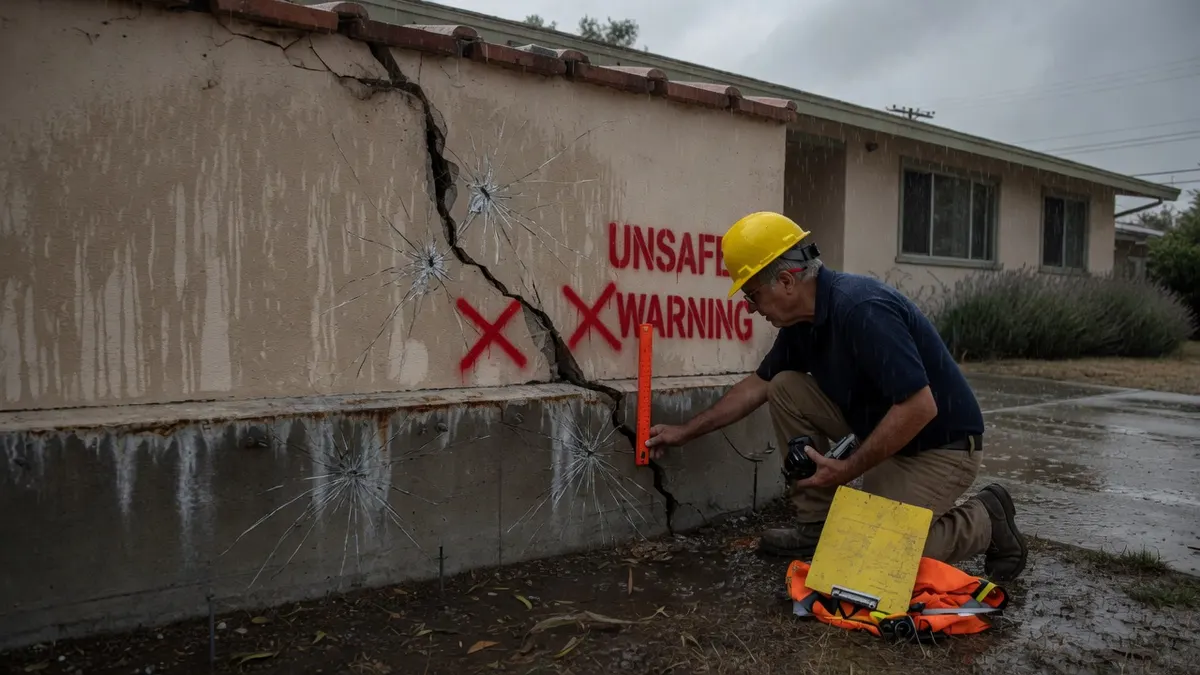
West Sacramento Foundation Warning Signs After a Wet Winter
The first sign is rarely dramatic. It's the guest-room door that suddenly drags across the jamb sometime in February, after weeks of rain off the Sacramento River have soaked the ground around your house. You shove it shut and forget about it. Then you notice a hairline crack above the door has crept a little wider. By the time the lawn dries out in late spring, West Sacramento homeowners start putting two and two together: the wet winter did something to the foundation.
It usually did. Not always something catastrophic, but something worth looking at.
What the storms actually do to the dirt under your house
A lot of West Sacramento sits on the kind of fine, clay-heavy soil that the Delta floodplain is known for. That soil swells when it's saturated and shrinks when it bakes in July. Your foundation rides on top of all that movement. After a long wet stretch, the ground around the house can stay damp for weeks, and water that lingers in low spots near the slab or the crawlspace is doing slow, steady work you can't see.
This is why so many real foundation problems here begin as drainage problems. Before anyone starts talking about piers or jacking a corner of the house, an honest contractor wants to know where the water goes. If a downspout dumps against the wall, or the yard slopes toward the foundation instead of away from it, fixing that is cheaper than fixing the structure and sometimes makes the structural fix unnecessary.
Reading the cracks before you panic
Not every crack means trouble. Thin vertical cracks in concrete are common as it cures and shifts. The ones that earn a closer look are the diagonal cracks running from the corners of doors and windows, cracks wider than about an eighth of an inch, stair-step cracks in any block or brick, and gaps where the slab meets a wall.
Walk the house with a notebook and a phone camera after the ground dries. Doors and windows that stick, floors that feel like they tilt, a strip of new daylight under a baseboard, fresh cracks in drywall above openings, that low corner of the yard that holds a puddle for days. Older raised-foundation homes in the established parts of town and newer slab-on-grade builds show their symptoms differently, but the documentation habit is the same. Dated photos give whoever you hire a baseline, and they tell you later whether a crack is still moving or has settled down.
The money conversation, minus the scare tactics
Here's the honest range. A genuine foundation issue in the Sacramento Valley can run anywhere from a few hundred dollars on the low end to well past $25,000, and that enormous spread is the whole point. Those two numbers are not the same job.
The smartest dollar you'll spend is on diagnosis. Paying for a clear inspection report, and sometimes a structural engineer's evaluation, keeps you from buying a repair you don't need. A good estimate breaks the work into distinct buckets: diagnosis, drainage correction, any structural repair, and cosmetic patching at the end. If a quote rolls all of that into one intimidating number, ask the contractor to separate it.
Set aside a contingency, too. Older West Sacramento homes have a way of hiding previous repairs that don't match current code or were never documented, and that's exactly where surprises live. When two bids come back far apart, the gap is almost always in the assumptions, not the labor rate. Compare what each one includes before you decide one is "cheaper."
Before you sign anything, check the license
In California, anyone doing home-improvement work that totals $1,000 or more in combined labor and materials has to hold a license from the Contractors State License Board. Foundation work clears that threshold without breaking a sweat, so this isn't optional. Look the contractor up on the CSLB website, confirm the license is active and in the right classification, and verify they carry liability insurance and workers' compensation. Skipping this step is how people end up paying twice.
Permits matter here as well. Structural repairs, foundation stabilization, and significant drainage work often require a permit and an inspection through the City of West Sacramento. If a contractor proposes major structural work and waves off any mention of permits or documentation, treat that as your cue to get a second opinion. A legitimate pro expects the paperwork. The contract should also spell out, in writing, who pulls the permits and who handles the inspections.
A few questions separate the careful contractors from the rest. Will you take elevation readings? Can I see photos of similar foundation jobs you've done nearby? Is a structural engineer involved, and will I get a written explanation of why this repair is or isn't necessary? Will the payment schedule track actual progress instead of front-loading the deposit? Someone who communicates clearly before the work starts tends to keep communicating when things get complicated mid-project.
When the smartest move is to wait and watch
Sometimes the right call after a wet winter isn't a repair at all. It's monitoring. If the cracks are minor and the engineer says the movement looks seasonal rather than progressive, the responsible plan might be to fix the drainage, mark the cracks, and check them again after the next dry summer and the following rains. A contractor willing to tell you "this can wait" is worth more than one eager to start digging.
So start small and start now, while last winter's damage is still fresh. Walk your property, photograph the spots that bother you, and write down which problems you actually want solved. Then line up a few licensed pros to compare. Our West Sacramento contractor guide is a good place to begin, and you can compare vetted foundation repair contractors or get a handle on related drainage and concrete work from there. When you're ready to build a shortlist, run a Sacramento Valley contractor search and put at least three estimates side by side. You're not just hunting for the lowest bid. You're after a clear scope, fewer surprises mid-job, and a house that sits steady through the next wet winter.
Who to Hire for This Project
For the work covered in this guide, these are the contractor types to contact and the CSLB classification to verify before you take quotes:
Questions to Ask Before You Sign
- "Is your CSLB license active and bonded?" Verify it yourself at cslb.ca.gov the license number must appear on their bid.
- "Who pulls the permit, and is it included in the bid?" The contractor should handle any required permits a pro who suggests skipping one is a red flag.
- "Can you itemize labor, materials, and allowances?" Itemized bids are the only way to compare quotes on the same scope.
- "What's the payment schedule?" California caps the down payment at $1,000 or 10%, whichever is less payments should track completed work.
- "Who from this area can I call as a reference?" Ask for a recent local job of similar scope, not just photos.
Sacramento Contractors for This Project
Related Articles
Frequently Asked Questions
Why do foundation problems show up after a wet winter in West Sacramento? +
Much of West Sacramento sits on fine, clay-heavy floodplain soil that swells when saturated and shrinks as it dries. After weeks of winter rain, that ground movement puts uneven pressure on your foundation, which is why sticking doors and new cracks often appear in late winter and spring. Poor drainage that lets water pool near the slab or crawlspace makes the effect worse.
Which foundation cracks should West Sacramento homeowners actually worry about? +
Thin vertical cracks in concrete are usually just normal curing and shifting. The ones worth a professional look are diagonal cracks running from the corners of doors and windows, any crack wider than about an eighth of an inch, stair-step cracks in brick or block, and gaps where the slab meets a wall. Photographing them with dates helps determine whether they are still moving or have stabilized.
How much does foundation repair cost in the Sacramento Valley? +
It varies enormously, from a few hundred dollars for an inspection and minor drainage correction to more than $25,000 for significant structural work and piering. The biggest cost driver is the actual problem, so a clear diagnosis comes first. Ask any contractor to break the estimate into diagnosis, drainage, structural repair, and cosmetic patching rather than quoting one lump sum.
Does a foundation contractor in California need a license? +
Yes. Any home-improvement work totaling $1,000 or more in combined labor and materials requires a license from the Contractors State License Board (CSLB), and foundation work easily exceeds that. Verify the license is active and in the correct classification on the CSLB website, and confirm the contractor carries liability insurance and workers' compensation before you sign.
Do foundation repairs require a permit in West Sacramento? +
Often, yes. Structural repairs, foundation stabilization, and major drainage work typically require a permit and inspection through the City of West Sacramento. Your contract should state in writing who pulls the permits and handles the inspections. If a contractor proposes major structural work but dismisses permits or documentation, get a second opinion.
Should I repair foundation cracks right away or wait and monitor them? +
It depends on whether the movement is seasonal or progressive. If an engineer judges minor cracking to be seasonal, a reasonable plan is to correct the drainage, mark the cracks, and recheck them after the next dry summer and rainy season. A contractor willing to recommend monitoring instead of immediate digging is often a sign of an honest assessment.