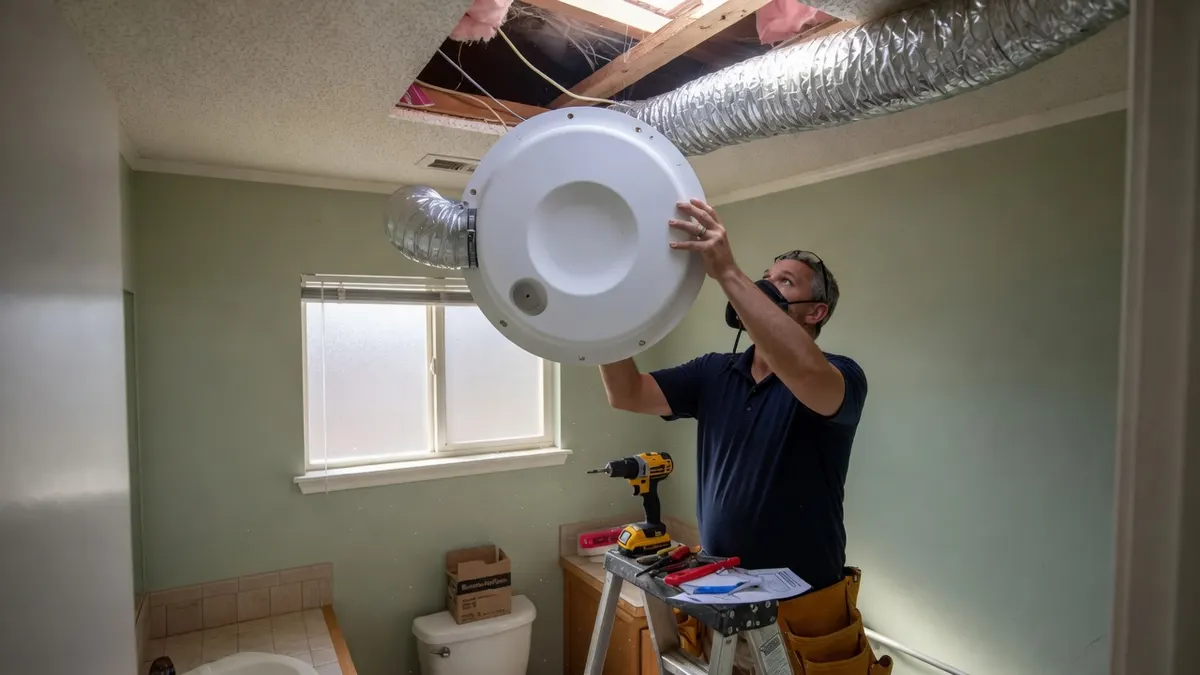
West Sacramento Bathroom Ventilation Fixes for Moisture Control
That brown halo creeping across your bathroom ceiling, the paint that bubbles near the shower, the mirror that stays fogged ten minutes after you towel off in West Sacramento, those are rarely paint problems. They are ventilation problems wearing a paint costume. And in a town where the valley fog rolls in and houses stay buttoned up tight from November into February, a bathroom fan that cannot move the moisture out has nowhere to hide its failures.
Plenty of homes in the Bryte and Broderick pockets, and the older builds off Jefferson Boulevard, still run the fan they were built with. Some of those fans were undersized the day they were installed. Others vent straight into the attic, which is a problem dressed up as a solution. Here is how to think about fixing it like someone who has actually crawled around up there.
What your fan is really fighting against
A bathroom fan has one job: pull humid air out of the room and dump it outside, fast enough that mold never gets comfortable. The number that matters is CFM cubic feet per minute. A small powder room might need 50 CFM; a larger primary bath with a soaking tub and a separate shower can need 110 or more. Undersize it and the fan runs forever without actually clearing the air.
But CFM on the box is a fantasy if the duct is wrong. A long flex duct full of sags, sharp turns, and crushed sections chokes airflow before it ever reaches daylight. The single most common thing I see in West Sacramento attics is a fan blowing into the attic space itself, or into a duct that simply ends near a soffit. That moisture condenses on the underside of the roof sheathing all winter, and a few seasons later you are looking at rot you cannot see from the bathroom.
If your project is turning into more than a fan swap, it is worth looking at how a full bathroom remodel gets scoped so the ventilation is designed in rather than bolted on at the end.
Where the moisture has to actually go
Done right, the duct runs the shortest sensible path to a dedicated cap on the roof or an exterior wall, with smooth pipe instead of saggy flex wherever possible, and a backdraft damper so cold valley air does not pour back in on a January morning. The exterior termination needs its own hood never a shared vent, never an attic, never a soffit that just recirculates the same damp air.
That exterior penetration is also where this stops being a simple plug-and-play job. Cutting a new hole through the roof or siding means flashing it correctly so you have not traded a moisture problem inside for a leak overhead. A good contractor will talk through the termination point before they quote, because the roof line and your attic layout dictate half the labor.
A budget that survives contact with reality
For most West Sacramento bathrooms, a ventilation fix lands somewhere in the range of roughly $600 to $5,500. That spread is wide on purpose. Swapping a like-for-like fan where the duct and wiring are already sound sits near the bottom. Sizing up to a quieter, higher-CFM unit, rerouting bad ductwork, adding a humidity-sensing or timer switch, cutting a fresh exterior cap, and patching and repainting the ceiling pushes you up the scale.
Older homes are where surprises live. Pull a fan and you might find aluminum-era wiring, a junction box that was never to code, or framing that has been quietly soaking for years. Set aside a contingency for that. And when you compare estimates, the cheapest one is usually cheapest because it left something out most often the duct rerouting or the exterior termination, which are exactly the parts that make the fan work. Ask each bidder to spell out CFM, duct material and path, where it terminates, the control switch, and how the ceiling gets finished. If you want a quieter unit, a drywall repair to patch the old opening cleanly is worth pricing too.
Licensing, permits, and the parts you cannot skip
Here is the California reality. A straight fan replacement is often minor work, but the moment you add a new duct penetration or change the electrical, you can cross into permit territory, and an inspector will care that it was vented outside and wired correctly. Venting into an attic will not pass, and frankly should not.
Anyone doing electrical or duct work on your home for more than $1,000 in combined labor and materials needs to be licensed by the CSLB. That $1,000 threshold is the line projects under it can legally be done by an unlicensed handyman, but ventilation work touching wiring and the roof almost always clears it. Before you sign anything, look the contractor up on the CSLB website, confirm the license is active and matches the name on your contract, and check that they carry liability insurance and workers' compensation. That last one matters: if an uninsured worker gets hurt in your attic, the liability can land on you.
The electrical side specifically is where I would not cut corners if the switch, circuit, or junction box needs attention, that is a job for a licensed electrical contractor, not a weekend favor.
Getting it scheduled and getting it right
Interior work like this is easier to book in the shoulder seasons, since spring and summer get jammed with roofing and exterior jobs across the valley. If your duct terminates through the roof, though, you may be coordinating with a roofer for the flashing, so ask early whether that is in-house or a sub.
When you are ready, walk your bathroom with your phone, photograph the ceiling stains, the existing fan, and the attic if you can reach it safely, and write down exactly what is bothering you the fog, the smell, the spreading stain. Then pull a few licensed bids and compare the assumptions, not just the totals. You can browse vetted pros on the West Sacramento page or run a wider contractor search across the Sacramento Valley. The fan you want is the one you stop noticing quiet, sized right, and venting your morning shower somewhere other than the wood over your head.
Who to Hire for This Project
For the work covered in this guide, these are the contractor types to contact and the CSLB classification to verify before you take quotes:
Questions to Ask Before You Sign
- "Is your CSLB license active and bonded?" Verify it yourself at cslb.ca.gov the license number must appear on their bid.
- "Who pulls the permit, and is it included in the bid?" The contractor should handle any required permits a pro who suggests skipping one is a red flag.
- "Can you itemize labor, materials, and allowances?" Itemized bids are the only way to compare quotes on the same scope.
- "What's the payment schedule?" California caps the down payment at $1,000 or 10%, whichever is less payments should track completed work.
- "Who from this area can I call as a reference?" Ask for a recent local job of similar scope, not just photos.
Sacramento Contractors for This Project
Related Articles
Frequently Asked Questions
Why does my West Sacramento bathroom stay so humid even with the fan running? +
Usually the fan is undersized for the room or the duct is too long, kinked, or sagging, so it cannot actually move enough air. Valley fog and tightly closed-up winter homes make the problem worse. A contractor can measure the room, check the CFM rating, and inspect the duct path to find the real cause.
Is it legal to vent a bathroom fan into the attic in California? +
No. Bathroom fans must terminate outside the home, through the roof or an exterior wall with a proper hood and damper. Venting into the attic dumps moisture onto your roof sheathing and can cause rot and mold. An inspector will fail it, and most reputable West Sacramento contractors will refuse to do it.
Do I need a permit to replace a bathroom fan in West Sacramento? +
A simple like-for-like fan swap is often minor work, but cutting a new duct penetration or changing the electrical can trigger a permit through the City of West Sacramento building department. Permits exist to confirm the fan vents outside and is wired safely. Ask your contractor to confirm whether your specific scope needs one and who pulls it.
How much does a bathroom ventilation fix cost in the Sacramento Valley? +
It typically runs roughly $600 to $5,500 depending on the work. A basic fan replacement with sound ductwork sits near the low end, while upsizing to a quieter high-CFM unit, rerouting bad duct, adding a humidity or timer switch, cutting a new exterior cap, and patching the ceiling pushes it higher. Older homes often add cost when hidden wiring or framing issues turn up.
Does the contractor doing my fan and duct work need a CSLB license? +
If the combined labor and materials exceed $1,000, yes, California requires a CSLB-licensed contractor. Ventilation work that touches electrical wiring and the roof almost always crosses that threshold. Verify the license is active on the CSLB website and confirm liability insurance and workers' compensation before you sign.
What size fan do I need for my West Sacramento bathroom? +
As a rough guide, a small powder room needs around 50 CFM, while a larger primary bath with a separate tub and shower can need 110 CFM or more. The duct path matters as much as the fan rating, since a long or kinked run reduces real airflow. A licensed contractor should size it to your specific room and duct layout rather than guessing.