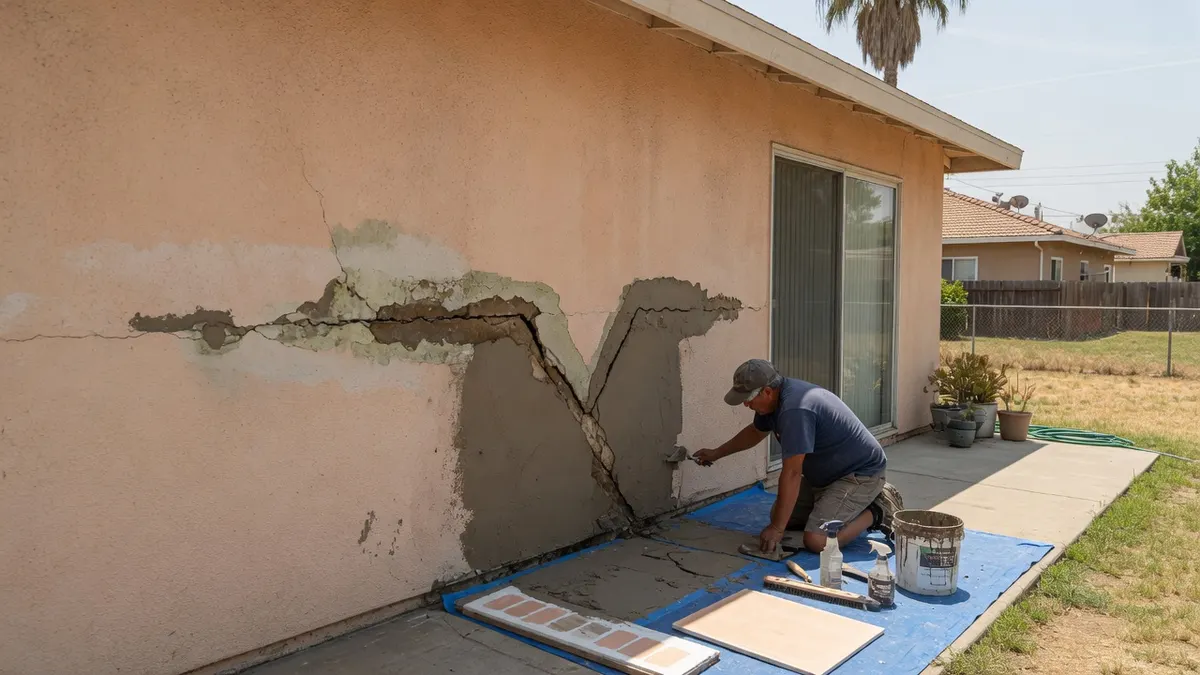
Sacramento Stucco Repair Cost Guide: Cracks, Water Damage, and Matching Texture
Watch: Quick Homeowner Overview
A short vertical explainer for this guide share it on socials or preview the project before you read.
Stucco is common across the Sacramento area because it handles heat well, fits many home styles, and can last for decades when the wall system stays dry. The problem is that stucco damage is easy to underestimate. A hairline crack near a window may be a simple surface repair, or it may be the first visible clue that water is getting behind the wall. A small patch near the base of a wall can turn into framing repair if sprinklers have been soaking the area for years.
Sacramento homeowners see a wide range of stucco issues: cracks from normal movement, impact damage from landscaping or vehicles, stains under roof edges, bubbling paint, soft areas near hose bibs, failed patches from past repairs, and water intrusion around windows or doors. The right repair depends on whether the damage is cosmetic, moisture related, structural, or tied to another trade such as roofing, windows, gutters, or drainage.
This guide explains realistic 2026 stucco repair costs in the Sacramento area, what drives the price, how texture matching works, when painting becomes part of the job, and what to ask before hiring a contractor.
Typical 2026 Stucco Repair Costs in Sacramento
Stucco pricing depends on access, wall height, texture, paint, moisture damage, and whether the repair is just the finish coat or the wall assembly underneath. For planning purposes, Sacramento homeowners often see ranges like these:
- Small crack sealing and touch-up: $250 to $900 when the repair is limited and easy to access
- Minor stucco patch under 10 square feet: $600 to $1,800 depending on texture, color matching, and prep
- Medium patch or multiple damaged areas: $1,500 to $5,000 when lath, building paper, corner bead, or trim details are involved
- Window or door stucco repair: $2,000 to $8,000 or more when flashing, trim, water damage, or finish matching is part of the scope
- Large wall section repair: $5,000 to $15,000 or more if the contractor removes failed stucco, replaces moisture barrier, repairs substrate, and blends texture
- Whole wall repaint after repair: often $1,500 to $6,000 depending on height, prep, access, and paint system
- Scaffold, second-story access, or tight side yards: can add hundreds or thousands of dollars
A small visible crack is not always a small project, but it is also not automatically a disaster. The best bids explain what will be opened, what will be replaced, how the repair will be waterproofed, and how the finish will be blended. A vague bid that says patch stucco can mean very different things from one contractor to another.
Hairline Cracks, Wider Cracks, and Movement
Hairline cracks are common in stucco. Sacramento homes move slightly with seasonal temperature swings, dry summers, wet winters, soil movement, and normal framing expansion. Thin surface cracks may only need cleaning, flexible sealant, elastomeric coating, or a small finish repair.
Wider cracks deserve more attention. Cracks that are diagonal from window corners, stair-step across a wall, open and close seasonally, or return after previous repairs may point to movement, poor lath attachment, foundation settlement, moisture problems, or stress around openings. If a crack is wide enough to catch a fingernail, has staining, or runs through a patched area, ask the contractor how they plan to diagnose the cause before covering it.
Repairing the crack without addressing the reason it opened is the classic stucco mistake. If the wall is moving because of drainage, foundation, framing, or flashing issues, the patch may fail quickly. For larger or recurring cracks, it can be worth coordinating with a foundation contractor, window contractor, roofer, or general contractor before committing to a finish-only repair.
Water Damage Is the Expensive Variable
Stucco is not just the hard surface you see. Traditional stucco walls usually include layers such as lath, weather resistant barrier, flashing, weep details, trim, and framing behind the finish. If water gets behind the exterior surface and cannot drain or dry, the cost can change fast.
Warning signs include:
- Brown staining below windows, decks, roof edges, or light fixtures
- Bulging, hollow, or soft stucco
- Paint that bubbles or peels in the same area repeatedly
- Cracks with dark staining or efflorescence
- Interior drywall stains near an exterior wall
- Musty smells, swollen baseboards, or damaged flooring near the same location
- Stucco that stays wet long after rain or sprinklers stop
Common Sacramento causes include failed window flashing, sprinklers hitting the wall, short roof overhangs, clogged gutters, patio concrete sloping toward the house, poorly sealed penetrations, and old patches that trapped moisture. A responsible contractor may recommend a test opening when the wall shows moisture symptoms. That can feel annoying because it adds uncertainty, but it is better than sealing rot inside the wall.
Texture Matching and Why Perfect Blending Is Hard
Matching stucco texture is part craft and part expectation management. Sacramento homes may have sand finish, lace texture, heavy dash, smooth trowel, cat face, or several textures from older additions and repairs. Sun exposure, paint age, patch size, and wall location all affect the final appearance.
Small patches are often the hardest to hide because the new texture is surrounded by aged stucco. A contractor may feather the repair outward, use a sample area, or recommend repainting a larger section so the eye does not focus on the patch. A repair on a side wall behind landscaping may only need to be serviceable. A repair near the front entry may deserve more blending and paint work.
Ask whether the bid includes texture matching only, spot painting, painting from corner to corner, or repainting the entire wall. Corner-to-corner painting often looks better because natural breaks hide color differences. Spot painting can be cheaper, but Sacramento sun fades paint quickly, so an exact match is not always realistic on older walls.
When Painting or Coating Should Be Included
Stucco repair and exterior painting often overlap. If the wall has many cracks, chalky paint, faded color, or previous patch marks, a broader paint scope may make more sense than a tiny patch and touch-up. Elastomeric coatings can bridge small cracks and help shed water, but they are not a substitute for proper flashing, drainage, or wall repair.
Good prep matters more than the coating label. The wall may need pressure washing at the correct setting, crack preparation, compatible sealant, patch curing time, primer, and attention to weep screeds or drainage edges. Painting too soon after a cement-based patch can create adhesion problems. Covering active moisture damage with thick coating can trap water.
If a painter is handling cracks, ask whether they are doing cosmetic prep or actual stucco repair. If a stucco contractor is repairing the wall, ask whether final paint is included. Homeowners often assume one trade includes the other, then discover a patched gray area left unfinished.
Permits, Licenses, and Related Trades
Small stucco patching usually does not need a major permit, but the answer can change if the project includes structural framing repair, window replacement, waterproofing around openings, balcony or deck work, electrical fixtures, or major exterior alterations. City of Sacramento homeowners can start with the City of Sacramento building division, while unincorporated properties can check Sacramento County building permits and inspection services. Nearby cities such as Elk Grove, Roseville, Folsom, Citrus Heights, Rancho Cordova, and West Sacramento may handle permits differently.
License scope matters. Verify the contractor through the official Contractors State License Board and make sure the license matches the work. A simple cosmetic patch is different from a project that opens walls, repairs framing, replaces windows, flashes a roof-to-wall joint, or paints the full exterior. For multi-trade work, one person should be responsible for sequencing and waterproofing details.
How to Compare Stucco Repair Bids
A useful stucco repair bid should answer these questions:
- What areas are being repaired, and how many square feet are assumed?
- Is the repair cosmetic, or will damaged stucco be removed to inspect behind it?
- Will lath, weather barrier, flashing, weep screed, trim, or framing be replaced if damaged?
- What texture is being matched, and how large will the blended area be?
- Is primer and paint included, and will painting stop at a natural break?
- How will windows, doors, hose bibs, lights, vents, and utility penetrations be sealed?
- What happens if hidden rot, termite damage, or mold-like growth is found?
- Are scaffold, access, cleanup, and debris haul-away included?
- How long should the patch cure before paint?
The lowest bid may be fine for a small impact patch, but it can be risky for water-related damage. If one contractor proposes opening the wall and another proposes caulk and paint, they may not be bidding the same repair.
Bottom Line
Sacramento stucco repair works best when the contractor separates cosmetic cracks from moisture or movement problems. A small patch may cost under $1,000, while window-related water damage or large wall repairs can cost several thousand dollars once flashing, lath, texture, paint, access, and hidden damage are included. The key is to understand what is behind the visible surface before paying to make it look finished.
Take photos after rain, note sprinkler spray patterns, and walk the wall with each contractor. Ask how the repair will keep water out, how the texture will be blended, and whether paint is included. Stucco can be durable in Sacramento, but only when the wall system is repaired as a system, not just as a surface.
Browse Sacramento-area stucco contractors, siding contractors, painting contractors, and local contractor listings in Sacramento, Elk Grove, Roseville, Folsom, and nearby communities. For related planning, see our window replacement cost guide, foundation problems guide, and California contractor license verification guide.
Who to Hire for This Project
For the work covered in this guide, these are the contractor types to contact and the CSLB classification to verify before you take quotes:
Questions to Ask Before You Sign
- "Is your CSLB license active and bonded?" Verify it yourself at cslb.ca.gov the license number must appear on their bid.
- "Who pulls the permit, and is it included in the bid?" The contractor should handle any required permits a pro who suggests skipping one is a red flag.
- "Can you itemize labor, materials, and allowances?" Itemized bids are the only way to compare quotes on the same scope.
- "What's the payment schedule?" California caps the down payment at $1,000 or 10%, whichever is less payments should track completed work.
- "Who from this area can I call as a reference?" Ask for a recent local job of similar scope, not just photos.
Sacramento Contractors for This Project
Related Articles
Frequently Asked Questions
How much does stucco repair cost in Sacramento? +
Small crack repairs or minor patches may cost about $250 to $1,800. Medium repairs often run $1,500 to $5,000, while window-related water damage, large wall sections, second-story access, texture blending, and repainting can push the project to $8,000 to $15,000 or more.
Can stucco cracks just be caulked and painted? +
Some hairline cosmetic cracks can be sealed and painted, but wider cracks, stained cracks, recurring cracks, and cracks near windows or doors should be evaluated for movement or moisture issues before being covered.
Why is matching stucco texture so expensive? +
Texture matching takes time because the contractor has to blend new material into aged stucco. Patch size, wall location, original texture, sun-faded paint, and whether the repair is painted corner to corner all affect how visible the repair will be.
Do stucco repairs in Sacramento need permits? +
Small cosmetic patches often do not, but permits may be needed when the work includes structural repair, window replacement, major waterproofing, deck or balcony repairs, electrical fixtures, or significant exterior changes. Check the local building department for the specific project.