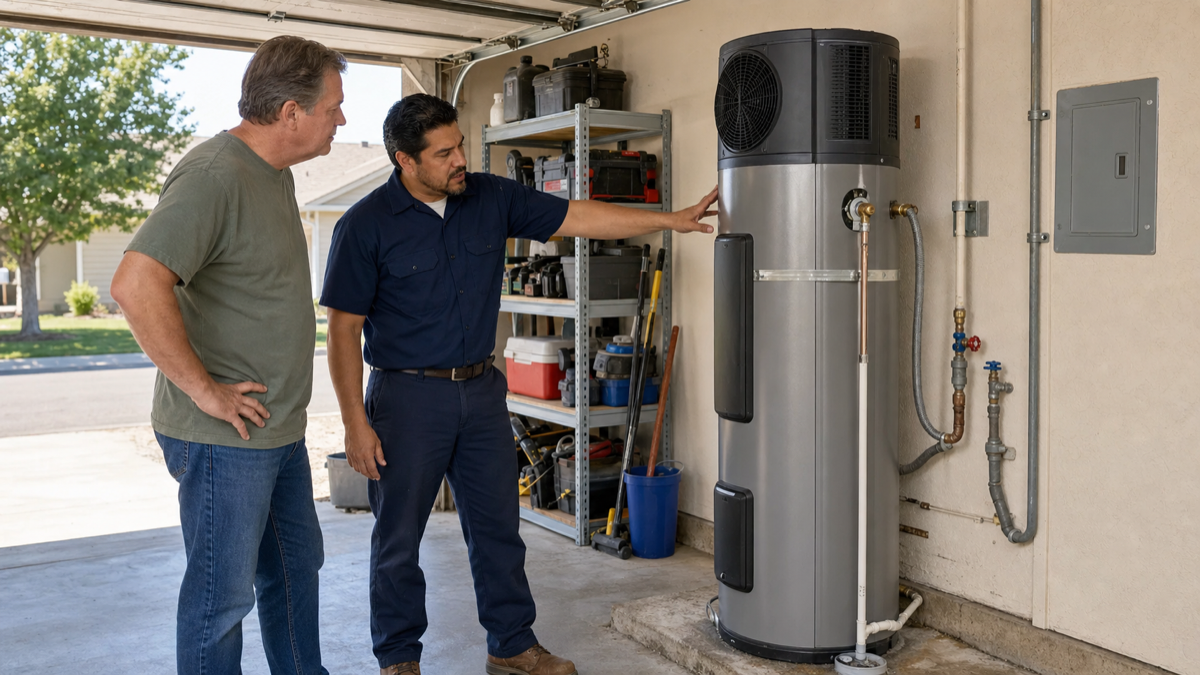
Sacramento Heat Pump Water Heater Cost Guide: Rebates, Electrical Work, Garage Installs, and When It Makes Sense
Heat pump water heaters are getting more attention in Sacramento because they can lower energy use, qualify for incentives, and help homeowners move away from gas appliances. They are also one of the easiest upgrades to misunderstand. The tank may look similar to a standard electric water heater, but the installation decisions are different. Location, airflow, condensate drainage, electrical capacity, noise, clearance, recovery time, and permit handling all matter.
For some Sacramento homes, a heat pump water heater is a smart replacement when an old gas or electric tank is near the end of its life. For others, the better move is to wait, fix electrical constraints first, or choose a different water heating setup. The right answer depends on the house, not just the rebate flyer.
This guide explains realistic 2026 Sacramento-area costs, where heat pump water heaters work best, what electrical and plumbing changes may be needed, how rebates affect the math, and what to ask before hiring a contractor.
Typical 2026 Heat Pump Water Heater Costs in Sacramento
A heat pump water heater replacement is usually more expensive than a basic like-for-like tank replacement, but incentives and lower operating costs can narrow the gap. For planning purposes, Sacramento homeowners often see ranges like these:
- Basic electric tank replacement: $1,800 to $4,000 in many straightforward cases
- Gas tank water heater replacement: $2,000 to $5,500 depending on venting, gas line, code upgrades, and access
- Heat pump water heater installed in a suitable garage or utility space: $3,500 to $7,500 before rebates
- Heat pump water heater with electrical upgrades: $5,000 to $12,000 or more if a new circuit, panel work, subpanel, or service planning is needed
- Condensate pump, drain routing, or pan drain improvements: $250 to $1,500 depending on distance and access
- Platform, seismic strapping, expansion tank, mixing valve, or code corrections: several hundred to a few thousand dollars depending on what is missing
- Panel upgrade if truly required: often $4,000 to $8,000-plus, although some homes can avoid this with load calculations or circuit-sharing solutions
A useful bid separates the water heater, plumbing connections, electrical scope, condensate handling, permit, haul-away, code upgrades, and rebate assumptions. If one contractor includes electrical work and another assumes it is already handled, the prices are not comparable.
How a Heat Pump Water Heater Is Different
A standard electric resistance water heater creates heat directly with elements inside the tank. A heat pump water heater uses electricity to move heat from the surrounding air into the water. That is why it can be much more efficient. It is also why the room around the heater matters.
The unit needs enough air volume and clearance to operate. It also cools and dehumidifies the surrounding space while it runs. In Sacramento, that can be helpful in a garage during much of the year, but it may be less ideal in a small interior closet. A tight closet can make the unit louder, colder, and less efficient unless it is designed with proper louvered doors, ducting, or manufacturer-approved ventilation.
Heat pump water heaters also produce condensate, similar to an air conditioner. That water has to drain somewhere safe. A garage floor is not automatically an acceptable plan. The contractor should identify the drain route, condensate pump if needed, overflow protection, and what happens if the line clogs.
Best Locations in Sacramento Homes
Garages are often the first place to consider because they usually have more air volume, easier drain options, and less concern about operating noise. Many Sacramento-area tract homes already have water heaters in the garage, which can make the plumbing side simpler. A garage installation still needs seismic strapping, safe clearances, protection from vehicle impact when required, a drain pan or proper drainage where applicable, and a plan for condensate.
Laundry rooms and utility rooms can work if they meet manufacturer clearance and airflow requirements. Interior closets are more complicated. Some models are designed for ducting or confined spaces, but the details have to be followed. If a contractor says any water heater closet is fine, slow down and ask for the model installation instructions.
Attics are usually a poor fit unless the home was specifically designed for it. The weight of a full tank, leak risk, condensate routing, service access, noise, and summer attic temperatures make the project harder. Outdoor locations also need careful review because heat pump water heaters have manufacturer limits for weather exposure and operating temperatures.
Electrical Work: The Part Homeowners Miss
Many heat pump water heaters use a 240-volt circuit. Some newer models offer 120-volt options for certain replacement situations, but they may have different recovery performance and installation requirements. The existing water heater type matters. Replacing an electric tank may already have a usable circuit, while replacing a gas tank may require new electrical work from the panel to the water heater location.
Before approving the project, ask whether the electrician will perform a load calculation, whether the panel has physical breaker space, whether a new dedicated circuit is required, and whether any smart load management or manufacturer-approved 120-volt option makes sense. A panel upgrade should not be treated as automatic, but it also should not be ignored if the home is already maxed out or has unsafe old equipment.
Electrical work should be performed by appropriately licensed professionals. Water heater replacement may involve a plumbing contractor, electrical contractor, or general contractor depending on the scope. Verify licenses through the official Contractors State License Board before work starts.
Rebates and Incentives Can Change the Math
Sacramento homeowners may see incentives from local utilities, statewide programs, federal tax credits, or manufacturer promotions. These programs change frequently, and they often include equipment requirements, contractor requirements, income limits, documentation rules, and deadlines. SMUD customers should check current electrification and water heating offers directly through SMUD, while customers in surrounding utility territories should confirm the correct program before signing.
Do not count a rebate as guaranteed unless the contractor identifies the exact program, eligible model, paperwork process, and who submits the application. Some rebates require pre-approval. Some are point-of-sale discounts. Others are tax credits that depend on your tax situation. A lower net price is useful only if the project actually qualifies.
Also compare operating cost honestly. A heat pump water heater can be efficient, but household size, hot water use, utility rates, temperature settings, vacation modes, and backup electric resistance operation all affect the result. If the home regularly empties the tank with back-to-back showers, ask about tank size and recovery time before choosing the smallest eligible model.
Permits, Code Items, and Safety Details
Water heater replacements commonly require permits, although the exact process depends on jurisdiction and scope. City of Sacramento homeowners can start with the City of Sacramento building division, and unincorporated properties can check Sacramento County building permits and inspection services. Nearby cities such as Elk Grove, Roseville, Folsom, Citrus Heights, Rancho Cordova, and West Sacramento may have their own requirements.
The permit conversation should include more than the tank itself. Ask about seismic strapping, temperature and pressure relief discharge, drain pan requirements, expansion control, mixing valves if needed, electrical disconnect or breaker labeling, condensate disposal, garage bollards or elevation where applicable, and combustion safety if an old gas appliance is being removed or if other gas appliances remain nearby.
If a gas water heater is removed, the unused gas line should be capped correctly. If the old unit shared venting assumptions with other appliances, make sure the contractor checks the remaining vented equipment. Electrification can be simple, but it still needs a clean closeout.
Questions to Ask Before You Hire
Before choosing a contractor, ask each bidder to explain:
- Whether the proposed model is 120-volt or 240-volt and why
- The tank size, first-hour rating, recovery expectations, and backup heat settings
- The required clearances and whether the room has enough air volume
- How condensate will drain and what overflow protection is included
- Whether a new electrical circuit, load calculation, panel work, or permit is included
- Which rebates are assumed and who handles the paperwork
- How noise will be managed if the unit is near living space
- What code upgrades are included in the base price
- Whether drywall, platform work, drain routing, or gas line capping is included
- What warranty covers the tank, labor, electrical work, and plumbing connections
Be cautious with any quote that sells the rebate first and the installation second. Also be cautious with any quote that treats the project as a simple tank swap when the existing unit is gas, located in a closet, or far from the electrical panel.
Bottom Line
A heat pump water heater can be a strong Sacramento upgrade when the home has a good location, a realistic electrical path, proper condensate drainage, and hot water needs that fit the selected tank. The best candidates are often garage installations where airflow, access, and drainage are easier to solve. The trickier projects are interior closets, gas-to-electric conversions with limited panel capacity, and households with very high peak hot water use.
Do the homework before the old tank fails. Photograph the existing water heater, panel, nearby drains, garage layout, and venting. Ask contractors to price the full scope, not just the appliance. Then compare the installed cost after realistic incentives, the expected operating savings, and the comfort details that matter every day: enough hot water, reasonable noise, safe drainage, and a permitted installation that will not create problems when you sell the home.
Browse Sacramento-area plumbing contractors, electrical contractors, HVAC contractors, and local contractor listings in Sacramento, Elk Grove, Roseville, Folsom, and nearby communities. For related planning, see our electrical panel upgrade guide, water heater replacement guide, and home improvement permit guide.
Who to Hire for This Project
For the work covered in this guide, these are the contractor types to contact and the CSLB classification to verify before you take quotes:
Questions to Ask Before You Sign
- "Is your CSLB license active and bonded?" Verify it yourself at cslb.ca.gov the license number must appear on their bid.
- "Who pulls the permit, and is it included in the bid?" The contractor should handle any required permits a pro who suggests skipping one is a red flag.
- "Can you itemize labor, materials, and allowances?" Itemized bids are the only way to compare quotes on the same scope.
- "What's the payment schedule?" California caps the down payment at $1,000 or 10%, whichever is less payments should track completed work.
- "Who from this area can I call as a reference?" Ask for a recent local job of similar scope, not just photos.
Sacramento Contractors for This Project
Related Articles
Sacramento Heat Pump Water Heater Guide: Costs, Rebates, Electrical Needs, Noise, and Installation Details
August 15, 2026
Sacramento Main Water Shutoff and Pressure Regulator Guide: Valves, Leaks, Access, and Remodel Planning
August 10, 2026
West Sacramento Backwater Valve Planning: Sewer Backup Risk, Permits, and Who to Call
August 9, 2026
Frequently Asked Questions
How much does a heat pump water heater cost in Sacramento? +
Many Sacramento-area heat pump water heater installations land around $3,500 to $7,500 before rebates when the location is suitable. Projects with new circuits, panel work, condensate routing, platforms, or code corrections can reach $5,000 to $12,000 or more.
Is a garage a good place for a heat pump water heater? +
Often yes. Garages usually provide more air volume, easier service access, and more practical drain routing than small interior closets. The installation still needs proper clearances, seismic strapping, condensate handling, and any required vehicle impact protection.
Do I need an electrical panel upgrade for a heat pump water heater? +
Not always. Some homes already have capacity, some can use a 120-volt model or load management strategy, and others need a new dedicated 240-volt circuit or panel work. Ask for a load calculation before assuming a full panel upgrade is required.
Do heat pump water heaters need permits in Sacramento? +
Water heater replacements commonly require permits, and the exact process depends on jurisdiction and scope. Electrical work, gas line capping, condensate routing, and code upgrades should be included in the permit discussion.