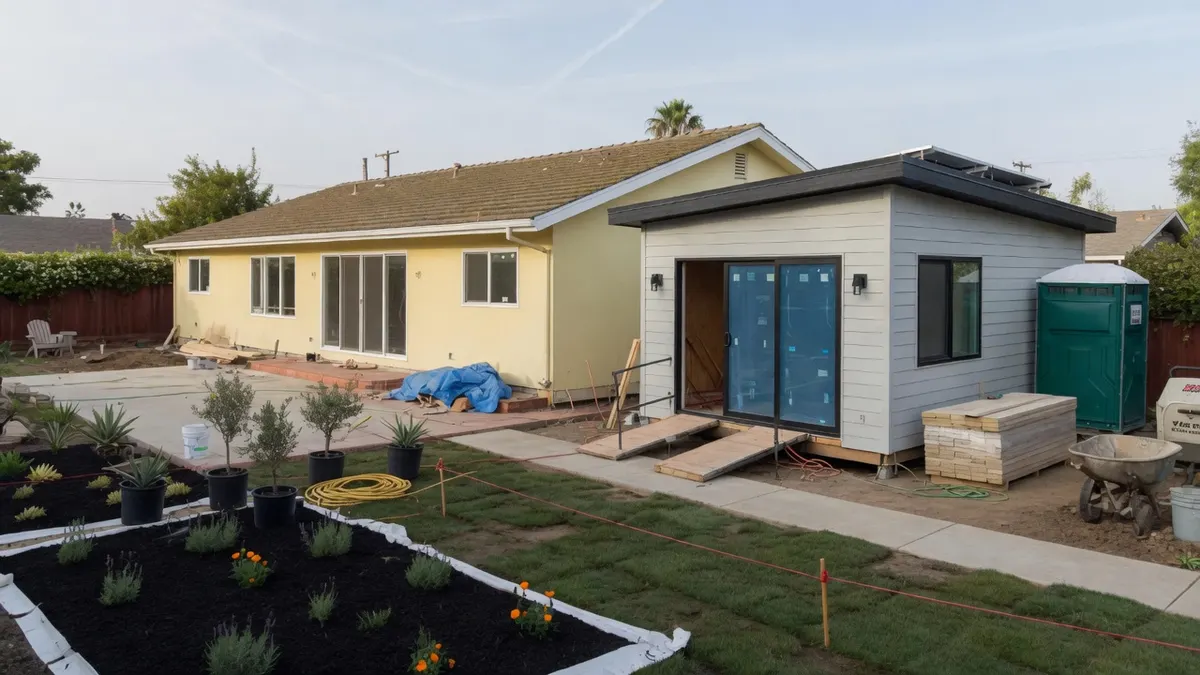
Sacramento ADU Budget Reality Check for Backyard Cottages
Picture a 1948 ranch house in Tahoe Park with a deep, sun-baked backyard and a detached garage that hasn't held a car since the Clinton administration. The owner wants to put a one-bedroom cottage back there for an aging parent. On paper it sounds simple: small footprint, one bathroom, done by Thanksgiving. Then the estimates come back somewhere north of two hundred grand and the whole thing suddenly feels less like a weekend dream and more like building a second house. Because that's exactly what it is.
That's the part people miss about accessory dwelling units. A backyard cottage isn't a glorified shed. It's a real structure with a foundation, its own kitchen and bath, separate utility runs, and a full inspection cycle. Sacramento has made these easier to permit than they were a decade ago, but "easier to approve" and "cheap to build" are two very different sentences.
What two hundred grand actually buys back there
For a detached ADU in the Sacramento Valley, a realistic all-in range tends to land somewhere between roughly $180,000 and $420,000. That spread is enormous, and it's not mostly about square footage. The number moves based on how far your sewer line sits below grade, whether the utility company has to trench a new service across the yard, how the lot drains, what fire separation the cottage needs from the property line, and how fancy the finishes get.
Site and utility work is where budgets swing the hardest. A flat East Sac lot with the main line close to the surface is a very different job than a sloped Land Park parcel where the crew has to dig deep and route around mature trees. The shell and structure are fairly predictable. The dirt is not. Plan for a contingency on top of the base number, because older Sacramento properties love to hide surprises once a shovel goes in.
Reading an estimate without getting played
The shortest bid is almost never the most useful one. A good estimate reads like a story: it spells out materials, labor, what's specifically excluded, the allowances for things you haven't picked yet, who's responsible for permits, cleanup, and the warranty terms. It also names the decisions that could change the price down the line.
When two bids land far apart, resist the urge to assume one contractor is just greedy. Nine times out of ten the gap is hiding in the assumptions. One builder priced a real utility trench; the other left it as an allowance you'll discover later. One included the contingency; the other buried it. Line the documents up side by side and compare the fine print before you compare the bottom lines. Ask for the budget broken into design, permits, site work, utility connections, the shell, interiors, and contingency as separate lines. If a contractor can't or won't itemize it that way, that tells you something.
The license check most homeowners skip
In California, any home improvement job priced at $1,000 or more in combined labor and materials legally requires a licensed contractor. An ADU clears that bar a hundred times over, so this isn't a gray area. Before you sign anything, pull up the Contractors State License Board site and verify the license number yourself. Confirm it's active, check that it covers the right classification, and make sure they carry both liability insurance and workers' compensation. That last one protects you if someone gets hurt on your property.
This matters even more on an ADU because so much of the work touches licensed trades all at once. You've got structural framing, a full electrical rough-in, plumbing for a new kitchen and bath, HVAC, and roofing, all bundled into one project. A reputable general contractor coordinates those subs and stands behind the whole thing. If someone offers to do it all cash, off the books, treat that as the exit sign.
Permits, inspections, and the Sacramento timeline
California's statewide ADU rules have streamlined approval, but local realities still apply. Sacramento plan review, setbacks, fire-access requirements, and utility coordination all have to clear before full construction drawings are worth paying for. Confirm the path with the city early. Your contract should state plainly who pulls the permits, who schedules inspections, and who handles any corrections the inspector flags.
Then there's the inspection rhythm itself. A detached ADU gets checked at multiple stages: foundation, framing, rough electrical and plumbing, then final. Each gate has to pass before the next phase moves, and a failed inspection can stall a crew for days. Season plays in too. Concrete, roofing, and exterior work get backed up across spring and early summer when every crew in the valley is slammed. If your project leans heavily on those trades, scheduling in a shoulder season can shave real time off the calendar, though material lead times still need confirming either way.
Keeping the project from stalling out
Most ADU delays aren't dramatic. They're slow leaks. A homeowner who hasn't picked cabinets or tile can freeze an otherwise-ready crew. So lock your finish level early, before the framing goes up, and keep your selections moving once construction starts. When something changes mid-build, get it in writing as a change order that lists the new price, the schedule impact, and the reason. Verbal "we'll sort it out later" agreements are how good projects turn into bad ones.
A practical way to begin: walk the backyard with your phone, photograph the garage or the spot where the cottage will sit, note where your sewer cleanout and electrical panel are, and write down what you actually need the unit to do. Then line up at least three licensed builders. Our Sacramento contractor guide is a solid starting point, and the contractor search helps you build a shortlist of vetted local pros. The goal isn't chasing the lowest number. It's landing a clean scope, an honest contingency, and a cottage that's still standing comfortably long after the parent, the renter, or the grown kid has moved in.
Who to Hire for This Project
For the work covered in this guide, these are the contractor types to contact and the CSLB classification to verify before you take quotes:
Questions to Ask Before You Sign
- "Is your CSLB license active and bonded?" Verify it yourself at cslb.ca.gov the license number must appear on their bid.
- "Who pulls the permit, and is it included in the bid?" The contractor should handle any required permits a pro who suggests skipping one is a red flag.
- "Can you itemize labor, materials, and allowances?" Itemized bids are the only way to compare quotes on the same scope.
- "What's the payment schedule?" California caps the down payment at $1,000 or 10%, whichever is less payments should track completed work.
- "Who from this area can I call as a reference?" Ask for a recent local job of similar scope, not just photos.
Sacramento Contractors for This Project
Related Articles
Frequently Asked Questions
How much does a detached ADU actually cost to build in Sacramento? +
A realistic all-in range for a detached backyard cottage in the Sacramento Valley runs roughly $180,000 to $420,000. The biggest swing factors are utility connections, sewer depth, site access, fire separation, and finish level, not square footage alone. Plan a contingency on top of the base estimate because older Sacramento lots often hide costly surprises once excavation begins.
Do I need a licensed contractor for an ADU in California? +
Yes. California law requires a licensed contractor for any home improvement work priced at $1,000 or more in combined labor and materials, and an ADU far exceeds that threshold. Verify the license yourself on the Contractors State License Board (CSLB) website, confirm it is active and properly classified, and check that the contractor carries liability insurance and workers' compensation before you sign.
Why are two ADU bids so far apart in price? +
Most large gaps between bids come from differing assumptions, not one contractor being cheaper. One builder may have priced a real utility trench while another left it as a vague allowance, or one included a contingency the other omitted. Compare the line items, exclusions, and allowances side by side before deciding, and insist on a budget broken into design, permits, site work, utilities, shell, interiors, and contingency.
How long does ADU permitting and inspection take in Sacramento? +
California's statewide rules have streamlined ADU approval, but local plan review, setbacks, fire-access requirements, and utility coordination still take time in Sacramento. Confirm the permit path with the city before paying for full construction drawings. Expect multiple inspection stages during the build, including foundation, framing, rough trades, and final, and remember a failed inspection can stall the crew for days.
What time of year is best to start an ADU in the Sacramento Valley? +
Concrete, roofing, and exterior trades get heavily booked across spring and early summer when crews valley-wide are busiest. Starting in a shoulder season can ease scheduling for those phases and may shorten your overall timeline. Either way, confirm material lead times early, since long-lead items can delay a project regardless of when you break ground.
Who is responsible for pulling permits on my Sacramento ADU? +
Your written contract should clearly state who applies for permits, who schedules inspections, and who handles any corrections the inspector requires. In most professional arrangements the general contractor manages all of this. If a builder is vague about permit responsibility or suggests skipping permits entirely, treat that as a serious warning sign.