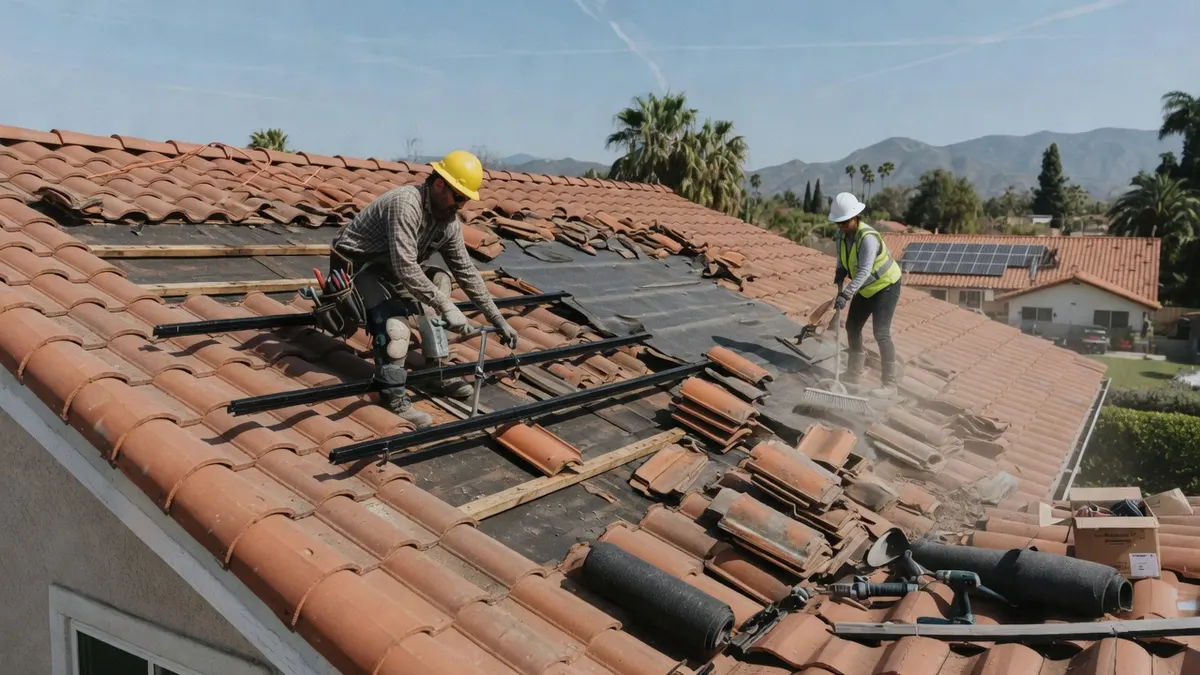
Lincoln Solar-Ready Remodels: What to Do Before Panels Go On
The newer subdivisions out by Twelve Bridges and Lincoln Crossing look tailor-made for solar: wide south-facing roof planes, simple gable lines, not a lot of mature shade trees yet. So homeowners are often surprised when a solar installer walks the property and says, "Before we put panels up here, a few things need to happen first." That sentence saves people thousands of dollars. Panels are supposed to sit on your roof for 25 years or more, and what's underneath them the roof itself, the electrical panel, the attic, the conduit path has to be in shape to carry that commitment.
Here's how to get the house ready before the solar crew shows up.
Start with the roof, because nobody wants to pull panels off in year eight
This is the single most expensive mistake to get wrong. If your shingles have ten years left and your panels have twenty-five, you're scheduling a costly removal-and-reinstall somewhere down the line just to replace the roof underneath. In Lincoln, summer heat is brutal on asphalt shingle, and a roof that looked fine in the listing photos may be closer to the end than you'd guess.
Get an honest read on remaining roof life before you commit to solar. If the roof is borderline, doing it now while you've already got crews and permits in motion is far cheaper than doing it later around a live array. Have your roofer and solar installer talk to each other about underlayment, flashing details, and where the mounting feet will land. A good roofing contractor will tell you straight whether your roof should be replaced first or has plenty of road left.
Your electrical panel is probably the quiet bottleneck
A lot of Lincoln homes were built with 100- or 125-amp service that was plenty for the original load. Add solar, a battery, an EV charger, maybe a heat pump down the line, and suddenly that panel is the choke point. Solar interconnection has rules about how much you can backfeed a given panel, and an undersized or full panel can force an upgrade you didn't budget for.
Have a licensed electrician evaluate your service before solar quotes get finalized. Sometimes a main panel upgrade to 200 amps is the move; sometimes a line-side tap or a smart panel solves it for less. This is firmly licensed-electrician territory in California backfeeding a panel incorrectly is a real safety issue, not a weekend project. If you're lining up electrical work, get it scoped alongside the solar plan rather than as an afterthought.
The unglamorous prep that pays off: conduit, attic, and shade
Three things rarely make it into the brochure but shape how clean and how productive your system ends up.
- Conduit pathway. Decide early how the wiring travels from the array to the panel. A planned route through the attic, down an interior chase, or along a discreet exterior run looks far better than conduit slapped across the front of the house because nobody thought about it until install day.
- Attic ventilation. Sacramento Valley attics get savagely hot. Panels actually shade part of the roof, but proper ventilation still matters for the equipment and for the rooms below. If you're opening things up anyway, it's a good moment to check insulation and airflow.
- Shade audit. Even in the newer tracts, that fast-growing tree on the south side will be a different animal in five years. A little tree service trimming now can protect production for the life of the system.
Leave room for the battery you'll probably want later
Even if a battery isn't in this year's budget, plan the wall space for one. With California's NEM 3.0 rules, storing your own power and using it in the evening makes a lot more financial sense than it used to, and most homeowners who skip the battery now end up wanting it within a few years. Reserve a clear, code-compliant spot typically in the garage or on an exterior wall and have your electrician rough in what's reasonable so a future install isn't a teardown. Same logic applies to EV charging: a conduit stub to the garage now is cheap insurance.
What a realistic Lincoln budget looks like, and who you let near it
Pre-solar prep in the Sacramento Valley typically runs anywhere from roughly $5,000 to $35,000 depending on what you're touching a panel upgrade alone might be a few thousand, a full roof replacement is the big-ticket item, and tree work and conduit planning fall in between. Treat those numbers as directional; site conditions, your roof's complexity, and permit scope move them around. Build in a contingency, especially on older homes where past work may not match current code or have clean documentation.
Now the part too many people skip: vet the people doing the work. Any single contract over $1,000 in labor and materials requires a licensed contractor in California verify the CSLB license number yourself at the CSLB website rather than taking a card at face value. Confirm the license is active and check that they carry workers' comp and liability insurance. Solar, battery, roofing, and electrical work each trigger their own permits and inspections, and solar also requires utility interconnection approval, so ask plainly who pulls the permits and who handles the inspection corrections. A contractor who answers those questions clearly before the job is the one who'll communicate well when something unexpected turns up behind a wall.
The practical move is to spend an afternoon on the house first. Climb up to the attic, photograph the roof and the inside of your electrical panel, note the tree shade through the day, and write down what you actually want the system to power. Then pull together a few licensed bids the Lincoln contractor page is a good starting point, you can compare vetted solar installers directly, and the contractor search helps you build a shortlist of three to compare. Get the house ready, and the panels are the easy part.
Who to Hire for This Project
For the work covered in this guide, these are the contractor types to contact and the CSLB classification to verify before you take quotes:
Questions to Ask Before You Sign
- "Is your CSLB license active and bonded?" Verify it yourself at cslb.ca.gov the license number must appear on their bid.
- "Who pulls the permit, and is it included in the bid?" The contractor should handle any required permits a pro who suggests skipping one is a red flag.
- "Can you itemize labor, materials, and allowances?" Itemized bids are the only way to compare quotes on the same scope.
- "What's the payment schedule?" California caps the down payment at $1,000 or 10%, whichever is less payments should track completed work.
- "Who from this area can I call as a reference?" Ask for a recent local job of similar scope, not just photos.
Sacramento Contractors for This Project
Related Articles
Sacramento Attic Insulation and Air Sealing Guide: Costs, Rebates, Ducts, Venting, and Summer Comfort
August 9, 2026
Sacramento Attic Insulation and Air Sealing Guide: Costs, Rebates, Comfort, and Contractor Questions
August 5, 2026
Arden Arcade Mini-Split Installation: Permits & Summer Cooling
July 18, 2026
Frequently Asked Questions
Do I need to replace my roof before adding solar in Lincoln? +
Not always, but you should get an honest assessment of remaining roof life first. If your asphalt shingle roof has fewer years left than the panels' 25-year lifespan, replacing it now is far cheaper than pulling the array off later to reroof. Lincoln's intense summer heat ages shingles faster than many homeowners expect, so don't assume a newer-looking roof is fine.
Will my electrical panel need an upgrade for solar in a Lincoln home? +
Often, yes. Many Lincoln homes were built with 100- or 125-amp service, and adding solar plus a battery, EV charger, or heat pump can exceed what the panel can safely backfeed. A licensed electrician should evaluate your service before you finalize solar quotes. Sometimes a 200-amp upgrade is needed; other times a line-side tap solves it for less.
How much does solar prep work typically cost in the Sacramento Valley? +
Pre-solar prep in the Sacramento Valley generally runs roughly $5,000 to $35,000 before the panels themselves, depending on scope. A panel upgrade might be a few thousand dollars, a full roof replacement is usually the largest item, and conduit planning and tree trimming fall in between. These are directional figures your roof complexity, site conditions, and permit scope all affect the final number.
Does California require a licensed contractor for solar-ready remodel work? +
Yes. Any contract over $1,000 in combined labor and materials requires a licensed contractor in California. Solar, electrical, roofing, and battery work all fall under this. Verify the contractor's CSLB license number yourself at the CSLB website, confirm it's active, and check that they carry workers' compensation and liability insurance before signing.
Should I plan for a battery even if I'm not buying one now in Lincoln? +
It's worth planning the space and rough-in even if the battery comes later. Under California's NEM 3.0 rules, storing solar power and using it in the evening is much more financially valuable than it used to be, and many homeowners want a battery within a few years of going solar. Reserving a code-compliant spot usually the garage or an exterior wall and roughing in wiring now avoids a costly teardown later.
What permits are involved in a solar-ready remodel in Lincoln? +
Solar, battery, roofing, and electrical work each carry their own permit and inspection requirements through the local building department, and solar additionally needs utility interconnection approval before it can be energized. Ask your contractor plainly who pulls the permits and who handles any inspection corrections. Building that into the contract up front prevents finger-pointing if a correction comes up.