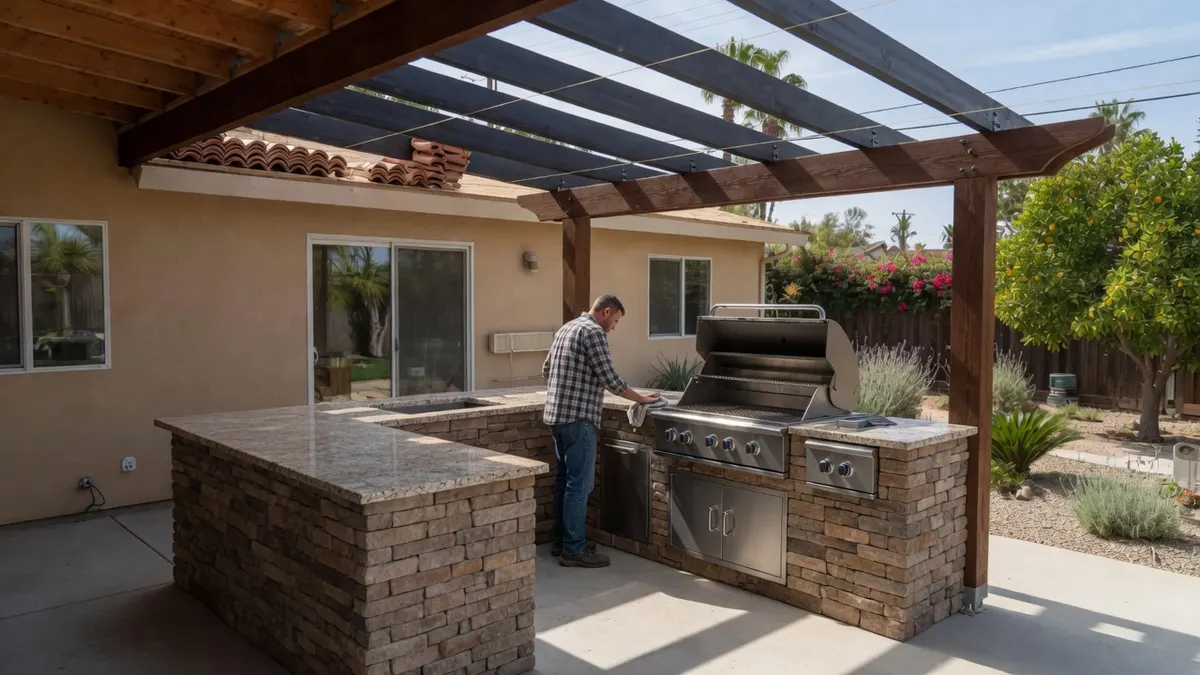
Granite Bay Outdoor Kitchen Costs Beyond the Grill
There's a moment every Granite Bay homeowner hits in July, usually around six in the evening when the patio finally drops below 100 degrees and the family drifts outside. If your "outdoor kitchen" is a gas grill rolled up next to the back door, that's where the dream stalls. Nobody wants to keep running inside for plates, ice, or a cutting board while the tri-tip rests. The grill was never the hard part. Everything around it is.
That's the gap most homeowners don't see until they're staring at a bid. On these larger Granite Bay lots, where backyards stretch toward pools, vineyard-style fences, and oak shade, the cost story has almost nothing to do with the burner you picked at the showroom.
The grill is the cheap part. The yard is not.
Here's the uncomfortable math. A respectable built-in grill might run a couple thousand dollars. But getting gas, electrical, and water out to where you actually want to cook? That's where a Granite Bay project separates from one in a tract neighborhood. Big lots mean long trenches. If the cooking zone sits 60 feet from the house, you're paying for every foot of that gas line, conduit, and possibly a drainage run, plus the labor to dig through clay-heavy soil that doesn't give up easily.
Across the Sacramento Valley, a real outdoor kitchen tends to land somewhere between roughly $18,000 and $90,000. That spread isn't padding. The low end is a modest counter with a grill and a few utilities close to the house. The high end is a covered structure with a pizza oven, refrigeration, a sink on a proper drain, stone counters, and lighting wired for evening use. Before you fall for a quartzite slab, get the boring stuff priced first: the trenching, the masonry base, the electrical, and the cover.
Why a covered cook space earns its keep here
A lot of homeowners treat shade as an upgrade they'll add "later." In Granite Bay, that's backwards. The summer sun makes an uncovered cooking station miserable from late morning through dinner, and the same UV that bakes you also degrades cheap appliances and finishes over a few seasons. A pergola, a solid patio cover, or a full ramada changes how often the space actually gets used.
Cover also protects your investment. Stainless steel left fully exposed pits faster, and electronics in unsealed grills don't love the heat-cool cycle. When you talk to a general contractor about the build, ask how the cover ties into the existing roofline or patio structure, because that connection point is where permitting and waterproofing details get real.
The wallet items hiding underground
Walk the route from your gas meter and electrical panel to the spot you've picked. That invisible line is the budget. A few things that quietly add up:
- Gas sizing. A grill, a side burner, and a pizza oven together may need a larger line than your existing service can spare, sometimes a meter upgrade.
- Drainage. A sink needs somewhere to go. On a flat or low-lying part of the yard, that can mean a drywell or a tie-in that adds real cost.
- Soil and trenching. Granite Bay's dense clay and the occasional buried rock make digging slower than anyone wants.
- Electrical load. Refrigeration, lighting, outlets, and a ventilation fan add up to a circuit you may not currently have to spare.
None of these show up in the glossy appliance brochure, and all of them belong in a written estimate that lists materials, labor, allowances, exclusions, and who pulls the permits.
Permits, the HOA, and checking that license
Gas, electrical, plumbing, and any covered structure will almost certainly need permits from Placer County, with inspections at the rough and final stages. If your neighborhood has an HOA, and many Granite Bay communities do, you'll likely need design approval before a shovel touches dirt. Visible structures, rooflines, and even fixture placement can trigger a review, so build that timeline into your plan rather than treating it as an afterthought.
On the contractor side, do the homework that protects you. In California, anyone doing work valued at $1,000 or more in combined labor and materials must hold a CSLB license. An outdoor kitchen clears that bar before you've even chosen a grill. Verify the license number directly on the CSLB website, confirm it covers the trades involved, and check that workers' compensation and liability insurance are current. A licensed concrete or masonry crew should welcome that question, not bristle at it. The same goes for the landscaping work that often wraps the kitchen into the rest of the yard.
Getting bids you can actually compare
The shortest quote is rarely the most honest one. When two estimates land far apart, the difference is usually in the assumptions, not the skill. Ask each contractor to spell out utility routing, appliance specs, the countertop material they recommend for sun exposure, and how the cover sheds water. Get a payment schedule tied to real progress milestones and a single named contact who answers the phone when a detail gets complicated.
Before any of that, spend an afternoon on your own property. Photograph the run from the house to your cooking spot, note where the sun sits at dinnertime, and write down what actually frustrates you about the current setup. Then line up at least three licensed contractors and compare their scopes side by side. Start your shortlist with the Granite Bay contractor guide and the Sacramento Valley contractor search, and judge the bids on clarity, not just the bottom number. A clean scope is what gets you to that July evening with everything you need already within arm's reach.
Who to Hire for This Project
For the work covered in this guide, these are the contractor types to contact and the CSLB classification to verify before you take quotes:
Questions to Ask Before You Sign
- "Is your CSLB license active and bonded?" Verify it yourself at cslb.ca.gov the license number must appear on their bid.
- "Who pulls the permit, and is it included in the bid?" The contractor should handle any required permits a pro who suggests skipping one is a red flag.
- "Can you itemize labor, materials, and allowances?" Itemized bids are the only way to compare quotes on the same scope.
- "What's the payment schedule?" California caps the down payment at $1,000 or 10%, whichever is less payments should track completed work.
- "Who from this area can I call as a reference?" Ask for a recent local job of similar scope, not just photos.
Sacramento Contractors for This Project
Related Articles
Frequently Asked Questions
What does a full outdoor kitchen typically cost in Granite Bay? +
Across the Sacramento Valley, a complete outdoor kitchen usually runs roughly $18,000 to $90,000. The low end covers a basic counter and grill with utilities close to the house, while the high end includes a covered structure, refrigeration, stone counters, a sink on a proper drain, and lighting. Granite Bay's larger lots can push costs up because utility runs are longer and the clay soil is harder to trench.
Why are utility runs more expensive on Granite Bay properties? +
Many Granite Bay homes sit on big lots, so the cooking area is often far from the gas meter and electrical panel. Every foot of gas line, electrical conduit, and drainage trench adds material and labor cost, and the area's dense clay soil makes digging slower. Walking the route from your house to the planned kitchen is the best way to gauge this before getting bids.
Do I need a permit for an outdoor kitchen in Granite Bay? +
Almost certainly. Gas, electrical, plumbing, and any covered structure typically require permits from Placer County, with inspections at the rough and final stages. Confirm in your contract who pulls the permits and schedules inspections so nothing falls through the cracks.
Will my HOA need to approve the project? +
Quite possibly. Many Granite Bay communities have an HOA that reviews visible structures, rooflines, and finishes before construction begins. Submit your design for approval early, because waiting on an HOA decision can add weeks to your timeline if you start the process late.
How do I confirm a contractor is properly licensed in California? +
In California, any project valued at $1,000 or more in combined labor and materials requires a CSLB-licensed contractor, and an outdoor kitchen easily clears that threshold. Look up the license number directly on the CSLB website, verify it covers the trades involved, and confirm that workers' compensation and liability insurance are current before you sign anything.
Is a covered cooking area worth the extra cost in Granite Bay? +
For this climate, usually yes. Summer sun makes an uncovered station uncomfortable for much of the day and accelerates wear on stainless appliances and finishes. A pergola, patio cover, or ramada both extends how often you use the space and protects the equipment you paid for, though it does add permitting and waterproofing details to the build.