Galt Water Heater Replacement: Tank, Tankless, or Heat Pump?
It usually happens on the coldest morning of the year. You step into the shower in your Galt home, the water runs lukewarm for ten seconds, then turns to ice, and you spend the rest of the day mopping a puddle off the garage floor. That pressure to fix it *right now* is exactly how people end up paying too much for the wrong water heater. The truth is, you have a few days of breathing room more often than you think, and the choice between tank, tankless, and heat pump is worth slowing down for.
The three roads out of a cold shower
A standard tank heater is the cheapest to drop in and the one most Galt installers can swap same-day. You lose a chunk of energy keeping 40 or 50 gallons hot around the clock, but the upfront cost is hard to beat.
Tankless units heat water on demand, so you never run out mid-shower. The catch shows up behind the wall: most retrofits need a bigger gas line and a new venting path, and that prep work is where the budget creeps.
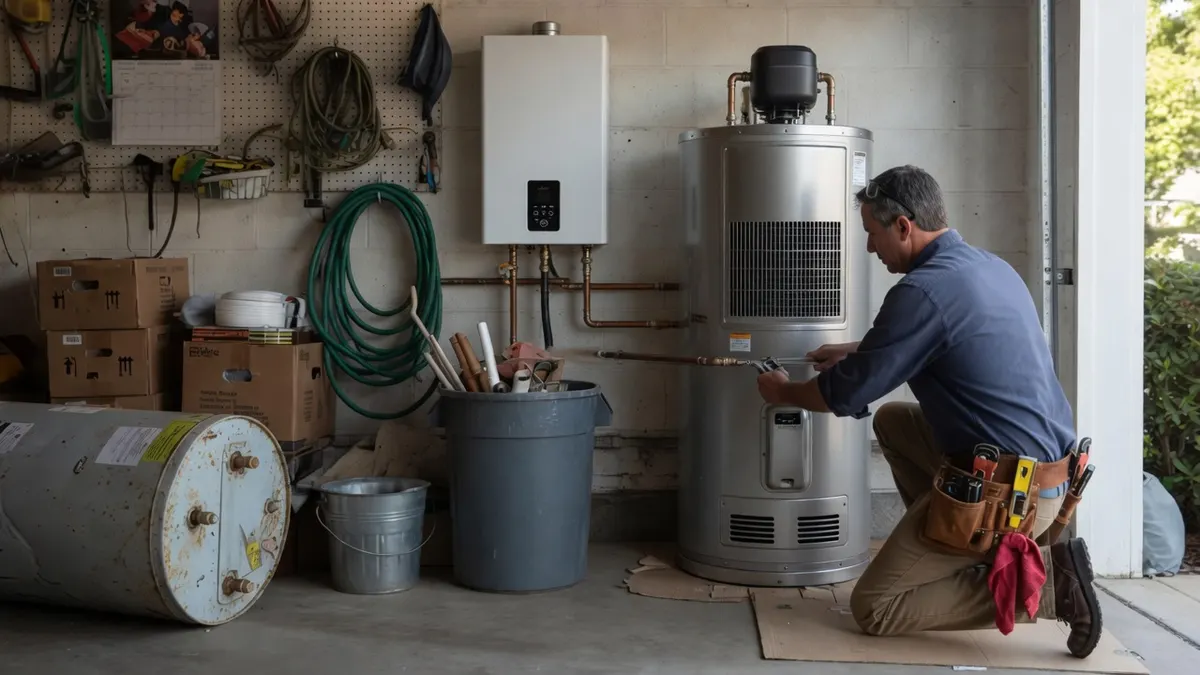
Then there's the heat pump water heater, the option that's quietly become a real contender in our part of Sacramento County. It pulls heat from the surrounding air to warm the water, sipping electricity instead of gulping it. Many Galt homes put their water heater in the garage, which is close to ideal for a heat pump model because there's room for the unit to breathe and somewhere sensible to route the condensate. They run a little noisy and need decent electrical capacity, so the garage location matters more than the brand on the box.
What it actually costs around here
Set your expectations between roughly $1,800 and $7,500 installed for a Sacramento Valley swap, and understand why that range is so wide. A like-for-like tank replacement sits near the bottom. A tankless conversion climbs because of the gas and venting upgrades. A heat pump install lands in the middle-to-upper band depending on whether your panel can handle it, but the lower operating cost can claw that back over the unit's life.
Here's the part people skip: budget a cushion for what nobody can see until the old unit comes out. Plenty of older homes around Galt have previous work that never matched today's code, and bringing it current is part of the job, not an upsell. When you collect estimates, the most useful one isn't the shortest. It should spell out materials, labor, what's excluded, who pulls the permit, cleanup, and the warranty. If two bids are hundreds of dollars apart, compare the assumptions before you decide one contractor is just cheaper. Often the low number simply left something out. When you're ready to line up quotes, the Sacramento Valley contractor search is the fastest way to build a shortlist of licensed plumbing pros.
The license check that takes two minutes
Water heater work is real plumbing, and in California it usually crosses the line into licensed territory. Any project where the combined labor and materials run over $1,000 legally requires a contractor holding an active CSLB license. That's the current threshold; if anyone quotes you the old $500 figure, they're working from outdated information. Take the two minutes to look up their number on the CSLB website and confirm the license is active, that they carry liability insurance, and that they hold workers' comp if they bring a crew. A heat pump conversion often pulls in an electrician for a dedicated circuit, so make sure whoever touches the panel is licensed for that too.
This isn't bureaucratic box-checking. If an unlicensed installer botches the gas connection or the electrical, you own the liability and the do-over.
Strapping, venting, and the inspector's checklist
Sacramento County sits in seismic territory, so your new heater has to be strapped at two points to keep it from walking off its base in a quake. Beyond that, an inspector wants to see proper venting, a temperature-and-pressure relief valve that discharges safely, and a drip pan with a drain where one's required. Tankless and heat pump units add their own wrinkles, combustion air and venting for one, an electrical permit for the other.
Yes, all of this means pulling a permit, and yes, it's worth it. The contract should state plainly that the installer handles the application, the inspection, and any corrections. A permitted install documents the work to code, gives you a clean inspection record, and shows up clearly when you eventually sell. Skipping it to save a few dollars is the kind of shortcut that surfaces at the worst possible moment.
Questions worth asking before you hand over a deposit
Ask for the installed price, not a vague range. Ask what code upgrades are baked in versus billed later. Ask about the warranty, the expected recovery time, and the realistic annual operating cost, because a heat pump's higher sticker only makes sense if you understand the energy savings. If a rebate is in play, ask whether it's already reflected in the price or something you chase down yourself afterward. Tie the payment schedule to progress, never a big check before work starts, and get a named person to call when something comes up. A contractor who answers clearly now is the one who'll answer when a complication appears mid-install.
If your project sits near a jurisdiction line, permit steps can shift from one city to the next. Folks comparing options across the county sometimes look at the nearby Elk Grove guide too, since requirements aren't always identical one town over.
So before that first estimate, snap a few photos of your current setup, note where the unit lives, whether it's gas or electric, and how often you actually run out of hot water. Walk that list into conversations with at least three licensed contractors through the contractor search, and you'll trade a panicked same-day decision for a clean scope, a fair price, and hot water that lasts longer than your morning routine.
Who to Hire for This Project
For the work covered in this guide, these are the contractor types to contact and the CSLB classification to verify before you take quotes:
Questions to Ask Before You Sign
- "Is your CSLB license active and bonded?" Verify it yourself at cslb.ca.gov the license number must appear on their bid.
- "Who pulls the permit, and is it included in the bid?" The contractor should handle any required permits a pro who suggests skipping one is a red flag.
- "Can you itemize labor, materials, and allowances?" Itemized bids are the only way to compare quotes on the same scope.
- "What's the payment schedule?" California caps the down payment at $1,000 or 10%, whichever is less payments should track completed work.
- "Who from this area can I call as a reference?" Ask for a recent local job of similar scope, not just photos.
Sacramento Contractors for This Project
Related Articles
Sacramento Attic Insulation and Air Sealing Guide: Costs, Rebates, Ducts, Venting, and Summer Comfort
August 9, 2026
Sacramento Attic Insulation and Air Sealing Guide: Costs, Rebates, Comfort, and Contractor Questions
August 5, 2026
Arden Arcade Mini-Split Installation: Permits & Summer Cooling
July 18, 2026
Frequently Asked Questions
Is a heat pump water heater a good fit for a Galt garage installation? +
Often yes. Many Galt homes keep the water heater in the garage, which gives a heat pump unit the open air space it needs to operate efficiently and a practical spot to route condensate. The main things to verify are that your electrical panel has the capacity for the unit and that the noise won't bother adjacent living space. A licensed contractor can confirm whether your garage meets the airflow and electrical requirements.
How much does it cost to replace a water heater in the Sacramento Valley? +
A typical installed range runs roughly $1,800 to $7,500 depending on the type. A like-for-like tank swap sits at the low end, tankless climbs because of gas line and venting upgrades, and heat pump models land in the middle-to-upper band depending on electrical work. Always set aside a contingency for code corrections, since older Galt homes sometimes have prior work that needs updating.
Do I need a permit to replace a water heater in Galt, California? +
Yes. Water heater replacements require a permit and inspection covering seismic strapping, venting, and the temperature-pressure relief discharge. Heat pump conversions usually add an electrical permit, and tankless units may involve gas and venting permits. Your contract should clearly state that the contractor handles the application, inspection, and any corrections.
Does a contractor need a license to install a water heater in California? +
If the total job, labor plus materials, exceeds $1,000, California law requires an actively licensed CSLB contractor. The old $500 threshold is outdated, so don't rely on it. Look up the license number on the CSLB website to confirm it's active, and verify the contractor carries liability insurance and workers' compensation.
Is tankless or tank better for a home in Galt? +
It depends on your priorities. A tank unit is cheaper to install and faster to swap, while a tankless system never runs out of hot water but usually needs a larger gas line and new venting, which raises the upfront cost. If endless hot water and long-term efficiency matter more than the initial price, tankless can be worth the extra prep work.
Are there rebates for upgrading to a heat pump water heater near Sacramento? +
Rebates and incentives for high-efficiency heat pump water heaters do come and go through utilities and state programs, so timing matters. Ask your contractor whether any current rebate is already reflected in the quoted price or something you apply for separately afterward. Confirm the unit qualifies before you assume a rebate, since eligibility changes over time.