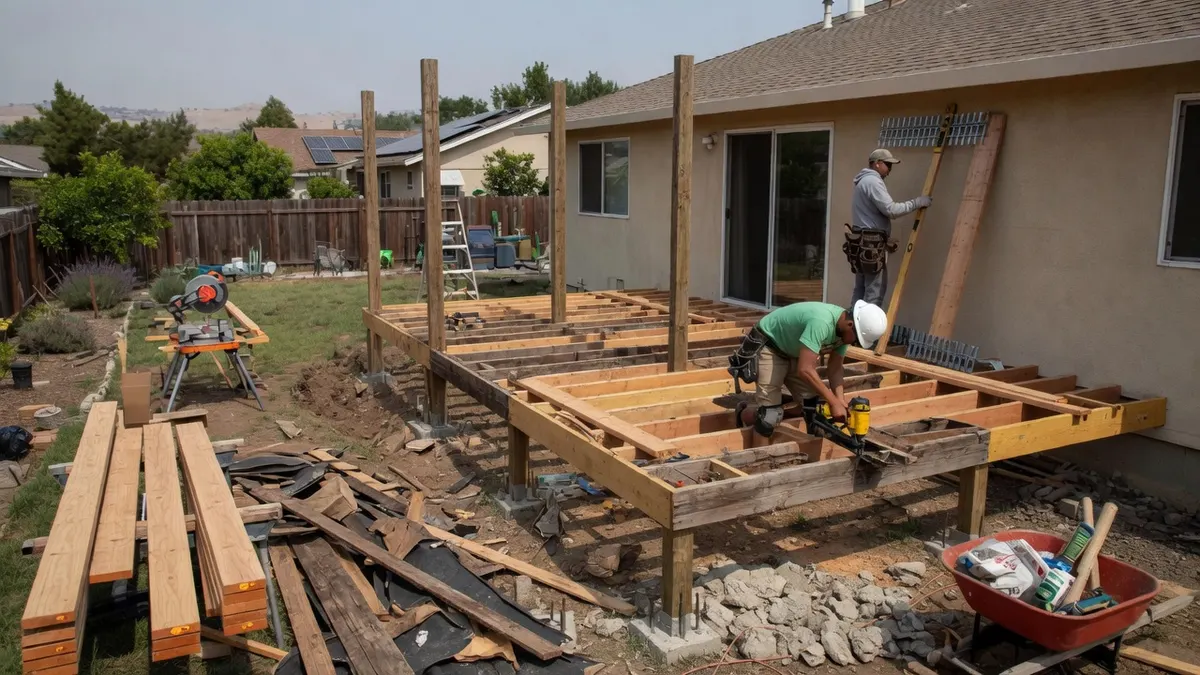
Fair Oaks Deck Repairs and Rebuilds for Sloped Lots
Drive through the older pockets of Fair Oaks, the ones tucked near the American River bluffs or backed up against a seasonal ravine, and you'll spot a lot of decks that were never really designed for the ground they sit on. A previous owner built out over a drop-off, the posts marched downhill, and twenty years of dry summers and damp winters did the rest. By the time someone notices the bounce underfoot or the soft spot near the stairs, the problem usually isn't the boards you can see. It's the framing you can't.
That gap between what's visible and what's structural is the whole story on a sloped lot. So before you call anyone, it helps to understand what actually drives the work, the cost, and the timeline out here.
Surface rot versus a frame that's giving up
There's a meaningful difference between a deck that needs a new walking surface and one that needs its bones rebuilt, and the two get confused constantly. Faded, splintering boards are cosmetic. A ledger pulling away from the house, posts that have shifted on their footings, or stair stringers that flex when you climb them are structural, and no amount of fresh decking will fix any of that.
On a Fair Oaks slope this matters more than it would on a flat suburban pad. Taller posts, longer beam spans, and deeper footings all carry more load and more risk. If the framing underneath is compromised, replacing only the top boards just hides the issue under a nicer finish. A good contractor will crawl underneath, photograph the connections, and tell you plainly which category your deck falls into. Be wary of anyone who quotes a rebuild from the curb.
What a slope actually does to the bill
Plan loosely. For deck work across the Sacramento Valley, repairs and rebuilds tend to land somewhere between roughly $6,000 and $55,000, and that's a wide range for a reason. A straightforward board swap sits near the bottom. A full structural rebuild with new footings, taller posts, code-compliant railings, and a long run of stairs down a grade pushes toward the top.
Think about it in two buckets. There's the surface, where the choice between pressure-treated wood and composite mostly moves the number, and there's the structure, where the framing, footings, railings, and stairs live. On a hillside it's usually the second bucket that dominates the estimate, not the decking you picked out at the showroom. Set aside a contingency too, typically 10 to 15 percent, because older Fair Oaks decks tend to reveal surprises once a contractor opens things up: undersized hardware, dry rot at the ledger, footings that were never poured deep enough.
When two bids come back far apart, resist the urge to just take the cheaper one. Line up the assumptions instead. The more useful estimate spells out materials, framing scope, railing and stair work, permit responsibility, allowances, cleanup, and warranty. The cheap bid is often cheap because it quietly excluded the part that actually costs money.
The footings, the oaks, and the water
Three site conditions shape almost every sloped-lot deck in this area. The first is soil and grade, which determines how deep and how wide your footings need to be and whether the posts need lateral bracing. The second is trees. Fair Oaks earns its name, and many lots sit under mature heritage oaks whose roots and drip lines are protected. If your footings or new posts land near a significant tree, expect the project to account for root protection, and don't be surprised if the county weighs in.
The third is drainage. Water runs downhill, and a deck on a slope often sits right in its path. Good framing details, proper flashing at the ledger, and decking that sheds water keep the structure from quietly rotting from the bottom up over a few wet Sacramento winters. Ask any contractor you're considering how they'll handle runoff under and around the deck. The ones who have built on these lots before will have a ready answer.
Permits, licenses, and the inspector's visit
Deck rebuilds, structural repairs, new stairs, elevated platforms, and railings generally require a permit in Sacramento County, and elevated decks usually get an inspection of the framing and footings before they're closed in. That inspection is your friend. It's a free second set of eyes on the connections that keep the deck attached to your house. If a contractor suggests skipping the permit to save time, that's a reason to cross them off the list, not a favor.
Verify the license before anything is signed. In California, any project where labor and materials total $1,000 or more must be performed by a contractor holding an active CSLB license, and you can confirm a license number, its status, and the bond and workers' compensation behind it in a couple of minutes on the CSLB website. Decks are exactly the kind of structural, safety-critical work where you want a properly licensed and insured crew rather than a weekend handyman. You can compare licensed deck builders and vetted general contractors when you start lining up names.
On timing, exterior work books up fast here. Spring and early summer are the busy stretch for decks, and if you call in April hoping for a May build, you may be waiting. Reaching out in late winter, or planning for the fall shoulder season, often gets you a better spot on the calendar and a contractor who isn't rushing between five other jobs.
Getting your shortlist together
Before the first contractor walks the property, do a little homework yourself. Walk the deck, bounce on it, look for the soft spots, and take photos of the underside, the ledger where it meets the house, the posts, and the stairs. Write down what's bothering you, whether it's safety, looks, or the way the layout works with your slope. That short list keeps the conversation honest and makes it far easier to compare estimates that should be describing the same scope.
From there, line up at least three licensed bids, confirm each license on the CSLB site, and ask for photos of similar hillside decks they've built. Our Fair Oaks contractor guide is a good starting point for local names, and you can build a full shortlist through the contractor search when you're ready. The aim isn't just the lowest number. It's a clear scope, an honest read on what's happening under the boards, and a deck that handles your slope safely for the next couple of decades.
Who to Hire for This Project
For the work covered in this guide, these are the contractor types to contact and the CSLB classification to verify before you take quotes:
Questions to Ask Before You Sign
- "Is your CSLB license active and bonded?" Verify it yourself at cslb.ca.gov the license number must appear on their bid.
- "Who pulls the permit, and is it included in the bid?" The contractor should handle any required permits a pro who suggests skipping one is a red flag.
- "Can you itemize labor, materials, and allowances?" Itemized bids are the only way to compare quotes on the same scope.
- "What's the payment schedule?" California caps the down payment at $1,000 or 10%, whichever is less payments should track completed work.
- "Who from this area can I call as a reference?" Ask for a recent local job of similar scope, not just photos.
Sacramento Contractors for This Project
Related Articles
Frequently Asked Questions
Does a deck rebuild on a sloped Fair Oaks lot require a permit? +
Yes, in most cases. Sacramento County typically requires a permit for deck rebuilds, structural repairs, new stairs, railings, and elevated platforms. Elevated decks usually get a framing and footing inspection before they're closed in, which is a valuable free check on the connections holding the deck to your house. If a contractor suggests skipping the permit, treat that as a red flag.
How much does it cost to repair or rebuild a deck in the Sacramento Valley? +
Costs vary widely with the scope and the slope, but deck repairs and rebuilds in the area generally run roughly $6,000 to $55,000. A simple board replacement sits near the low end, while a full structural rebuild with new footings, taller posts, code railings, and a long stair run down a grade pushes toward the top. Plan a 10 to 15 percent contingency for hidden rot or undersized hardware that often turns up in older decks.
How do I check whether a Fair Oaks deck contractor is licensed? +
Look up the contractor's CSLB license number on the California Contractors State License Board website, where you can confirm the license is active and see the bond and workers' compensation behind it. In California, any job where labor and materials total $1,000 or more must be done by a properly licensed contractor. Decks are structural, safety-critical work, so verify the license before you sign anything.
Why does building a deck on a slope cost more than on a flat lot? +
A sloped lot means taller posts, longer beam spans, and deeper footings, all of which carry more load and require more material and labor. The framing and footings, not the decking you choose, usually drive the cost on a hillside. Grade, soil conditions, and the need for lateral bracing can also add engineering and excavation that a flat backyard deck never needs.
Can my Fair Oaks deck project be affected by the oak trees on my lot? +
Often, yes. Many Fair Oaks lots sit under mature heritage oaks whose roots and drip lines are protected, and the county may have a say if your footings or posts land near a significant tree. Expect a knowledgeable contractor to plan around root protection, which can affect where posts go and how footings are dug. Mention any large trees early so the design accounts for them.
When is the best time of year to schedule deck work in Fair Oaks? +
Exterior work books up fast in spring and early summer, so if you call in April hoping for a May build you may face a wait. Reaching out in late winter or planning for the fall shoulder season often gets you a better calendar slot and a contractor who isn't juggling several jobs at once. Either way, confirm material lead times when you book.