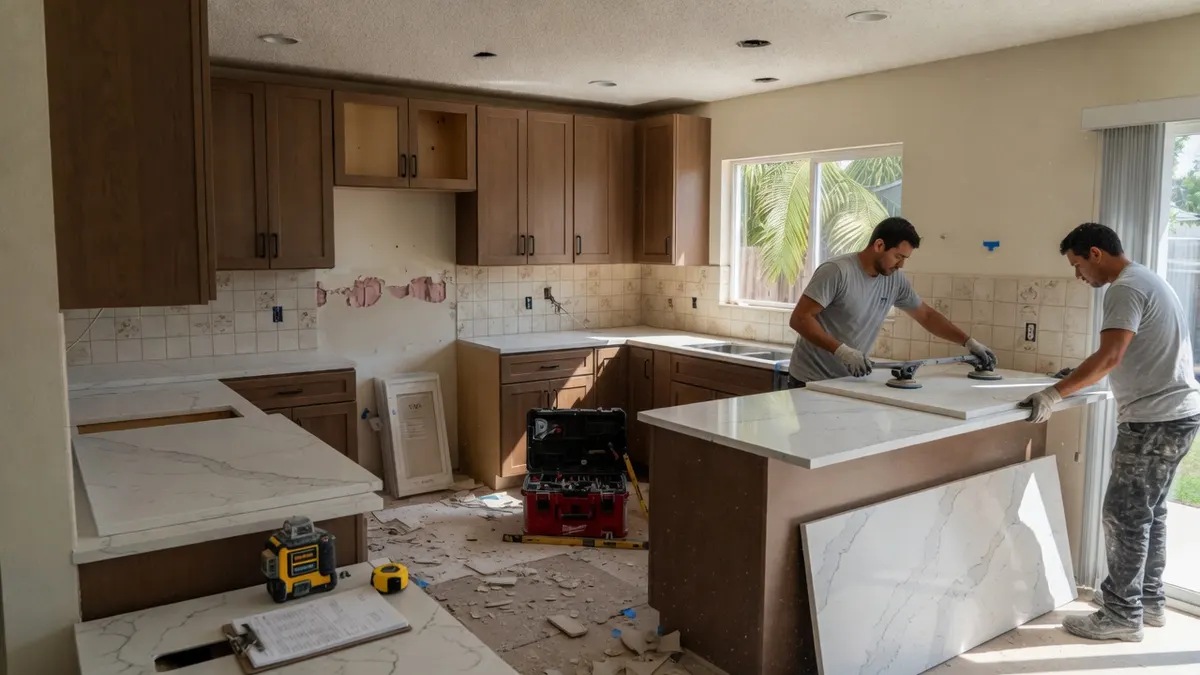
Countertop Installation Cost in Sacramento (2026)
A homeowner in East Sacramento recently pulled three bids for the same 42 square feet of kitchen counter. They ranged from $3,400 to $9,800 same kitchen, same week. That spread is exactly why "countertop cost" feels impossible to pin down. The truth is that your number depends on the slab you fall in love with, the shape of your kitchen, and whether the crew has to wrestle the old counters out first. Here's how the math actually works in the Sacramento Valley, and how to read a bid so you don't overpay.
What countertops actually cost per square foot installed
In the Sacramento area, countertops are priced by the installed square foot, which bundles the material, fabrication (cutting and polishing the slab), and installation. These are directional 2026 ranges that move with material grade, slab availability, and job complexity:
- Laminate: roughly $25-$55 per sq ft installed. The budget option, and it has come a long way visually.
- Butcher block / wood: roughly $40-$95 per sq ft installed. Warm look, but needs oiling and isn't fond of standing water near sinks.
- Granite: roughly $50-$120 per sq ft installed. Exotic colors and thicker slabs push the top end.
- Quartz (engineered): roughly $60-$135 per sq ft installed. The most popular pick in Sacramento remodels right now for its consistency and low maintenance.
For a typical Sacramento kitchen of about 40-50 square feet of counter, that shakes out to:
- Laminate: roughly $1,200-$2,800 total
- Butcher block: roughly $2,000-$4,800 total
- Granite: roughly $2,800-$6,500 total
- Quartz: roughly $3,200-$7,500 total
Large kitchens with islands, or homes in Folsom, Roseville, and El Dorado Hills with oversized layouts, routinely land at $9,000-$14,000+ once you add premium slabs and a big island waterfall edge.
The line items that quietly move the price
Two quotes can look wildly different because of details buried below the slab price. These are the usual culprits:
- Edge profile: A standard eased or beveled edge is typically included. Upgrades like ogee, bullnose, mitered, or a waterfall island edge add anywhere from a few dollars per linear foot to several hundred dollars for a waterfall side.
- Cutouts: Sink and cooktop cutouts often run $100-$250 each. An undermount sink cutout (polished on the underside) costs more than a drop-in.
- Tear-out and disposal: Removing and hauling old counters commonly adds $150-$500. Tile counters set in mortar take longer to demo than laminate, so they cost more to remove.
- Backsplash: A 4-inch slab backsplash adds material and labor; a full-height slab backsplash adds a lot more.
- Plumbing reconnect: Disconnecting and reconnecting a sink, faucet, and disposal is sometimes a separate trade and a separate charge.
- Seams and slab count: A long run or an island may force a second slab, and you pay for the whole slab even if you only use part of it.
- Access: Second-floor units, tight galley kitchens, or a long carry from the driveway add labor.
Quartz vs granite vs butcher block vs laminate picking for Sacramento
Sacramento's hot, dry summers and the occasional spell of valley humidity don't punish countertops much, so the choice is mostly about budget and how you cook. Quartz wins for busy families who want a sealed-for-life, stain-resistant surface. Granite appeals if you want a natural one-of-a-kind slab and don't mind resealing it periodically. Butcher block is the warmest and most affordable solid-surface look, but it's high-maintenance near sinks and dishwashers. Laminate is unbeatable on price and great for rentals, ADUs, and laundry rooms where a stone slab is overkill. Many local homeowners mix it: quartz on the main run, butcher block on an island for contrast.
How to compare bids without getting played
The $3,400-versus-$9,800 gap from that East Sac kitchen almost always comes down to apples-and-oranges line items. Before you sign anything:
- Make every bid quote the same scope same square footage, same edge profile, same number of cutouts, tear-out included or excluded the same way.
- Confirm what's included: template visit, fabrication, delivery, install, tear-out, disposal, and plumbing reconnect.
- Ask for the slab yard and material name, not just "quartz." Grade matters enormously.
- Get the seam plan for islands and long runs so you know where seams land before install day.
You can line up several pre-screened pros to bid the same scope through hire a countertop installer in Sacramento, which makes the comparison much cleaner. If you want background on materials and process first, the countertops trade overview is a good primer, and you can browse other vetted local pros from the Sacramento city hub.
The California license and permit reality
This is where a lot of homeowners trip up. In California, any home-improvement job where the combined cost of labor and materials is $1,000 or more must be performed by a contractor licensed by the CSLB (Contractors State License Board). Note that this is $1,000, not the old $500 figure you may still see floating around online the threshold was raised. Since a real countertop job almost always exceeds $1,000, you should be hiring a licensed contractor, full stop.
Verify the license yourself before you pay a deposit. Go to the CSLB website, type in the license number from the bid or business card, and confirm it's active, matches the business name, and carries workers' comp if they have employees. It takes two minutes and protects you if something goes sideways. A C-29 (masonry) or general contractor classification is common for stone work; many countertop shops hold the appropriate class. If you're folding counters into a larger kitchen remodel, a licensed general contractor can coordinate the trades for you.
As for permits: a straight countertop swap with no structural, electrical, or plumbing relocation generally does not require a building permit in the City of Sacramento or surrounding county jurisdictions. But the moment you move plumbing, add electrical for an island, or change the structure, permits come into play. When in doubt, your contractor should pull them that's part of what you're paying a licensed pro for.
Your practical move from here
Measure your counters (length times depth in feet) to get a rough square footage, decide on your material tier, and then get at least three bids on identical scope. Hand each bidder the same list square footage, edge, cutouts, tear-out, plumbing so the numbers are comparable. When you're ready to collect quotes from vetted local installers, start at hire a countertop pro in Sacramento or search all local trades to find the right fit for your project.
Who to Hire for This Project
For the work covered in this guide, these are the contractor types to contact and the CSLB classification to verify before you take quotes:
Questions to Ask Before You Sign
- "Is your CSLB license active and bonded?" Verify it yourself at cslb.ca.gov the license number must appear on their bid.
- "Who pulls the permit, and is it included in the bid?" The contractor should handle any required permits a pro who suggests skipping one is a red flag.
- "Can you itemize labor, materials, and allowances?" Itemized bids are the only way to compare quotes on the same scope.
- "What's the payment schedule?" California caps the down payment at $1,000 or 10%, whichever is less payments should track completed work.
- "Who from this area can I call as a reference?" Ask for a recent local job of similar scope, not just photos.
Sacramento Contractors for This Project
Related Articles
Frequently Asked Questions
How much does countertop installation cost in Sacramento? +
For a typical 40-50 sq ft Sacramento kitchen, expect roughly $1,200-$2,800 for laminate, $2,000-$4,800 for butcher block, $2,800-$6,500 for granite, and $3,200-$7,500 for quartz, installed. Large kitchens with islands and premium slabs commonly run $9,000-$14,000 or more. These are directional estimates that vary with material grade, edge profile, cutouts, tear-out, and access.
Is quartz cheaper than granite in Sacramento? +
They overlap heavily. Granite runs about $50-$120 per sq ft installed and quartz about $60-$135 per sq ft installed, so quartz tends to land slightly higher at the entry level. Exotic granite colors and thick slabs can flip that and make granite the pricier choice. The real cost driver is the specific slab and grade, not just the material category.
Do I need a permit to replace kitchen countertops in Sacramento? +
A straight countertop replacement with no plumbing relocation, electrical changes, or structural work generally does not require a building permit in the City of Sacramento or surrounding counties. Permits come into play if you move the sink, add electrical for an island, or alter the structure. When in doubt, your licensed contractor should confirm and pull any required permits.
Do I need a licensed contractor to install countertops in California? +
Yes, in nearly all cases. California law requires a CSLB-licensed contractor for any home-improvement job where combined labor and materials total $1,000 or more note this is the current $1,000 threshold, not the outdated $500 figure. Since most countertop jobs exceed $1,000, you should hire a licensed pro and verify the license is active on the CSLB website before paying a deposit.
What adds the most to a countertop quote? +
The biggest swings come from slab grade and slab count, edge upgrades like waterfall or mitered edges, sink and cooktop cutouts ($100-$250 each), and tear-out and disposal of old counters ($150-$500). Plumbing reconnect, full-height backsplashes, and difficult access (second floor, long carry) also add up. Two bids look very different mostly because these line items aren't matched.
How do I compare countertop bids fairly? +
Make every bidder quote identical scope: same square footage, same edge profile, same number of cutouts, and the same treatment of tear-out and plumbing reconnect. Ask each one to name the slab yard and exact material, and request a seam plan for islands or long runs. Once scope is identical, the price differences reflect real value rather than hidden line-item gaps.