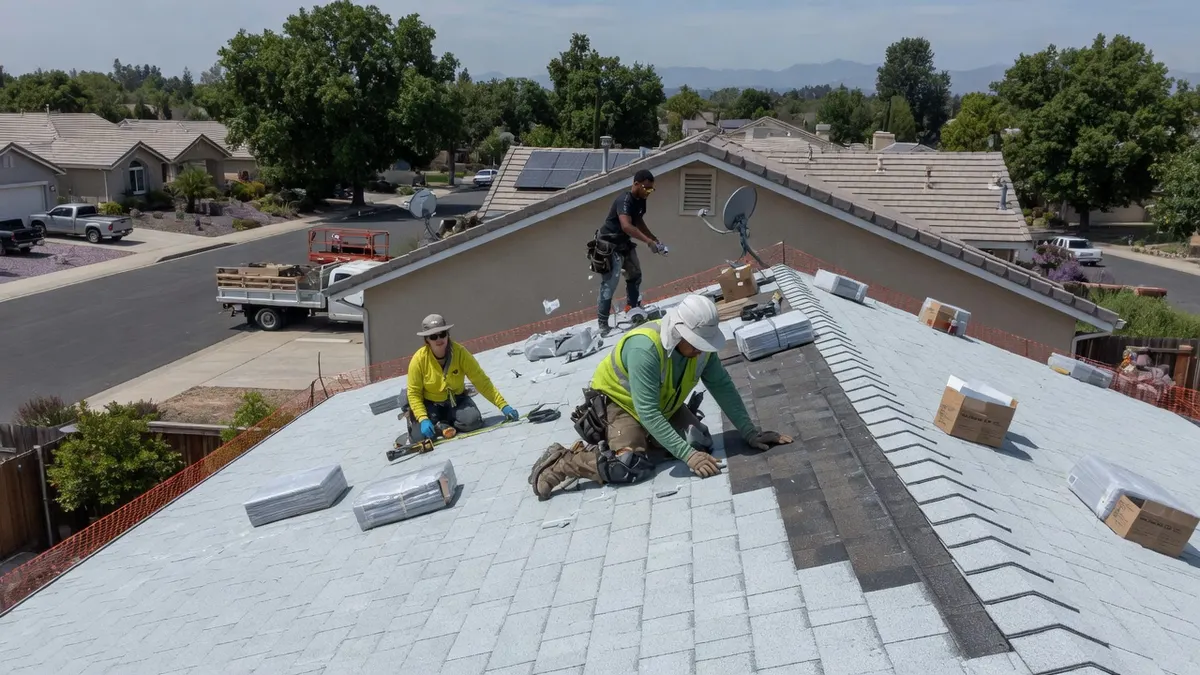
Cool Roofs in Sacramento: Costs, Title 24 Rules, and Reroof Choices
A Sacramento roof does more than keep rain out. From June through September it sits under long stretches of direct sun, 95°F to 105°F afternoons, dry north winds, and attic temperatures that can climb far above the outdoor air. That heat shows up later as uncomfortable bedrooms, longer AC runtimes, brittle underlayment, and faster wear on marginal roof materials.
That is why cool roof planning matters here. A cool roof is not a single product or a trendy upgrade. It is a roof surface selected for solar reflectance and thermal emittance, meaning it reflects more sunlight and releases absorbed heat more effectively than a darker conventional roof. California energy rules also make cool roof compliance part of many reroof decisions, so homeowners should understand the cost and inspection picture before signing a bid.
Here is the practical Sacramento version: cool roof materials can be a smart choice, but the best reroof bid is the one that explains the material, ventilation, attic insulation, permit path, and warranty together.
What a Cool Roof Actually Means
A cool roof surface is rated for how it handles solar heat. Two terms matter:
- Solar reflectance: how much sunlight the roof reflects instead of absorbing.
- Thermal emittance: how well the roof releases heat after it warms up.
Light-colored shingles, reflective asphalt shingles, concrete or clay tile, coated low-slope membranes, and some metal roofing systems can all qualify in the right product line. A roof does not need to be bright white to perform better than an old dark composition roof, but color and product rating both matter.
For Sacramento homeowners, the goal is not just passing code. The goal is reducing attic heat, protecting the roof assembly, and making the house easier to cool without creating a project that costs more than it returns.
When Title 24 Comes Into the Reroof Conversation
California's energy code, commonly called Title 24, can apply when a roof is replaced or substantially recovered. The exact requirement depends on roof slope, climate zone, building type, product, and whether an exemption path applies. Sacramento-area jurisdictions also differ in how they want the compliance documentation presented with the permit.
For a typical steep-slope single-family reroof, the contractor should be able to tell you one of three things:
- The selected roofing product meets the cool roof requirement for your project.
- The roof qualifies for an allowed exception.
- The job will use another compliance path, often involving attic insulation.
If a bid says only "30-year shingles installed" with no mention of cool roof compliance, product rating, attic insulation, or energy forms, it is incomplete. That does not mean the contractor is bad. It means you need the compliance question answered before work starts.
What Cool Roof Reroofing Costs in Sacramento
For a standard Sacramento-area single-family home, full reroof costs often land in these ranges:
- Cool roof asphalt shingles: $7 to $12 per square foot installed
- Standard architectural shingles with a compliant product line: $6.50 to $11 per square foot installed
- Concrete or clay tile replacement: $14 to $28 per square foot installed
- Metal roofing: $12 to $22 per square foot installed
- Low-slope TPO or similar membrane: $8 to $15 per square foot installed
For a 1,800 to 2,200 square foot home, that often means a composition shingle reroof in the $13,000 to $28,000 range depending on roof pitch, layers, dry rot, access, ventilation, gutters, and permit details. Tile, metal, and complex rooflines can move well beyond that.
The cool roof portion of the cost is usually not a separate giant line item. The upgrade may be a modest product premium, often a few hundred to a few thousand dollars, unless it changes the entire material category. The bigger surprise is usually not the reflective shingle. It is dry rot at eaves, failed fascia, low attic ventilation, skylight flashing, gutter replacement, or insulation that was not discussed until inspection.
The Attic Insulation Tradeoff
Some California energy compliance paths allow attic insulation to help satisfy reroof energy requirements. In practical terms, that means a homeowner may be choosing between a qualifying cool roof product, improved attic insulation, or a combination of both.
In Sacramento, attic insulation is often worth discussing even when the roof product qualifies. Many older homes in Land Park, Carmichael, Arden-Arcade, Citrus Heights, and Rancho Cordova have thin or uneven attic insulation. A new reflective roof surface helps, but a poorly insulated attic can still let heat move into the living space.
Typical attic insulation costs run about $1.50 to $4.00 per square foot for adding blown insulation, depending on access, air sealing, old insulation condition, and target R-value. Air sealing, bath fan duct corrections, recessed light protection, and attic ventilation fixes add cost but can be more valuable than simply adding depth.
A roofer does not always perform insulation work. If the reroof depends on insulation for compliance, ask who is doing it, when it happens, what documentation is provided, and whether the final inspection depends on it.
Ventilation Still Matters
A cool roof does not fix a trapped-heat attic by itself. Sacramento attics need balanced intake and exhaust ventilation. That usually means enough soffit or low intake vents paired with ridge, gable, dormer, or other high exhaust vents. If intake is blocked by insulation or old paint, adding more roof vents may not solve the problem.
Ventilation affects reroof cost because vents, ridge cuts, intake corrections, and dry rot repairs all happen while the roof is open. A good roofing contractor should inspect the attic, not just measure the roof from the driveway. They should explain whether the existing ventilation is adequate for the roof system they are installing.
This is especially important on homes with vaulted ceilings, low-slope additions, older skip sheathing, or multiple attic zones. Those details can change both comfort and warranty coverage.
Material Choices for Sacramento Homes
Cool roof asphalt shingles are the most common choice because they balance price, appearance, and code compliance. They make sense for many tract homes, ranch homes, and remodels where the roof structure was designed for composition roofing. Tile roofing handles heat well and is common in Elk Grove, Roseville, Folsom, Natomas, and newer suburbs. Tile can last a long time, but underlayment, flashing, and broken tiles still need maintenance. Replacing tile or resetting tile during underlayment work is labor-heavy. Metal roofing can perform very well in heat and can be a strong long-term product, but it requires careful detailing around penetrations, valleys, and sound. It is rarely the cheapest option. Low-slope membranes matter on patio additions, modern homes, garages, and flat roof sections. These areas need the right membrane, drainage slope, edge metal, and tie-in details. A steep-slope shingle crew is not automatically the right crew for low-slope membrane work.What Should Be in the Reroof Bid
Before approving a Sacramento reroof, ask for the estimate to spell out:
- Roofing product, color, and manufacturer line
- Cool roof rating or compliance path
- Tear-off layers included
- Decking and dry rot repair pricing
- Underlayment type
- Flashing, pipe jacks, vents, skylights, and chimney details
- Attic ventilation changes
- Whether gutters are removed, reset, or replaced
- Permit responsibility and inspection timing
- Cleanup, magnetic nail sweep, and disposal
- Workmanship warranty and manufacturer warranty
The cheapest bid is often the one with the most assumptions hidden inside it. Reroofing is too expensive to leave those assumptions vague.
Is a Cool Roof Worth It in Sacramento?
Usually, yes, if you are already replacing the roof. The incremental cost is often reasonable, the comfort benefits fit Sacramento's climate, and code compliance is easier when the product is selected intentionally from the start. The payoff is strongest when the roof is paired with adequate attic ventilation and insulation.
A cool roof is less exciting as a standalone comfort solution if the real problem is leaky ducts, old attic insulation, west-facing glass, or an undersized HVAC system. It should be part of the house plan, not the only plan.
If your roof is near the end of its life, start early. Summer schedules fill quickly, and the best contractors will want time to inspect the attic, check product availability, pull permits, and explain the compliance path. Sacramento homeowners comparing options can browse roofing contractors and related insulation contractors before deciding who should quote the job.
Who to Hire for This Project
For the work covered in this guide, these are the contractor types to contact and the CSLB classification to verify before you take quotes:
Questions to Ask Before You Sign
- "Is your CSLB license active and bonded?" Verify it yourself at cslb.ca.gov the license number must appear on their bid.
- "Who pulls the permit, and is it included in the bid?" The contractor should handle any required permits a pro who suggests skipping one is a red flag.
- "Can you itemize labor, materials, and allowances?" Itemized bids are the only way to compare quotes on the same scope.
- "What's the payment schedule?" California caps the down payment at $1,000 or 10%, whichever is less payments should track completed work.
- "Who from this area can I call as a reference?" Ask for a recent local job of similar scope, not just photos.
Sacramento Contractors for This Project
Related Articles
Sacramento Gutter and Downspout Prep Before Rain: Roof Edges, Fascia, Foundations, and Drainage
August 4, 2026
Sacramento Roof Replacement Cost Guide: Asphalt Shingles, Decking, Ventilation, Permits, and Bid Details
August 4, 2026
Sacramento Rain Gutter Replacement Cost Guide: Downspouts, Drainage, Fascia Repairs, and Leaf Guards
July 18, 2026
Frequently Asked Questions
How much does a cool roof cost in Sacramento? +
A Sacramento cool roof using asphalt shingles often costs $7 to $12 per square foot installed, with many full reroofs landing around $13,000 to $28,000 for a typical single-family home. Tile, metal, low-slope membrane work, dry rot, ventilation upgrades, and insulation can raise the total.
Does Title 24 require a cool roof in Sacramento? +
Title 24 can apply to reroof projects, but the exact requirement depends on roof slope, climate zone, product, and available exceptions. Your roofer should identify the selected product's cool roof rating or explain the alternate compliance path before work begins.
Can attic insulation replace a cool roof requirement? +
In some reroof situations, attic insulation can be part of an allowed compliance path. Do not assume it automatically applies. Ask the contractor who will install the insulation, what R-value is required, what documentation is provided, and whether it affects final inspection.
Will a cool roof lower my Sacramento AC bill? +
A cool roof can reduce attic heat and help the home stay more comfortable, especially during long hot afternoons. Utility savings vary based on insulation, duct condition, ventilation, shade, thermostat habits, and HVAC efficiency. It works best as part of a broader heat-control plan.
What should I ask a roofer before choosing a cool roof product? +
Ask for the product name, color, cool roof rating, Title 24 compliance path, ventilation plan, dry rot repair pricing, underlayment type, permit responsibility, and warranty terms. If the contractor cannot explain the compliance path clearly, get clarification before signing.