Citrus Heights Siding Repairs After Woodpeckers, Sun, and Dry Rot
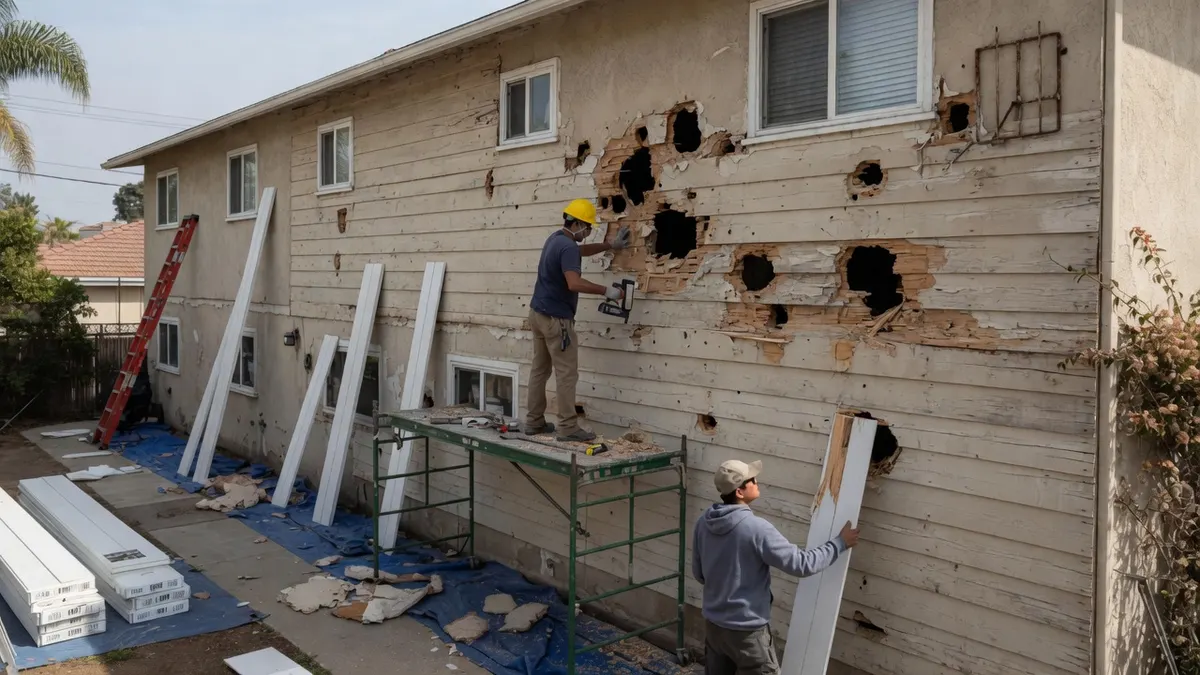
Drive down almost any street off Greenback or Sunrise and you'll spot it: a handsome ranch home from the 1960s or '70s with one wall that looks tired in a way the others don't. The west or south face takes the worst of the Citrus Heights sun, and over thirty or forty summers that relentless heat bakes the finish off wood and composite siding until the boards go gray, split, and start drinking up water every time the sprinklers run. Add a determined acorn woodpecker drilling for grubs or stashing acorns, and you've got the three-headed problem so many homeowners here face at once.
The acorn woodpecker is doing you a favor (sort of)
Those holes are annoying, but the bird is often telling you something useful. Woodpeckers hammer into siding because they hear or smell insects in the wall, or because the wood has already softened enough to drill easily. So a fresh row of holes near the eaves isn't just cosmetic damage. It can be the first visible sign that moisture got in behind the panel and bugs followed. Before you patch the holes and repaint, somebody should open up a small area and look at what's underneath. Plugging the surface and walking away is how a $1,500 repair quietly becomes a $24,000 one a few years later.
The same logic applies to bubbling paint, trim that feels spongy when you press a thumbnail into it, and panels that have swelled at the seams. Those are moisture symptoms, not paint problems. Catch them while they're small and you're repairing boards. Miss them and you're replacing sheathing, framing, and insulation behind the siding.
What's actually rotting, and why this side of town
Citrus Heights housing stock is a mix. You'll find original T1-11 and composite hardboard on the older tract homes, stucco on plenty of '80s and '90s builds, and fiber cement on newer or already-renovated places. Each ages differently. The composite and hardboard siding from the '70s and '80s is the usual dry-rot suspect, especially down low where irrigation overspray hits it day after day, and up high where sun and roof runoff team up.
Here's the local wrinkle most quotes skip: irrigation. A lot of dry rot in this area starts with a sprinkler head that's been quietly soaking the bottom course of siding every morning for years. A good contractor will notice that, mention it, and tell you to adjust the heads before they hand over new boards that'll meet the same fate. If nobody brings up your irrigation, that's a small tell about how carefully they're really looking.
Reading an estimate without getting played
A real Sacramento Valley siding repair runs anywhere from roughly $1,500 for a handful of isolated boards to around $24,000 for re-siding a full elevation with rot remediation behind it. That's a wide range because "siding repair" covers wildly different jobs. The number itself matters less than how the estimate breaks down.
A bid worth trusting separates the work into parts you can actually compare: demolition and tear-off, any sheathing or framing repair found behind the siding, flashing, the siding material itself, trim, caulk, and the paint system. It should also carry a contingency or allowance for hidden conditions, because in a 50-year-old Citrus Heights home, what's behind the wall is rarely exactly what anyone predicted.
When two bids come in far apart, resist the urge to assume the low one is the deal. Usually the gap is in the assumptions. One contractor budgeted to open the wall and fix rot; the other priced a cosmetic patch and will hit you with a change order the day they find soft sheathing. Compare the exclusions and allowances line by line before you compare the bottom numbers. You can start building a shortlist of siding contractors and use the Sacramento Valley contractor search to pull a few names worth calling.
License, permits, and the paperwork that protects you
In California, any home-improvement job where labor and materials total $1,000 or more must be done by a contractor licensed through the CSLB. Siding repair clears that bar in a hurry, so verify the license number yourself at the CSLB website rather than taking a business card at face value. While you're at it, confirm the contractor carries general liability insurance and workers' compensation. If an uninsured worker gets hurt on your wall, you do not want that becoming your problem.
Permits depend on scope. Swapping a few boards usually doesn't trigger one. But once you're into larger replacement, repairing structural sheathing, or altering the wall assembly, the City of Citrus Heights building department will likely want a permit and an inspection. There's also a federal lead-safe rule in play: any home built before 1978 with painted surfaces, which is a big share of the older neighborhoods here, requires a contractor certified in lead-safe work practices for the disturbance and cleanup. Ask whether they're RRP-certified before sanding starts, not after.
Timing it around the Sacramento summer
Exterior work books up fast in spring and early summer, when every roofer, painter, and siding crew in the area is slammed. If your damage isn't urgent, the shoulder seasons can mean better scheduling and a more attentive crew. That said, you don't want exposed sheathing sitting open through a January storm, so weigh the calendar against how far the rot has progressed. Material lead times on fiber cement and matching trim can also stretch out, so confirm availability before you lock a start date.
One more piece worth lining up early: since most repairs end with a repaint, talk to the crew about how they'll blend new boards into your existing color. Sun-faded siding almost never matches a fresh batch off the shelf, and the difference between an invisible repair and an obvious patch usually comes down to whether someone bothered to feather and match the finish. If a separate painter handles that step, it's worth comparing painting contractors too.
When you're ready, walk the whole house with your phone first. Photograph every hole, soft spot, and bubbled seam, note where the sprinklers are spraying, and write down what's bothering you most. Bring that to your appointments and ask each contractor what they think caused the damage, not just what they'll charge to cover it. Then get at least three licensed bids through the Citrus Heights contractor directory and pick the one whose scope is clearest, not just cheapest. The wall you fix correctly once is the wall you stop thinking about.
Who to Hire for This Project
For the work covered in this guide, these are the contractor types to contact and the CSLB classification to verify before you take quotes:
Questions to Ask Before You Sign
- "Is your CSLB license active and bonded?" Verify it yourself at cslb.ca.gov the license number must appear on their bid.
- "Who pulls the permit, and is it included in the bid?" The contractor should handle any required permits a pro who suggests skipping one is a red flag.
- "Can you itemize labor, materials, and allowances?" Itemized bids are the only way to compare quotes on the same scope.
- "What's the payment schedule?" California caps the down payment at $1,000 or 10%, whichever is less payments should track completed work.
- "Who from this area can I call as a reference?" Ask for a recent local job of similar scope, not just photos.
Sacramento Contractors for This Project
Related Articles
Frequently Asked Questions
Why are woodpeckers drilling holes in my Citrus Heights siding? +
Acorn woodpeckers usually drill into siding because they hear or smell insects in the wall or because the wood has already softened enough to peck through easily. In older Citrus Heights homes that often means moisture has gotten behind composite or hardboard panels and bugs have moved in. Treat fresh holes as a signal to inspect what's underneath, not just a cosmetic patch job.
How much does siding repair typically cost in the Sacramento Valley? +
It varies widely with scope. Replacing a handful of isolated boards can run as little as roughly $1,500, while re-siding a full elevation with dry-rot remediation behind it can reach around $24,000. Ask for an itemized estimate that separates demolition, sheathing repair, flashing, siding material, trim, caulk, and paint so you can compare bids fairly.
Do I need a permit to repair siding in Citrus Heights? +
Small repairs like swapping a few boards usually don't require a permit. Larger replacement, structural sheathing repair, or changes to the wall assembly generally do, and the City of Citrus Heights building department will want an inspection. Your contract should clearly state who pulls permits and handles inspections.
Does my contractor need to be licensed for siding work in California? +
Yes. California requires a CSLB-licensed contractor for any home-improvement job where combined labor and materials total $1,000 or more, and siding repair almost always exceeds that threshold. Verify the license number directly at the CSLB website and confirm the contractor carries liability insurance and workers' compensation before signing.
Why does dry rot keep showing up on the lower part of my siding? +
In Citrus Heights, the most common culprit is irrigation. Sprinkler heads that spray the bottom course of siding every morning keep the wood damp for years, which leads to swelling and rot. Adjust your sprinkler heads away from the wall before installing new boards, or the replacement will eventually fail the same way.
My home was built before 1978. Does that affect siding repair? +
It can. Federal lead-safe rules require a contractor certified in lead-safe practices (RRP) to disturb and clean up painted surfaces on pre-1978 homes, which describes much of Citrus Heights' older housing stock. Ask whether the crew is RRP-certified before any sanding or tear-off begins so the dust is handled and contained properly.