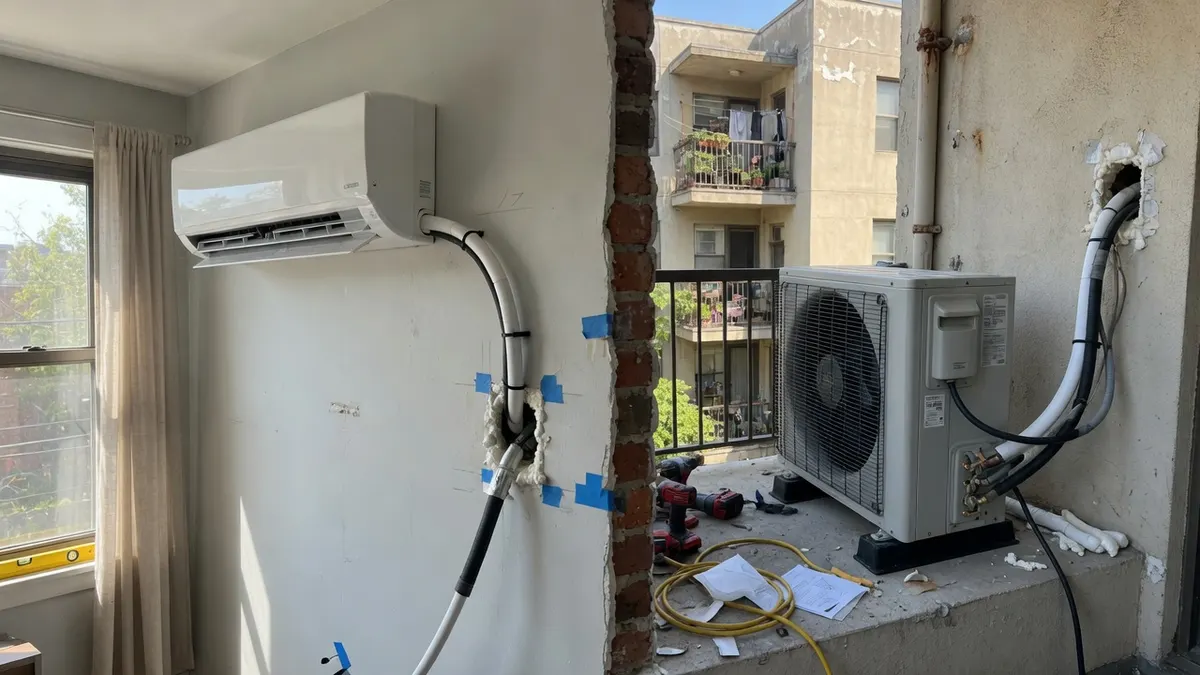
Mini-Split AC in Citrus Heights: Costs, Permits & Rebates
A Citrus Heights homeowner called three HVAC contractors after their central air died during the second week of June. Two bids covered a full central system replacement. The third offered a different option: a three-zone mini-split setup that would cool only the rooms they were using, skipping the compromised duct system entirely. The price difference was $8,000, and neither of the original two bids mentioned permits until the homeowner asked directly.
The central-versus-mini-split question comes up often across the older neighborhoods of Citrus Heights, in areas built in the 1960s and 1970s with duct systems designed for much smaller cooling loads. Mini-splits are often the practical answer for a bonus room, a converted garage, a home office in a rear addition, or a whole-house retrofit where the original ducts are too leaky to save money fixing. This guide covers what installation costs in the Sacramento Valley, the permit and license requirements that apply here, and the questions to ask before you sign.
Single-Zone vs. Multi-Zone: How the Numbers Break Down
For most Citrus Heights homes, a single-zone mini-split in one problem room is the starting point. These are directional installed prices for 2026, including equipment, labor, lineset, and permits:
- 9,000 BTU single-zone (up to about 350 sq ft): $2,800 to $4,800
- 12,000 BTU single-zone (up to about 550 sq ft): $3,400 to $5,800
- 18,000 to 24,000 BTU single-zone (large master, bonus room, open-concept space): $4,500 to $7,500
- Two-zone multi-split system: $7,000 to $12,000
- Three- to four-zone multi-split: $11,000 to $19,000
Equipment is roughly 40 to 55 percent of the total. The rest is labor, lineset materials, electrical work, and permits. Brand tier affects the range: Mitsubishi, Daikin, and Fujitsu systems run at the higher end, and off-brand units land lower but carry more uncertainty on parts availability. Any system needs a proper installation to perform correctly and pass inspection.
"Installed" means the contractor handles everything: mounting the indoor air handler, setting the outdoor compressor on a pad, running the refrigerant lineset and electrical whip, pulling a vacuum on the system, charging with refrigerant, and testing all modes. A bid that does not spell out all of those steps is not a complete installed price.
Why Citrus Heights Housing Stock Makes Mini-Splits Worth Considering
The housing stock in Citrus Heights skews toward single-story and split-level homes built between 1955 and 1985. Many of them have original ductwork that has never been sealed or replaced. When ducts run through an attic that hits 145 to 155 degrees in August, efficiency losses are severe even when the central system itself is functioning.
For a converted garage, a room addition, or a detached home office, there may be no duct connection at all. A mini-split handles all of those scenarios without requiring duct demolition or replacement. The trade-off is upfront cost per zone: one mini-split zone at $5,000 costs more than routing one room into existing ducts. But if the duct system is already compromised, the comparison changes. A local HVAC contractor can assess the duct situation and give you a real cost comparison before you commit.
Permits in Citrus Heights
A new mini-split installation requires a mechanical permit from the Citrus Heights building division. If the project adds a dedicated electrical circuit, which is nearly always required for a 240V mini-split, an electrical permit is also required.
Permit fees for residential mechanical work in Citrus Heights typically run $120 to $300 depending on system value. The electrical permit for a new circuit adds $80 to $200. Those fees belong in the project budget, not treated as optional extras.
Skipping permits is a common shortcut that creates larger problems later. Unpermitted HVAC work shows up in home inspections, can complicate homeowner's insurance claims related to electrical or fire events (coverage depends on your policy and the cause of loss), and must be disclosed in a sale. An inspector who sees a new mini-split with no permit record will flag it. The permit fee is small relative to the installation cost and the risk of going unpermitted.
SMUD Territory: Rebates and the Federal Credit Situation
Citrus Heights is in SMUD's service territory. SMUD has run rebate programs for qualifying heat pump systems, including high-efficiency mini-splits. The amounts and availability change annually, so confirm current program details directly with SMUD before finalizing your budget. A contractor who works regularly in Citrus Heights should know which programs are active and whether your chosen system qualifies.
One item to remove from your budget planning: the federal 25C energy tax credit for qualifying HVAC heat pump equipment ended December 31, 2025. If a contractor mentions a federal tax credit on a 2026 installation, ask them to identify the specific program before counting it in your numbers.
License Requirements
Any mini-split installation that totals $1,000 or more in combined labor and materials requires a contractor licensed by the CSLB. For HVAC work in California, the relevant classification is a C-20 (Warm-Air Heating, Ventilating and Air-Conditioning) license. A licensed general contractor who subcontracts to a C-20 mechanic can also legally perform the work.
Verify the license before paying a deposit. The CSLB's free license check takes about two minutes: confirm the license is active, the name matches the business, and workers' comp is listed if they have employees. Our guide on how to verify a California contractor license walks through the exact steps.
California also caps the down payment: a contractor cannot legally require more than 10 percent of the total contract price or $1,000, whichever is less. On a $6,000 job, the maximum legal deposit is $600. A request for $2,000 or more before any work begins is a legal violation and a reason to walk away.
When You Need a Panel Upgrade
Mini-splits run on dedicated 240V circuits, typically 15 to 30 amps depending on system size. If your panel is already near capacity or your home has older wiring, adding one or more mini-split circuits may require a subpanel addition or a full panel upgrade, which adds $1,500 to $4,000 to the project.
Ask every HVAC contractor whether your current panel has room before you finalize scope. If an upgrade is needed, the HVAC contractor typically coordinates with a licensed electrician, and that cost needs to appear in the written bid before you sign. The panel capacity question is covered in more detail in our panel upgrade guide for Sacramento County homeowners. For the electrical side alone, the electrical trade overview covers licensing and permit requirements.
Reading a Bid Before You Sign
Three things every mini-split bid in Citrus Heights should address explicitly:
Permits: The bid should state who pulls the mechanical and electrical permits and confirm they are included in the scope. A bid that describes permits as the homeowner's responsibility deserves a direct follow-up. Electrical scope: A complete bid states whether a new dedicated circuit is included, at what amperage, and whether your current panel was assessed. A bid that says nothing about electricity is missing information that affects total cost. Lineset routing: Long linesets beyond 25 to 30 feet add cost and can affect system efficiency. The bid should describe the planned route through the attic, along the exterior wall, or through the crawlspace so you know what the finished installation will look like from outside.Browse vetted local options in the Citrus Heights contractor directory or search all Sacramento Valley HVAC contractors to find installers who know local permit requirements and current SMUD rebate programs.
Who to Hire for This Project
For the work covered in this guide, these are the contractor types to contact and the CSLB classification to verify before you take quotes:
Questions to Ask Before You Sign
- "Is your CSLB license active and bonded?" Verify it yourself at cslb.ca.gov the license number must appear on their bid.
- "Who pulls the permit, and is it included in the bid?" The contractor should handle any required permits a pro who suggests skipping one is a red flag.
- "Can you itemize labor, materials, and allowances?" Itemized bids are the only way to compare quotes on the same scope.
- "What's the payment schedule?" California caps the down payment at $1,000 or 10%, whichever is less payments should track completed work.
- "Who from this area can I call as a reference?" Ask for a recent local job of similar scope, not just photos.
Sacramento Contractors for This Project
Related Articles
Frequently Asked Questions
How much does mini-split AC installation cost in Citrus Heights? +
For most Citrus Heights homes, a single-zone mini-split runs $2,800 to $7,500 installed depending on system size, brand, and installation complexity. A 12,000 BTU unit for a medium-sized room typically lands at $3,400 to $5,800 fully installed. Multi-zone systems for two to four rooms run $7,000 to $19,000 installed. Equipment is roughly 40 to 55 percent of the total cost; the rest is labor, lineset, electrical work, and permits.
Do I need a permit to install a mini-split in Citrus Heights? +
Yes. A mini-split installation requires a mechanical permit from the Citrus Heights building division. If the project adds a dedicated electrical circuit, which is nearly always required for a 240V system, an electrical permit is also required. Mechanical permit fees typically run $120 to $300 and the electrical permit adds $80 to $200. Unpermitted HVAC work creates inspection problems and can complicate insurance claims - coverage depends on your policy and the cause of loss.
Are there SMUD rebates for mini-split AC in 2026? +
Citrus Heights is in SMUD's service territory, and SMUD has run rebate programs for qualifying heat pump systems including high-efficiency mini-splits. Rebate amounts and program availability change annually, so confirm current details directly with SMUD or ask your contractor what is currently active. The federal 25C HVAC tax credit ended December 31, 2025 and does not apply to 2026 installations.
What license does a mini-split installer need in California? +
The relevant CSLB classification for HVAC installation is a C-20 (Warm-Air Heating, Ventilating and Air-Conditioning) license. Any mini-split job totaling $1,000 or more in combined labor and materials legally requires a CSLB-licensed contractor. A licensed general contractor who subcontracts to a C-20 mechanic can also legally pull the permits. Verify the license is active at the free CSLB lookup before paying any deposit.
How much can a contractor require as a deposit for mini-split installation? +
California law caps the initial down payment at the lesser of 10 percent of the total contract price or $1,000. On a $6,000 installation, the maximum legal deposit is $600. On a $15,000 multi-zone job, the maximum is $1,000. A request for a large deposit before any work begins is a warning sign and may be a legal violation.
Do I need to upgrade my electrical panel for a mini-split? +
Not always, but it depends on your current panel capacity. Mini-splits require dedicated 240V circuits typically drawing 15 to 30 amps. If your panel is near capacity or your home has older wiring, adding circuits may require a subpanel addition or full panel upgrade, which adds $1,500 to $4,000 to the project. Every HVAC contractor should assess your panel capacity before finalizing scope and provide that answer in writing.