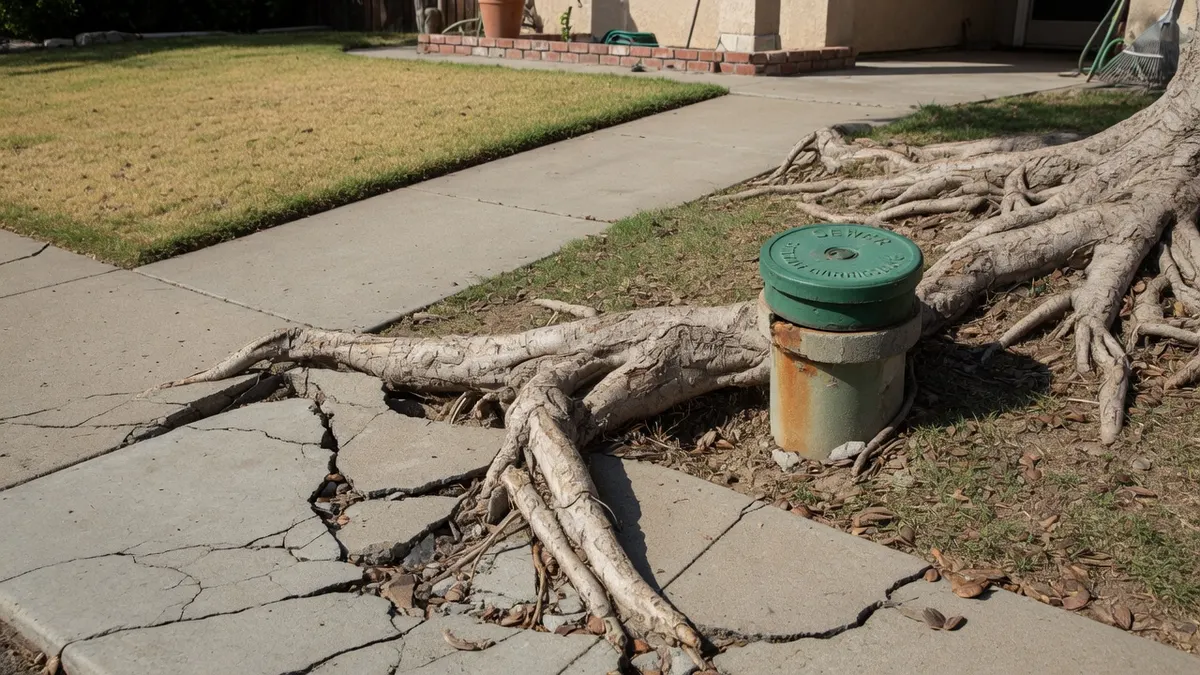
Carmichael Tree Root Damage: What to Check Before Concrete or Plumbing Work
Lifted walkways, slow drains, cracked flatwork, or roots visible near older sewer and irrigation lines can make a homeowner feel rushed. The better move is to slow the first contractor conversation down just enough to separate symptoms, trade scope, permits, and budget assumptions.
In Carmichael, mature lots make shade valuable, but roots can complicate sewer, concrete, drainage, and foundation decisions. That does not mean every project is complicated. It means the estimate should explain what is known, what still needs inspection, and which parts of the job belong to which licensed trade.
Start With the Clue You Can See
Write down when the issue happens, where it shows up, and whether it changes with heat, rain, irrigation, appliance use, or seasonal load. Take wide photos for access and close photos for the symptom. If the issue involves water, heat, electrical behavior, roof age, or structural movement, collect dates instead of relying on memory.
This makes the first estimate more useful. A contractor can price tree and root damage planning more clearly when they know what triggered the call and what the homeowner has already observed.
What a Useful Estimate Should Separate
For tree and root damage planning in the Sacramento Valley, a realistic planning range is often $750 to $18,000. That range is not a quote. It is a reminder to ask what is included before comparing numbers.
A stronger bid should separate diagnosis, labor, materials, permits, disposal, access constraints, finish repair, exclusions, warranty terms, and likely change-order triggers. If the work might touch another trade, ask whether that trade is included or whether you need a separate estimate.
Questions to Ask Before You Hire
- What will you inspect before recommending the fix?
- Which parts of this scope require a licensed specialty contractor?
- Are permits, inspections, or utility coordination part of the price?
- What could change once the work starts?
- What photos, model numbers, measurements, or past invoices would help you quote accurately?
- How will you document the finished work?
Contractor Connection Notes
Start with the Carmichael contractor guide at /cities/carmichael/, compare licensed tree service contractors, and use the contractor search when you are ready to build a shortlist.
Before signing, verify the CSLB license, bond, workers' compensation status, and insurance fit for the actual scope. A directory page can help you find names, but the final hiring decision should be based on current license status, a written scope, and references or project proof that match your job.
The Bottom Line
The homeowner who gets the best estimate is usually the one who explains the problem clearly and asks how the contractor will confirm the cause. For tree and root damage planning, do the small documentation work first, then compare bids by scope instead of price alone.
Who to Hire for This Project
For the work covered in this guide, these are the contractor types to contact and the CSLB classification to verify before you take quotes:
Questions to Ask Before You Sign
- "Is your CSLB license active and bonded?" Verify it yourself at cslb.ca.gov the license number must appear on their bid.
- "Who pulls the permit, and is it included in the bid?" The contractor should handle any required permits a pro who suggests skipping one is a red flag.
- "Can you itemize labor, materials, and allowances?" Itemized bids are the only way to compare quotes on the same scope.
- "What's the payment schedule?" California caps the down payment at $1,000 or 10%, whichever is less payments should track completed work.
- "Who from this area can I call as a reference?" Ask for a recent local job of similar scope, not just photos.