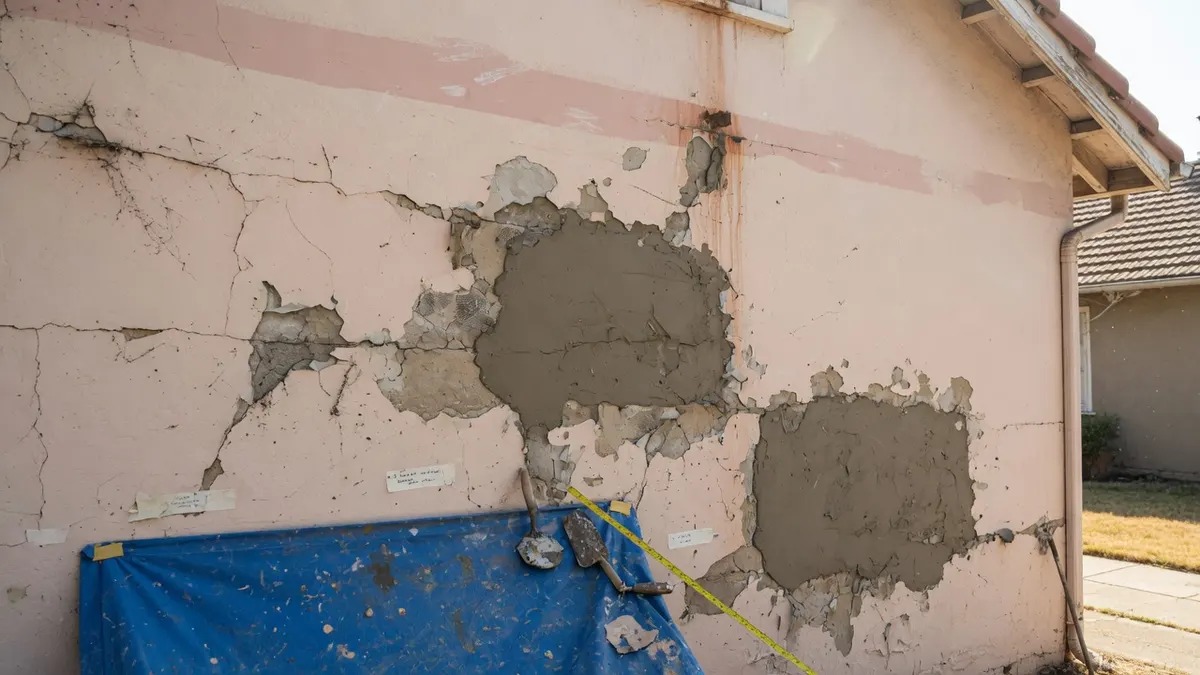
Carmichael Stucco Repair Before Exterior Paint
A stucco crack in Carmichael almost never tells the whole story. You see a hairline running down the wall near a hose bib, you grab a tube of caulk and a gallon of exterior paint, and you call it a Saturday. Three summers later the same crack is back, wider, and now there's a soft spot in the lath behind it. The paint didn't fail. It just covered up a problem it was never built to fix.
If you're staring at your exterior right now wondering whether to paint or to patch first, the honest answer is almost always: figure out why the stucco is moving or staying wet, then paint. Around here that order matters more than most homeowners expect.
Carmichael's stucco grows up around water it doesn't need
A lot of the housing stock between Fair Oaks Boulevard and the river is older stucco-clad ranch and mid-century construction, and those walls have been baking under that flat valley afternoon sun for decades. Stucco itself doesn't mind the heat. What it minds is water it can't shed.
Drive a few streets and you'll see the usual suspects: lawn sprinklers throwing a fine mist against the lower three feet of a wall every morning, downspouts dumping at the foundation, planter beds graded back toward the house. That repeated wetting is what turns a cosmetic shrinkage crack into a structural one. So before anybody talks paint color, somebody needs to walk the perimeter and ask where the water is coming from. A good contractor does this without being asked.
Telling a "who cares" crack from a "deal with it" crack
Not every crack is a crisis. Stucco shrinks as it cures and moves a little with temperature, and thin spiderweb cracks are often purely cosmetic. The ones worth your attention follow a different pattern:
- Cracks that step diagonally off the corners of windows and doors, which often point to settlement or framing movement.
- Cracks paired with staining, bubbling, or a hollow sound when you tap nearby, suggesting moisture has gotten into the lath or sheathing.
- Cracks that have clearly widened season over season.
If you can slide a credit card into it, or if the surrounding stucco gives when you press it, that's no longer a paint problem. That's a repair problem, and painting over it just buys you a prettier failure.
What this actually costs in the Sacramento Valley
Budgets here run wide because "stucco repair before paint" covers everything from a tube of patch compound to tearing out and re-lathing a whole wall. Realistically, plan for somewhere between roughly $1,200 on the small end and $18,000 if you're into lath replacement, texture rebuilding, an elastomeric coating system, and a full repaint. Most single-wall repairs land well below the top of that range.
The line items that move the number are diagnosis, patching and lath repair, matching the existing texture (harder than it sounds on a 40-year-old dash or lace finish), the coating system, and the paint itself. Build in a contingency, too. Older Carmichael homes love to hide a little dry rot or a previous patch that was done wrong.
When you compare bids, don't reward the shortest one. The most useful estimate spells out materials, labor, what's excluded, who's responsible for any permit, cleanup, and warranty terms. If two numbers are miles apart, the gap is almost always in the assumptions, not in one contractor being greedy. Line them up side by side before you decide anything. You can build that shortlist of painting contractors and Carmichael pros through the site, then pull quotes with the contractor search.
Texture matching is where amateurs get exposed
Here's the part people underestimate. Patching a hole is easy. Making that patch disappear into a hand-troweled texture that's been weathering since the Carter administration is a craft. A repair that's structurally perfect but reads as an obvious rectangle of fresh stucco from the curb is, for resale purposes, still a failure.
Ask any contractor to show you photos of texture matches they've done on homes like yours, ideally in the neighborhood. Ask what coating they recommend and why. Elastomeric coatings can bridge minor hairline cracks and add real water resistance, but they're not a substitute for fixing active movement or a leak. If someone's pitching a thick coating as the whole solution to a stepping diagonal crack, slow down.
The license check most people skip, and shouldn't
Stucco and exterior paint work in California falls under contractor licensing rules that are easy to verify and worth two minutes of your time. Any contractor doing a job where labor and materials total $1,000 or more must hold a current CSLB license. (You may have heard $500 somewhere; that figure is out of date.) Look the license up directly on the CSLB website, confirm it's active, and confirm they carry liability insurance and workers' compensation if they have a crew. Skipping that check is how people end up holding the bag when someone gets hurt on their property.
Permits are usually a non-issue for cosmetic patching and repaint. But once you're into larger wall sections, repairing water damage, redoing window flashing, or anything touching structure or weather-resistive barrier, your jurisdiction may want a permit and inspection. Get it in writing who's pulling that permit, scheduling inspections, and handling any corrections.
A note on timing: spring through early summer is the busy stretch for exterior trades across the valley, so the better crews book out. If your repair edges into related work, it's worth glancing at siding contractors too, since the line between "stucco repair" and "wall system" gets blurry fast on older homes.
So before that first estimate, do the boring homework. Walk the whole perimeter on a dry morning, photograph every crack and stain, check whether your sprinklers are hitting the wall, and write down what you actually want solved. Bring that to two or three licensed contractors, compare their scopes instead of just their bottom lines, and only schedule paint once everyone agrees the stucco underneath is dry, stable, and properly patched. Paint is the reward at the end of the job, not the fix.
Who to Hire for This Project
For the work covered in this guide, these are the contractor types to contact and the CSLB classification to verify before you take quotes:
Questions to Ask Before You Sign
- "Is your CSLB license active and bonded?" Verify it yourself at cslb.ca.gov the license number must appear on their bid.
- "Who pulls the permit, and is it included in the bid?" The contractor should handle any required permits a pro who suggests skipping one is a red flag.
- "Can you itemize labor, materials, and allowances?" Itemized bids are the only way to compare quotes on the same scope.
- "What's the payment schedule?" California caps the down payment at $1,000 or 10%, whichever is less payments should track completed work.
- "Who from this area can I call as a reference?" Ask for a recent local job of similar scope, not just photos.
Sacramento Contractors for This Project
Related Articles
Frequently Asked Questions
Should I repair stucco cracks before painting my Carmichael home, or can paint cover them? +
Repair first. Paint, even a thick elastomeric coating, can hide a crack temporarily but won't stop the movement or moisture causing it, so it returns. In Carmichael's older stucco homes, sprinkler overspray and settlement are common culprits, and addressing those before painting is what makes the finish last.
How much does stucco repair before exterior paint typically cost in the Sacramento Valley? +
It ranges widely, roughly $1,200 for small patch-and-paint work up to about $18,000 for full lath replacement, texture rebuilding, an elastomeric coating, and repaint. Most single-wall repairs fall well under the top of that range. Always budget a contingency, since older Carmichael homes often hide dry rot or prior bad patches.
Does a contractor need a CSLB license for stucco repair in California? +
Yes. Any contractor performing work where labor and materials total $1,000 or more must hold a current California State License Board (CSLB) license. The often-cited $500 threshold is outdated. Verify the license is active on the CSLB website and confirm liability insurance and workers' compensation before signing.
How do I tell a cosmetic stucco crack from one that needs real repair? +
Thin spiderweb or hairline cracks are usually cosmetic curing shrinkage. Be concerned with cracks that step diagonally off window and door corners, cracks paired with staining, bubbling, or a hollow sound when tapped, or any crack that has widened season over season. If a credit card slides in or the surrounding stucco flexes when pressed, it's a repair, not a paint job.
Do I need a permit to repair stucco before painting in Carmichael? +
Cosmetic patching and repainting usually don't require a permit. Larger wall sections, water-damage repair, window flashing work, or anything touching structure or the weather-resistive barrier may require a permit and inspection from your local jurisdiction. Put it in writing who pulls the permit and handles inspections before work starts.
Why does texture matching matter so much on older Carmichael stucco? +
Many Carmichael homes have hand-applied dash or lace textures that have weathered for decades, and a structurally sound patch that reads as an obvious fresh rectangle from the curb still looks like a failure. Ask contractors for photos of texture matches on similar homes, ideally nearby, since blending into aged stucco is a real craft, not a guarantee.