Carmichael Exterior Door Leaks: Thresholds, Sill Pans, Drainage, and Permit Questions
The first clue is usually small enough to ignore: a dark line at the patio door sill, a soft spot under bare feet, or a towel that keeps showing up after the first hard rain.
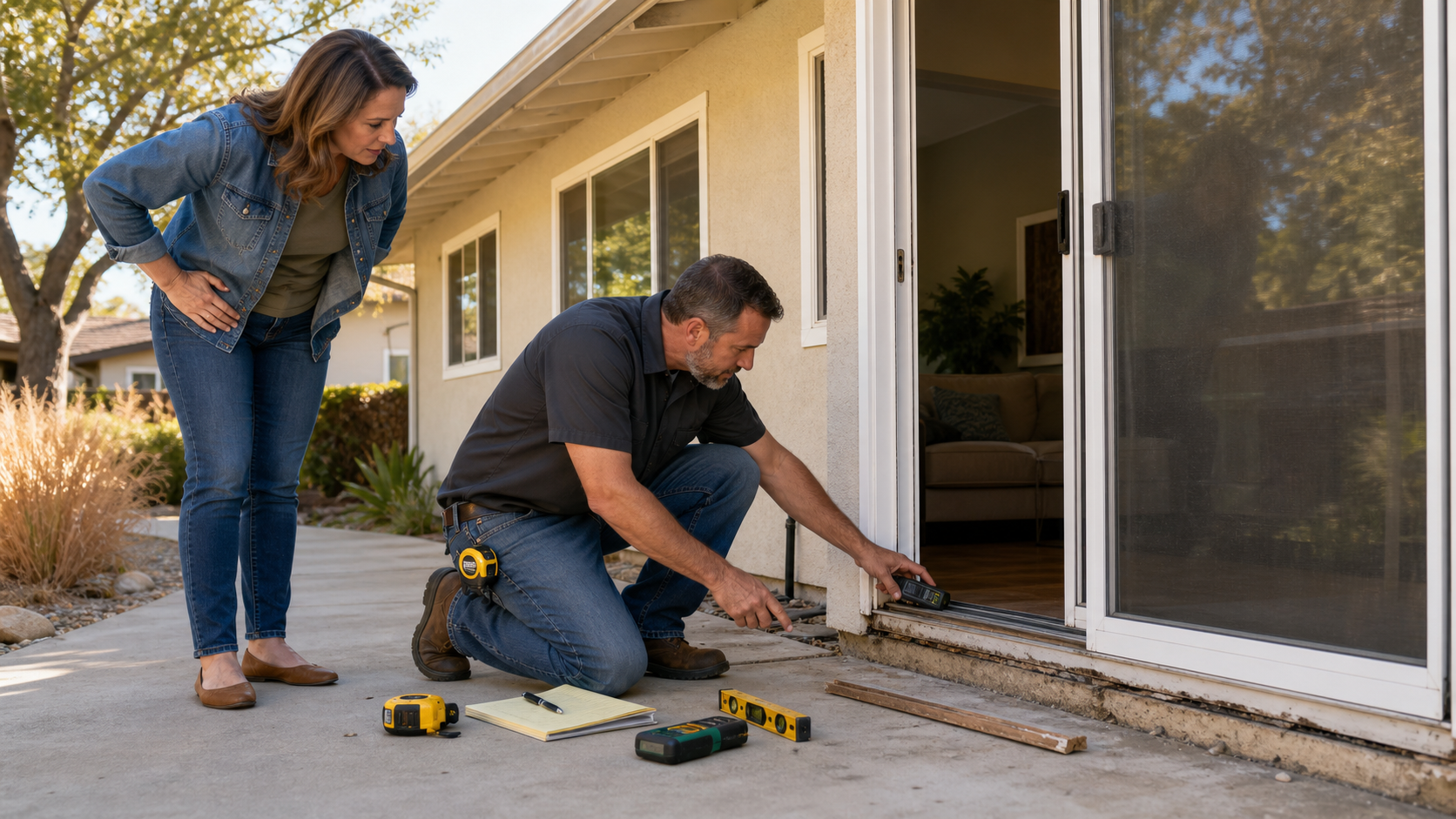
Then a Carmichael homeowner pulls back the corner of the flooring and finds the real problem. The door is not just drafty. Water has been running under the threshold, behind the trim, or across a low patio slab for long enough to stain the subfloor. The fix might be as simple as a door adjustment and better weatherstripping. It might also involve removing the door, rebuilding the sill, adding a pan flashing detail, repairing stucco or siding, cutting back concrete, and documenting the work for a permit.
Exterior door leaks are frustrating because the visible gap is rarely the whole story. The door, frame, threshold, flashing, patio slope, roof runoff, trim, flooring, and wall cavity all have a vote. The right contractor call depends on where the water is actually entering, not just where it finally appears.
| What you see | Likely scope | Best lead | Planning range |
|---|---|---|---|
| Light drafts or visible daylight | Adjustment, sweep, lockset alignment, weatherstripping. | Door contractor or qualified handyman | $250 to $1,200 |
| Stained threshold or soft trim | Remove trim, check sill framing, repair rot, reset threshold. | Door contractor or GC | $1,200 to $5,500 |
| Water at sliding or French doors | Track cleanup, roller/lock repair, drainage check, glass or frame replacement. | Door, glazing, or window contractor | $900 to $7,500 |
| Low patio or poor slope | Concrete grinding, drain channel, slab correction, downspout routing. | Concrete or drainage contractor with GC input | $1,500 to $15,000-plus |
| Rot into framing, wall, or flooring | Door removal, sill pan, framing repair, stucco/siding, drywall, flooring. | General contractor | $5,000 to $28,000-plus |
Use this chart before comparing estimates. Door leak bids are not comparable until each contractor is pricing the same assumptions for water testing, sill repair, flashing, exterior finish patching, flooring repair, drainage, and permits.
Start With The Water Path
Do not start by shopping for a door slab. Start by proving how water reaches the opening.
Look outside first. Is the concrete patio higher than the interior floor? Does it slope toward the house? Is there a roof valley, gutter, downspout, hose bib, sprinkler head, planter, or tree canopy dumping water near the door? Does the door sit under a covered patio or exposed west wall? Does the leak happen only with wind-driven rain, only after irrigation, or every time someone hoses off the patio?
Then look inside. Check the baseboard ends, flooring seams, quarter-round, drywall texture, nearby closet wall, and any ceiling below if the door is on a raised level. A stain six inches inside the room may come from water that entered under the threshold, behind side trim, above the head flashing, through a sliding-door track, or from a patio that has no place to drain.
Take photos during rain if you can do it safely. A dry-weather estimate is much better when the contractor can see where water actually collects.
Why Carmichael Doors Leak Differently
Carmichael has many 1950s through 1970s ranch homes, additions, converted patios, slab-on-grade rooms, raised-foundation homes, and shaded lots with mature trees. That mix creates door openings that may have been changed more than once.
A back door may have started as a simple service door, then became the route to a patio cover, then had new flooring installed over old transitions. A sliding glass door may sit in stucco with older flashing details. A family room addition may have a concrete patio poured too close to the threshold. Mature tree shade helps the house in summer, but it also drops leaves into gutters and keeps shaded concrete damp longer after storms.
The best contractor will ask about the sequence of the house. Original door or replacement? Original patio or later slab? Any past flooring, stucco, siding, or roof work nearby? Door leaks are often created by layers of small changes that nobody documented.
What It Might Cost In 2026
These are planning ranges for Carmichael and nearby Sacramento County homes, not quotes:
- Door adjustment, sweep, seal, or lockset alignment: $250 to $1,200 when the frame is sound and the problem is mostly air, splash, or hardware fit.
- Exterior door replacement in the existing opening: $1,800 to $6,500 depending on material, size, hardware, trim, threshold, disposal, and finish repair.
- Sliding glass or French door replacement: $3,500 to $12,000-plus depending on unit size, glass package, frame condition, stucco or siding work, and permit handling.
- Rot repair at sill, subfloor, or trim: $1,200 to $8,500 when damaged wood is limited and the opening can be rebuilt without major wall or flooring scope.
- Door leak repair tied to stucco, siding, drywall, and flooring: $5,000 to $28,000-plus when water has traveled into the wall or floor system.
- Drainage or concrete correction near the threshold: $1,500 to $15,000-plus when the patio, walkway, downspouts, drain channel, or slab elevation is part of the cause.
The cheap bid usually fixes the visible gap. The better bid explains why the gap happened, what has to be opened, how the new sill will drain, and what finish repair is included after the door is watertight.
Which Contractor Should Lead?
For a simple door adjustment or weatherstrip replacement, a door contractor or qualified handyman may be enough if the total job stays small and no permit-triggering work is involved. California's contractor licensing threshold matters, though. The CSLB explains that projects requiring a building permit, employee labor, or $1,000 or more in combined labor and materials need a current valid contractor license.
For door replacement, look for license fit. The CSLB's C-6 finish carpentry classification includes doors, trim, and related finish carpentry. The CSLB's D-28 doors, gates, and activating devices classification covers installing, modifying, or repairing residential and commercial doors, including sliding assemblies. If the project includes glass or glazed door panels, a C-17 glazing contractor may be the better fit.
Use a general contractor when the leak has already reached framing, flooring, drywall, stucco, siding, electrical devices, or concrete drainage. A GC can coordinate the door installer, carpenter, siding or stucco repair, flooring contractor, painter, and drainage or concrete work so nobody leaves the water path for someone else.
Permit Questions In Sacramento County
Carmichael is generally in unincorporated Sacramento County, so door permits usually start with Sacramento County Building Permits and Inspection. The county's permit FAQ says window and door replacement has required a permit since January 1, 2010, including retrofit and cut-in work. The county's Building Permits and Inspection Division is the place to confirm the current path for your exact address and scope.
Ask the contractor to answer these questions in writing:
- Is this a same-size door replacement, a retrofit, a full-frame replacement, or a cut-in/new opening?
- Who pulls the permit and schedules inspection?
- Are energy-code, safety-glass, egress, landing, or threshold requirements part of the scope?
- If stucco, siding, or sheathing is opened, does the permit cover that repair?
- If the patio height or landing is corrected, does that change the permit or inspection path?
- What photos or inspection records will you receive after the job?
The permit question is not paperwork theater. It protects the opening detail, glass safety, energy compliance, and future resale documentation.
The Sill Pan Question
Ask every bidder one blunt question: if water gets past the exterior face of the door, where does it go?
A properly planned opening gives incidental water a path back out. That may involve a manufactured sill pan, site-built pan flashing, back dam, end dams, compatible sealants, flexible flashing, drainage gaps, or other details that fit the door system and wall assembly. The exact method depends on the door, wall, and manufacturer instructions. The answer should be specific enough that you can picture what happens before the trim covers it.
Be careful with a bid that says "caulk around door" as the whole waterproofing plan. Caulk is maintenance. It is not a substitute for flashing, slope, or drainage. If the patio slopes toward the door, even a well-installed threshold can be asked to do too much.
When Drainage Is The Real Repair
Some Carmichael door leaks are not door problems first. They are water-management problems.
If the patio is flat or back-pitched, rain can pond at the threshold. If downspouts dump beside the door, splash can overwhelm the opening. If soil or mulch is piled high against siding, the wall may stay wet after every storm. If a hose bib, irrigation head, or planter sprays the door, a contractor can replace the door perfectly and still lose.
Drainage fixes might include downspout extensions, a channel drain, surface grading, concrete grinding, a new patio section, a small roof or gutter correction, planter changes, or a larger yard-drainage plan. Before spending on a premium door unit, ask whether the exterior water source has been solved.
Red Flags In Door Leak Bids
Slow down if a contractor promises to replace the door without checking the threshold framing. Be cautious if they will not discuss permits, glass type, drainage, or exterior finish patching. Be careful with "lifetime waterproof" language that depends entirely on surface caulk.
Other red flags include no moisture check, no plan for protecting flooring during demolition, no explanation of what happens if rot is found, no photos of flashing before trim goes back, vague hardware allowances, and no written warranty separating the door manufacturer's warranty from labor.
The best estimate may be less convenient because it has more questions. That is usually the point. Door leaks are cheap only when the opening is still sound.
Internal Homework Before You Hire
Start with our Carmichael contractor guide, then compare licensed door installation contractors, window and glazing contractors, general contractors, siding contractors, drywall contractors, flooring contractors, concrete contractors, and painting contractors. Use the contractor search when you are ready to build a shortlist.
For related planning, pair this with our Antelope door replacement guide, Sacramento window leak repair guide, siding inspection before rain guide, yard drainage cost guide, California permit basics, and license verification checklist.
The Bottom Line
An exterior door leak is not solved when the room is dry for one afternoon. It is solved when the water path is understood, damaged material is exposed and repaired, the opening is flashed correctly, nearby drainage is handled, and the permit and inspection trail matches the work.
Hire the contractor who talks about the threshold before the door model, and who can explain what happens if the wall is wetter than expected. In Carmichael homes with older openings and layered patio changes, that diagnostic mindset is what keeps a door replacement from becoming the same leak with newer trim.
Who to Hire for This Project
For the work covered in this guide, these are the contractor types to contact and the CSLB classification to verify before you take quotes:
Questions to Ask Before You Sign
- "Is your CSLB license active and bonded?" Verify it yourself at cslb.ca.gov the license number must appear on their bid.
- "Who pulls the permit, and is it included in the bid?" The contractor should handle any required permits a pro who suggests skipping one is a red flag.
- "Can you itemize labor, materials, and allowances?" Itemized bids are the only way to compare quotes on the same scope.
- "What's the payment schedule?" California caps the down payment at $1,000 or 10%, whichever is less payments should track completed work.
- "Who from this area can I call as a reference?" Ask for a recent local job of similar scope, not just photos.
Sacramento Contractors for This Project
Related Articles
Frequently Asked Questions
Do I need a permit to replace an exterior door in Carmichael? +
Carmichael is generally under Sacramento County jurisdiction, and the county FAQ says window and door replacement requires a permit, including retrofit and cut-in work. Confirm the current requirement for your exact address and scope with Sacramento County Building Permits and Inspection before work starts.
How much does it cost to fix a leaking exterior door? +
A small adjustment or weatherstrip repair may run a few hundred dollars. Door replacement commonly lands around $1,800 to $6,500, while sliding or French door replacement, sill rot, stucco repair, flooring repair, or patio drainage corrections can push the total above $10,000 to $28,000.
What kind of contractor should fix a patio door threshold leak? +
Use a door, finish carpentry, glazing, or window contractor for a contained door or sliding assembly scope. Use a general contractor when the leak affects framing, drywall, flooring, stucco, siding, electrical items, or drainage because multiple trades need to be sequenced.
Is caulking enough to stop a door leak? +
Sometimes caulk is part of routine maintenance, but it is not a full waterproofing plan. If water is entering under the threshold, behind trim, through a sliding track, or from a back-pitched patio, the repair may need flashing, sill pan work, drainage correction, or damaged-material replacement.
What should a door leak estimate include? +
A useful estimate should state the diagnosis method, door or threshold scope, permit responsibility, flashing or sill pan method, rot repair allowances, exterior finish patching, interior drywall or flooring repair, hardware and glass assumptions, cleanup, warranty, and change-order triggers.
Can patio drainage cause an exterior door leak? +
Yes. A low or back-pitched patio, downspout discharge, irrigation overspray, high mulch, or poor surface drainage can push water at the threshold. Fixing the door without correcting the exterior water source may leave the home vulnerable during the next wind-driven rain.